

ISRO has officially invited proposals from Indian scientists for the analysis of data.
GK and monthly revision
ISRO invites proposals from Indian scientists to analyse data from Aditya-L1 mission
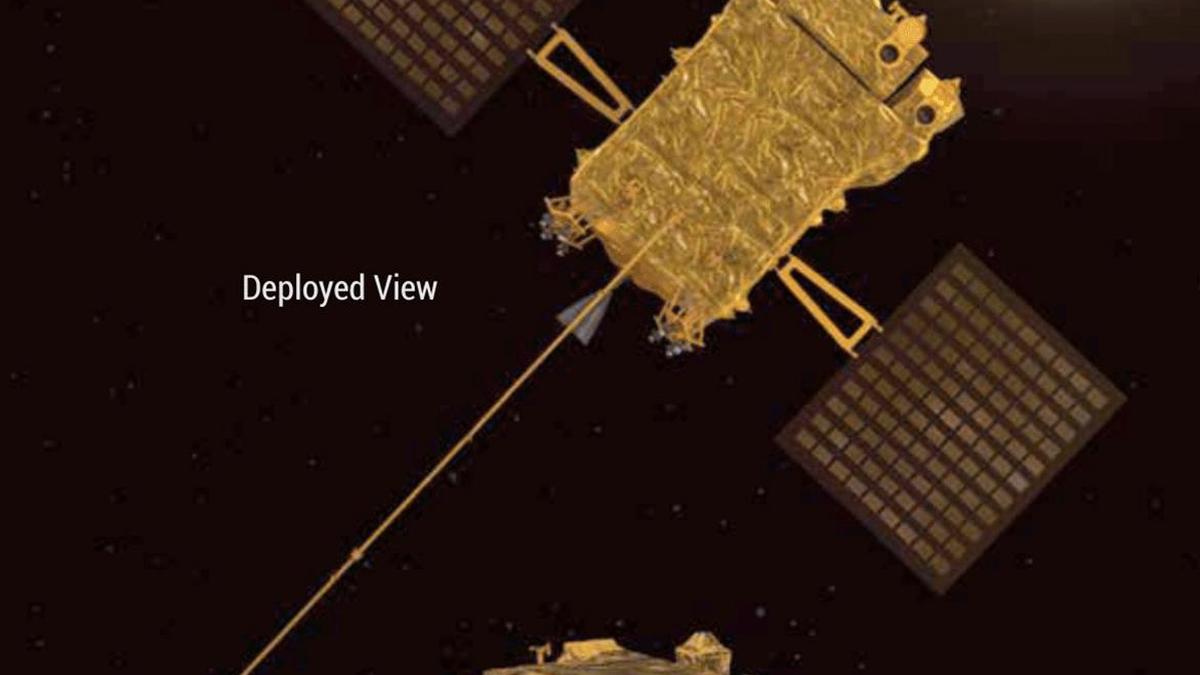
ISRO has invited proposals from Indian scientists for the analysis of data collected by the Aditya-L1 mission. This initiative aims to deepen scientific understanding of the Sun and space weather, leveraging the more than 23 TB of mission data already available in the public domain. Several important scientific results have already been published in international peer-reviewed journals, highlighting the mission's significance for competitive exams in science and technology.
Revision structure
Monthly events and exam calendar context
Static GK and one-liner notes
Quiz and mock-test revision path
Key points
Exam-ready takeaways
The data pertains to India's first solar observatory mission, Aditya-L1.
More than 23 TB (Terabytes) of data from the Aditya-L1 mission is currently available in the public domain.
Several significant scientific results derived from Aditya-L1 data have already been published in international peer-reviewed journals.
The initiative aims to encourage further research and scientific understanding of the Sun and space weather phenomena.
Detailed analysis
Full exam-oriented breakdown
The Indian Space Research Organisation (ISRO) has consistently pushed the boundaries of space exploration, evolving from a nascent program in the 1960s to a global leader in cost-effective and efficient space missions. This journey, marked by milestones like the launch of Aryabhata in 1975, the PSLV's commercial success, and the Chandrayaan and Mars Orbiter Missions, culminated in India's first dedicated solar observatory, Aditya-L1. Launched on September 2, 2023, the mission represents a significant leap towards fundamental space science, moving beyond purely application-driven satellites to unravel the mysteries of our closest star. The recent announcement by ISRO, inviting proposals from Indian scientists for the analysis of data from the Aditya-L1 mission, marks a crucial phase in this scientific endeavor. Aditya-L1 is strategically positioned in a halo orbit around the Sun-Earth Lagrange Point 1 (L1), approximately 1.5 million kilometers from Earth. This unique vantage point provides an uninterrupted view of the Sun, free from occultation or atmospheric interference, allowing its seven payloads to continuously observe the solar corona, chromosphere, solar flares, Coronal Mass Ejections (CMEs), and study space weather phenomena. With over 23 terabytes (TB) of data already available in the public domain and several scientific results published in international peer-reviewed journals, ISRO's call aims to democratize access to this valuable dataset, fostering a broader scientific community's engagement in solar physics research. Several key stakeholders are involved in this initiative. Foremost is the **Indian Space Research Organisation (ISRO)** itself, which designed, built, launched, and operates the Aditya-L1 mission, and is now facilitating data dissemination and collaborative research. **Indian scientists and researchers** from universities, national laboratories, and other academic institutions form the primary audience for this call. Their expertise will be crucial in processing, interpreting, and deriving new insights from the vast amounts of solar data. The **Government of India**, particularly through the Department of Space (which functions directly under the Prime Minister's Office), provides the strategic vision, policy framework, and financial backing for such ambitious missions, underscoring the nation's commitment to scientific advancement and technological self-reliance. While the current call is for domestic collaboration, the **global scientific community** also stands to benefit from the published research, enriching the collective understanding of solar physics and space weather. This initiative holds profound significance for India. Scientifically, it will deepen our understanding of the Sun's dynamics, its impact on Earth's magnetosphere, and the complex processes governing space weather. Such knowledge is vital for protecting our space assets (satellites), communication networks, and power grids from solar storms. Technologically, the successful operation of Aditya-L1 and the subsequent data analysis further solidify India's position as a capable spacefaring nation, inspiring future generations of scientists and engineers. Economically, advanced space weather forecasting can help mitigate potential disruptions to critical infrastructure, saving significant resources. Socially, it fosters a scientific temper (as enshrined in Article 51A(h) of the Constitution as a Fundamental Duty) and promotes a culture of research and innovation across the country. This aligns with the broader vision of 'Atmanirbhar Bharat' (Self-Reliant India) in high technology domains. The historical context of India's space program reveals a steady progression from foundational satellite launches to complex interplanetary and observational missions. The success of Chandrayaan-1 (2008), Mangalyaan (Mars Orbiter Mission, 2013), and Chandrayaan-3 (2023) demonstrated India's capability in deep-space exploration. Aditya-L1 marks a natural evolution, focusing on fundamental astrophysics. This shift showcases ISRO's maturity and its commitment to contributing to global scientific knowledge, rather than solely focusing on application-centric missions. The **Indian Space Policy 2023** further encourages participation from academia and private players, aligning with ISRO's current call for broader scientific engagement. The future implications of this data analysis are vast. Increased participation from Indian scientists will likely lead to a surge in high-quality research publications, potentially uncovering groundbreaking insights into solar phenomena. This enhanced understanding will directly contribute to more accurate space weather predictions, which can inform national policies for safeguarding critical infrastructure. The success of Aditya-L1 and the collaborative data analysis efforts could pave the way for more ambitious future solar missions or even other astrophysical observatories, positioning India as a key player in international space science. Furthermore, it will cultivate a robust ecosystem of scientific talent and infrastructure, capable of tackling future challenges in space exploration and fundamental research. The insights gained could also foster international collaborations, further elevating India's standing in the global scientific community.
How to study
Turn news into exam marks
Revise monthly events by exam family instead of reading random updates.
Pair one-liners with mock tests so mistakes become the next revision list.
Keep state job pages, calendar pages and GK packs connected in one path.