

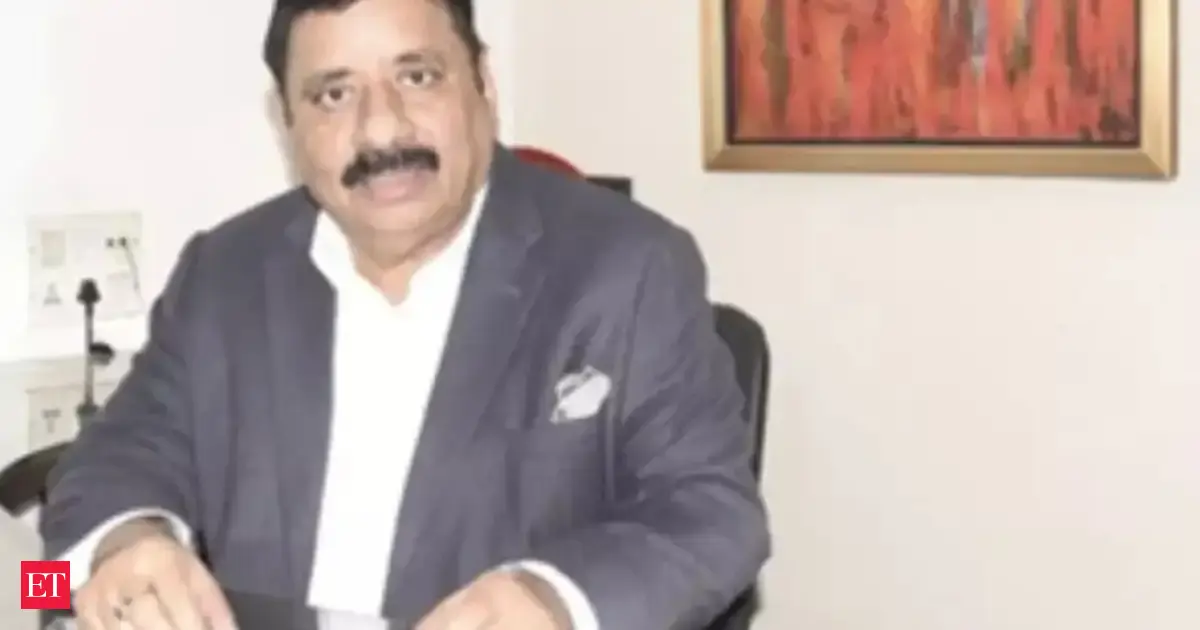
Ramesh Juneja has assumed charge as the new Chairman of the Council for Leather Exports (CLE).
GK and monthly revision
Ramesh Juneja assumes charge as Chairman of Council for Leather Exports
Ramesh Juneja has been appointed as the new Chairman of the Council for Leather Exports (CLE). This appointment is significant as India's leather and footwear sector aims for substantial export growth, targeting $14 billion in the next 3-5 years from the current $5.5 billion. The growth is expected to be driven by potential bilateral trade agreements with the EU and US, making it relevant for economic and trade policy questions in competitive exams.
Revision structure
Monthly events and exam calendar context
Static GK and one-liner notes
Quiz and mock-test revision path
Key points
Exam-ready takeaways
The Council for Leather Exports (CLE) is the organization focused on promoting India's leather and footwear exports.
India's current leather and footwear exports stand at approximately $5.5 billion.
The sector aims to boost exports to $14 billion within the next 3-5 years.
Potential bilateral trade agreements with the European Union (EU) and the United States (US) are expected to drive this export growth.
Detailed analysis
Full exam-oriented breakdown
The appointment of Ramesh Juneja as the new Chairman of the Council for Leather Exports (CLE) marks a pivotal moment for India's leather and footwear industry, an ancient sector with immense modern potential. This development signals a renewed focus on leveraging India's strengths to significantly boost its global trade presence, particularly within the ambitious 'Make in India' and 'Atmanirbhar Bharat' frameworks. Historically, India's leather industry boasts a rich heritage, evolving from traditional craftsmanship to a significant organized sector. It is one of the oldest industries in the country, deeply rooted in its cultural and economic fabric. India is the second-largest producer of footwear and the second-largest exporter of leather garments globally. The sector is highly labour-intensive, employing approximately 4.42 million people, a substantial portion of whom come from vulnerable sections of society, thereby playing a crucial role in socio-economic upliftment. However, despite its historical importance and current scale, the sector has faced challenges ranging from environmental compliance issues in tanneries to global competition and technological upgrades. The current export figure of around $5.5 billion, while significant, is seen as far below its true potential. What happened is the formal assumption of charge by Ramesh Juneja, an experienced figure in the industry, as the head of CLE. This appointment comes with an ambitious target: to nearly triple India's leather and footwear exports to $14 billion within the next 3-5 years. This growth trajectory is envisioned to be significantly propelled by potential bilateral trade agreements, particularly with major economies like the European Union (EU) and the United States (US). These agreements are crucial as they can provide preferential market access, reduce tariffs, and streamline trade procedures, making Indian products more competitive. Key stakeholders in this ambitious endeavour include, first and foremost, the **Council for Leather Exports (CLE)** itself, which functions as an apex body under the aegis of the Ministry of Commerce and Industry. Its primary mandate is to promote the export of leather and leather products from India. The **Government of India**, particularly the **Ministry of Commerce and Industry** and the **Directorate General of Foreign Trade (DGFT)**, plays a critical role in policy formulation, negotiating trade agreements, and providing incentives and support schemes. The **Indian leather and footwear manufacturers and exporters** are the direct beneficiaries and drivers of this growth, whose innovation, quality, and production capacity will determine success. Internationally, the **European Union** and the **United States** are key markets, and their readiness to finalize Free Trade Agreements (FTAs) or other preferential trade pacts will be instrumental. Finally, the **millions of workers** employed in the sector are crucial stakeholders, as their livelihoods directly depend on the industry's growth and stability. This development holds immense significance for India. Economically, achieving the $14 billion target would mean a substantial increase in foreign exchange earnings, contributing positively to India's balance of payments and Gross Domestic Product (GDP). It aligns perfectly with the 'Make in India' initiative by promoting domestic manufacturing and value addition, and with 'Atmanirbhar Bharat' by making India a self-reliant global manufacturing hub. Socially, the labour-intensive nature of the industry ensures significant job creation, providing employment and empowering a large workforce, including women and marginalized communities. Politically, successful trade negotiations and increased exports reinforce India's position as a reliable and competitive global trading partner, enhancing its geopolitical influence. From a constitutional perspective, the Union Government's power to regulate foreign trade is enshrined in the **Seventh Schedule of the Constitution**, specifically under **Entry 41 of the Union List**, which deals with 'Trade and Commerce with foreign countries; import and export across customs frontiers; customs'. This grants the central government the exclusive authority to frame policies like the **Foreign Trade Policy (FTP)**, which outlines the incentives, regulations, and procedures for exports and imports. The **Foreign Trade (Development and Regulation) Act, 1992**, provides the statutory framework for governing foreign trade in India. Policy initiatives like the **Production Linked Incentive (PLI) scheme**, though not yet widely extended to the entire leather sector, reflect the government's strategy to boost domestic manufacturing and exports in key sectors. Furthermore, environmental regulations, stemming from the **Environmental Protection Act, 1986**, are critical for the tanning sector to ensure sustainable and compliant production, which is increasingly a prerequisite for international markets. The future implications are multifaceted. Success in achieving the export target will depend on several factors: the swift conclusion of beneficial FTAs with the EU and US, continuous investment in skill development and technological upgradation within the industry, adherence to international quality and environmental standards, and diversification of product offerings and markets. Challenges include intense global competition, volatility in raw material prices, and the need for robust infrastructure. However, a thriving leather sector can inspire growth in allied industries, foster innovation, and solidify India's position as a global leader in high-quality leather goods. This strategic focus, led by figures like Ramesh Juneja, is a testament to India's commitment to leveraging its traditional strengths for future economic prosperity and global integration.
How to study
Turn news into exam marks
Revise monthly events by exam family instead of reading random updates.
Pair one-liners with mock tests so mistakes become the next revision list.
Keep state job pages, calendar pages and GK packs connected in one path.