

Andhra Minister Narayana launched the Land Pooling Scheme-II (LPS-II).
GK and monthly revision
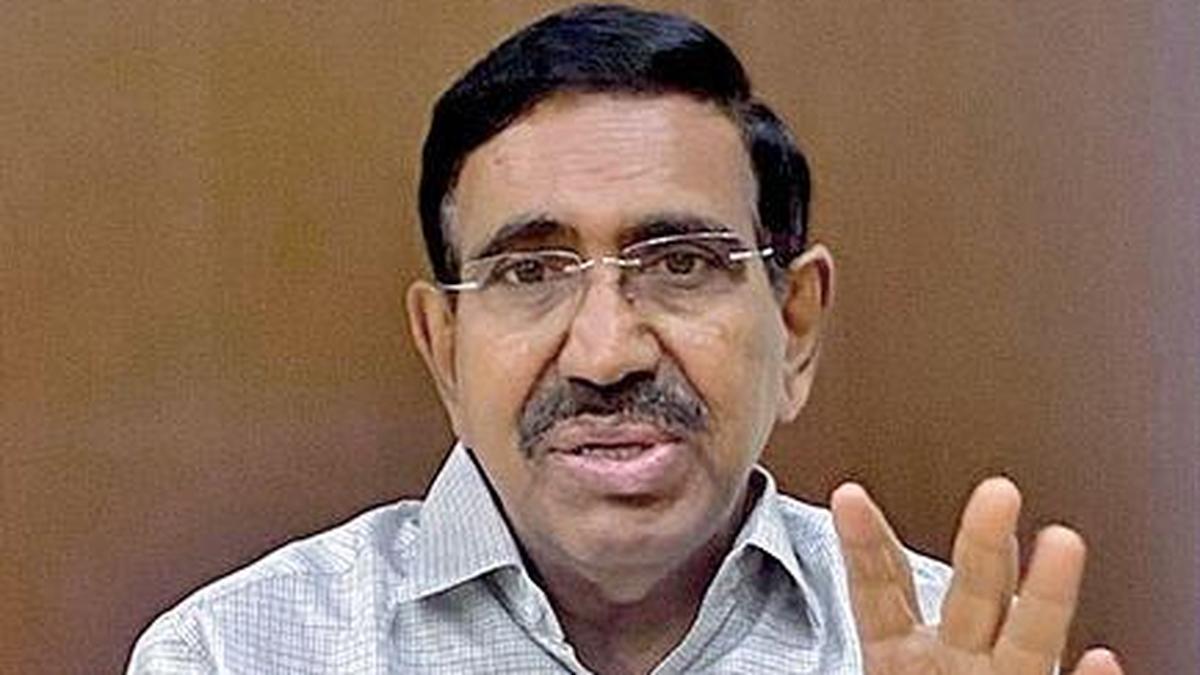
Andhra Minister Narayana launches Land Pooling Scheme-II in Amaravati
Andhra Minister Narayana launched Land Pooling Scheme-II (LPS-II) in Amaravati, announcing a significant ₹1.50 lakh debt waiver for families who provided land for the capital's construction. This move aims to address farmer grievances and streamline land acquisition for the Amaravati project, highlighting state government policies on urban development and land compensation, crucial for competitive exam knowledge on governance and schemes.
Revision structure
Monthly events and exam calendar context
Static GK and one-liner notes
Quiz and mock-test revision path
Key points
Exam-ready takeaways
The scheme was launched in Amaravati, the capital region of Andhra Pradesh.
A debt waiver of ₹1.50 lakh was announced under the scheme.
The debt waiver is specifically for families who gave their lands for the construction of Capital Amaravati.
LPS-II is an initiative related to land acquisition and development for the state capital.
Detailed analysis
Full exam-oriented breakdown
The announcement of the Land Pooling Scheme-II (LPS-II) by Andhra Minister Narayana in Amaravati, coupled with a significant ₹1.50 lakh debt waiver for families who surrendered their land, marks a crucial development in the ongoing saga of Andhra Pradesh's new capital. This initiative is not merely a local administrative decision; it encapsulates broader themes of governance, urban planning, land acquisition challenges, and farmer welfare that are highly pertinent for competitive exam aspirants. **Background Context: A Capital's Genesis and Land Challenges** The story of Amaravati as Andhra Pradesh's new capital begins with the bifurcation of the erstwhile state of Andhra Pradesh in June 2014, leading to the formation of Telangana with Hyderabad as its capital. The Andhra Pradesh Reorganisation Act, 2014, mandated that Hyderabad would serve as the common capital for both states for a maximum of 10 years, after which Andhra Pradesh would need its own capital. This led to the selection of Amaravati, a region strategically located on the banks of the Krishna River between Vijayawada and Guntur, as the new capital. To acquire the vast tracts of land required for a greenfield capital city, the state government under the then Chief Minister N. Chandrababu Naidu opted for a unique 'Land Pooling Scheme' (LPS-I) instead of outright compulsory acquisition under the Right to Fair Compensation and Transparency in Land Acquisition, Rehabilitation and Resettlement Act (RFCTLARR Act), 2013. LPS-I was presented as a voluntary mechanism where farmers would surrender their land to the government for development and, in return, receive a developed plot (both residential and commercial) within the new capital area, along with an annuity payment for a certain period. While initially successful in pooling over 33,000 acres, the project faced significant delays, changes in political leadership, and funding issues, leading to widespread grievances among the farming community, including rising debt. **What Happened: LPS-II and Debt Waiver** Recognizing the distress among farmers who had given up their primary source of livelihood for the capital project, the current state government launched LPS-II. The core announcement by Minister Narayana is the ₹1.50 lakh debt waiver for families who provided their lands for Amaravati's construction. This move is a direct response to the financial hardships faced by these families, many of whom took loans against their land or for agricultural purposes, anticipating swift development and compensation that did not materialize as quickly as promised. The debt waiver aims to alleviate their immediate financial burden and potentially rebuild trust between the government and the landowners. LPS-II is expected to streamline the stalled land development process and address the long-pending issues related to the capital city's construction. **Key Stakeholders Involved** At the heart of this development are the **Andhra Pradesh State Government** and its various departments, particularly the **Andhra Pradesh Capital Region Development Authority (APCRDA)**, which is the nodal agency responsible for the planning, execution, and development of Amaravati. The primary stakeholders, however, are the **Farmers and Landowners** of the Amaravati region, whose lives and livelihoods have been directly impacted by the capital project. Their voluntary participation in LPS-I, followed by years of uncertainty, makes them crucial beneficiaries of any relief measure. **Political Parties**, both ruling and opposition, also play a significant role by advocating for or against government policies and representing the interests of various sections of society, including farmers. **Significance for India** This development holds immense significance for India on multiple fronts. Firstly, it highlights the complexities of **Urbanization and Greenfield Capital Development**. India, a rapidly urbanizing nation, often grapples with land acquisition for infrastructure projects. Amaravati's journey serves as a case study for the challenges and potential pitfalls of creating a new capital city from scratch. Secondly, it underscores the critical importance of **Fair Land Acquisition and Compensation Policies**. The shift from compulsory acquisition to land pooling demonstrates an innovative approach, but the subsequent debt waiver reveals that even voluntary schemes can lead to farmer distress if not executed efficiently and transparently. This resonates with the principles enshrined in the RFCTLARR Act, 2013, which emphasizes fair compensation, rehabilitation, and resettlement. Thirdly, it speaks to the broader issue of **Farmer Welfare and Agricultural Debt**. The debt waiver is a direct measure to address farmer distress, a persistent challenge across India, often leading to suicides. Such government interventions reflect a commitment, albeit delayed, to supporting the agricultural community. Lastly, it touches upon **Federalism and State Autonomy**, particularly concerning the implications of state reorganization and the enormous task of building new state infrastructure post-bifurcation. **Historical Context and Constitutional References** The historical context is rooted in the **Andhra Pradesh Reorganisation Act, 2014**, which necessitated a new capital. The choice of Land Pooling over compulsory acquisition was a conscious policy decision to avoid the legal and social complexities often associated with the draconian Land Acquisition Act of 1894 (now largely superseded by the RFCTLARR Act, 2013). The RFCTLARR Act, 2013, aims to provide for humane, participative, informed, and transparent land acquisition processes, and while LPS is distinct, its spirit of ensuring fair returns to landowners aligns with the Act's broader objectives. The 'Right to Property,' though no longer a fundamental right, is a constitutional right under **Article 300A**, emphasizing that no person shall be deprived of property save by authority of law. This article forms the bedrock against arbitrary land acquisition. Furthermore, 'Land' and 'Agriculture' fall under the **State List (Entry 18 and 14 respectively) of the Seventh Schedule** of the Constitution, giving state governments primary legislative and executive authority over these matters. **Future Implications** The success of LPS-II and the effective implementation of the debt waiver will be crucial for the future of the Amaravati project. If successful, it could restore farmer confidence, accelerate development, and provide a template for other states facing similar land acquisition challenges for large-scale infrastructure. Conversely, further delays or inadequate implementation could deepen farmer resentment, stall the capital's development indefinitely, and erode public trust. This initiative will also set a precedent for how state governments manage the socio-economic impacts of mega-projects, especially concerning vulnerable sections like farmers. It underscores the need for robust long-term planning, financial stability, and continuous engagement with affected communities to ensure equitable and sustainable development.
How to study
Turn news into exam marks
Revise monthly events by exam family instead of reading random updates.
Pair one-liners with mock tests so mistakes become the next revision list.
Keep state job pages, calendar pages and GK packs connected in one path.