

For-profit companies are now permitted to establish medical colleges in India.
GK and monthly revision
For-profit companies allowed to set up medical colleges under PPP mode, says NMC chief
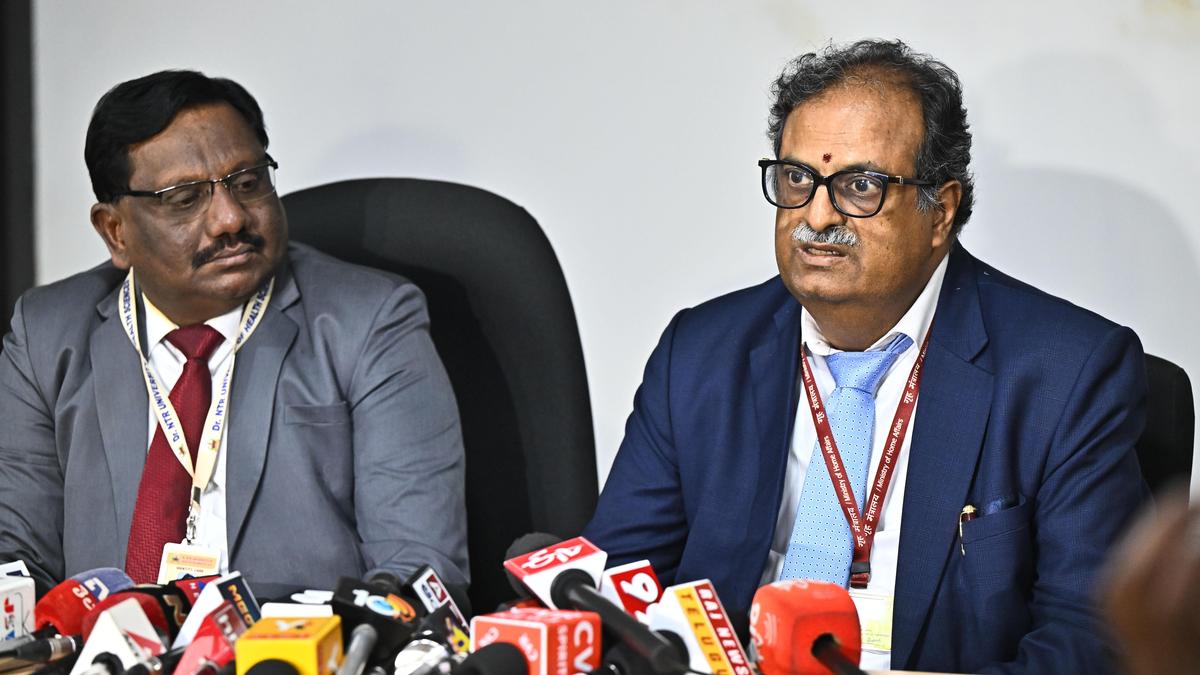
The National Medical Commission (NMC) chief, Abhijat Chandrakant Sheth, announced that for-profit companies can now establish medical colleges under the Public-Private Partnership (PPP) mode. This policy aims to increase medical education infrastructure and ensure patient access to free or subsidised treatment, as these hospitals will be under State government purview. This is significant for understanding healthcare policy changes and the role of private players in medical education.
Revision structure
Monthly events and exam calendar context
Static GK and one-liner notes
Quiz and mock-test revision path
Key points
Exam-ready takeaways
This new policy allows for medical colleges to be set up under the Public-Private Partnership (PPP) mode.
The announcement was made by the National Medical Commission (NMC) chief, Abhijat Chandrakant Sheth.
Hospitals operating under the PPP model will fall under the purview of State governments.
Patients receiving treatment at these PPP-model hospitals will benefit from either free or subsidised medical services.
Detailed analysis
Full exam-oriented breakdown
The National Medical Commission (NMC) chief, Abhijat Chandrakant Sheth, recently announced a significant policy shift: for-profit companies are now permitted to establish medical colleges in India under the Public-Private Partnership (PPP) mode. This move is designed to address the persistent challenges in India's healthcare and medical education sectors, signaling a new era of private sector involvement with a public service mandate. India faces a critical shortage of medical professionals and infrastructure. The doctor-patient ratio in India, though improving, remains below the World Health Organization's recommended standard of 1:1000. This deficit is exacerbated by a limited number of medical college seats, high costs of medical education, and an uneven distribution of healthcare facilities, with a significant skew towards urban areas. Historically, medical education was largely dominated by government institutions, with the private sector playing a role, but often criticized for high fees and sometimes questionable quality. The transition from the Medical Council of India (MCI) to the National Medical Commission (NMC) in 2020, through the National Medical Commission Act, 2019, aimed to bring greater transparency, accountability, and reform to medical education and practice. The core of this new policy is the integration of for-profit entities into medical education through the PPP model. While private medical colleges have existed, allowing 'for-profit' companies specifically marks a change, as previous regulations often favored trusts or non-profit societies. The crucial rider is that hospitals run under this PPP mode will fall under the direct purview of State governments. This oversight is intended to ensure that patients receive treatment on either a free or subsidised basis, thereby maintaining the public service objective despite the involvement of profit-driven entities. The NMC's rationale is to leverage private capital and efficiency to rapidly expand medical education infrastructure and simultaneously enhance healthcare access for the general populace, particularly those from economically weaker sections. Key stakeholders in this development include the National Medical Commission (NMC), which is the regulatory body responsible for setting standards and ensuring compliance in medical education and practice. Their role will be critical in formulating detailed guidelines, monitoring the implementation, and ensuring quality control. For-profit companies are the new entrants, bringing capital investment, managerial expertise, and a drive for efficiency, but also the inherent objective of generating returns. State governments will play a pivotal role in operationalizing these PPPs, overseeing the hospitals, and ensuring the delivery of free or subsidized healthcare services to patients. Patients, especially those from vulnerable sections, stand to benefit from increased access to affordable medical care. Medical aspirants will see an increase in the number of available seats, potentially diversifying fee structures and accessibility. This policy holds immense significance for India. Firstly, it directly addresses the critical shortage of doctors and specialists by enabling a faster expansion of medical colleges and training facilities. This aligns with the goals of the National Health Policy 2017, which emphasizes universal access to quality healthcare services. Secondly, by bringing for-profit companies, it aims to attract substantial private investment into a sector that desperately needs it, potentially spurring economic growth and job creation. Thirdly, the mandate for free or subsidised treatment under state government purview attempts to bridge the gap between quality medical education and equitable healthcare access, a major challenge in a country with significant socio-economic disparities. This also resonates with the spirit of Directive Principles of State Policy (DPSP) in the Indian Constitution, particularly Article 47, which mandates the State to improve public health, and Article 41, which speaks of the right to public assistance in cases of sickness. The historical context reveals a long-standing debate about the role of the private sector in essential services like health and education. While private players have contributed significantly, concerns about commercialization, exorbitant fees, and quality have often led to regulatory tightening. The NMC's move represents a calibrated approach, attempting to harness private sector strengths while embedding public service obligations through the PPP framework and state oversight. The legal framework for this initiative stems from the National Medical Commission Act, 2019. Furthermore, education, including medical education, falls under Entry 25 of the Concurrent List in the Seventh Schedule of the Constitution, allowing both central and state governments to legislate. Public health and hospitals fall under Entry 6 of the State List, reinforcing the state's role in this new PPP model. Looking ahead, the success of this policy hinges on robust implementation and stringent regulatory oversight. Future implications include a potential surge in medical college seats, possibly alleviating the pressure on aspirants and reducing the need to study abroad. However, challenges such as maintaining the quality of education in new institutions, ensuring equitable geographical distribution (especially in underserved rural areas), preventing commercial exploitation, and effectively monitoring the 'free or subsidised treatment' clause will be paramount. The NMC and state governments will need to develop clear, transparent, and enforceable guidelines to prevent potential pitfalls and ensure that the ultimate beneficiaries are both the medical students and the common citizens seeking affordable healthcare. This policy could transform India's healthcare landscape, but its impact will be defined by its execution.
How to study
Turn news into exam marks
Revise monthly events by exam family instead of reading random updates.
Pair one-liners with mock tests so mistakes become the next revision list.
Keep state job pages, calendar pages and GK packs connected in one path.