

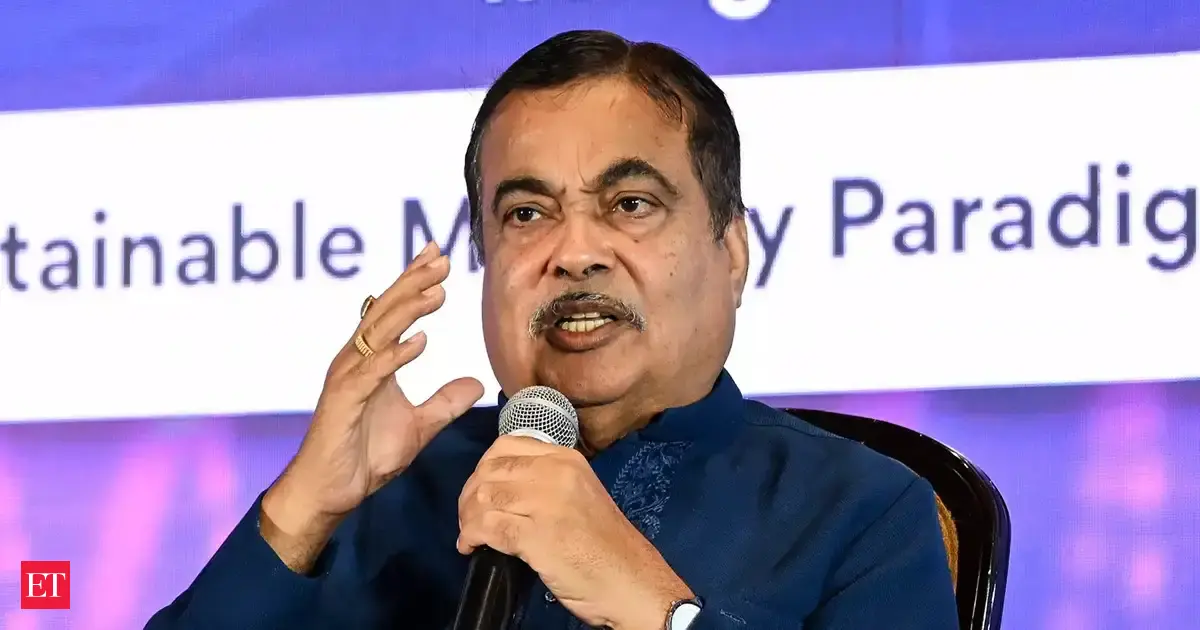
Union Minister Nitin Gadkari articulated India's ambition to become the world's third-largest economy.
GK and monthly revision
India must rein in imports, push exports: Nitin Gadkari
Union Minister Nitin Gadkari emphasized India's strategic goal of becoming the world's third-largest economy, necessitating a sharp reduction in imports and a boost in exports. He highlighted converting agricultural waste into a valuable national resource to foster a circular economy, mitigate pollution from crop burning, and significantly reduce dependence on imported crude oil by blending. This approach is crucial for sustainable economic growth and enhancing India's self-reliance.
Revision structure
Monthly events and exam calendar context
Static GK and one-liner notes
Quiz and mock-test revision path
Key points
Exam-ready takeaways
He stressed the critical need for India to rein in imports and actively push exports to achieve this economic target.
A key strategy proposed is converting agricultural waste into a national resource.
This initiative aims to strengthen the circular economy and reduce pollution caused by crop burning.
Blending 15% with agro-waste is projected to save foreign exchange by significantly reducing dependence on imported crude oil.
Detailed analysis
Full exam-oriented breakdown
India's ambition to become the world's third-largest economy, a goal frequently articulated by Union Minister Nitin Gadkari, hinges significantly on a strategic recalibration of its economic policies, particularly concerning international trade and resource management. This aspiration is not merely about increasing Gross Domestic Product (GDP) but about fostering sustainable, self-reliant growth that addresses core vulnerabilities. The recent emphasis on reining in imports and boosting exports, coupled with an innovative approach to converting agricultural waste into a national resource, represents a multi-pronged strategy to achieve this. This approach is deeply rooted in India's long-standing quest for economic independence and environmental sustainability. Historically, India has grappled with a significant trade deficit, largely driven by its substantial dependence on imported crude oil. The nation imports over 85% of its crude oil requirements, making its economy vulnerable to global price fluctuations and geopolitical instability. This import bill drains precious foreign exchange reserves, impacts the balance of payments, and can lead to inflationary pressures. Post-liberalization in 1991, while exports grew, the import bill, especially for energy and capital goods, often outpaced export earnings, creating a structural challenge. The current global economic landscape, marked by supply chain disruptions exacerbated by events like the COVID-19 pandemic and geopolitical conflicts, has further underscored the urgency of reducing import dependence and strengthening domestic production capabilities. Union Minister Nitin Gadkari's proposition to leverage agricultural waste is a prime example of a circular economy model. This involves converting waste products, such as crop residue, into valuable resources like biofuels (e.g., ethanol, compressed biogas). This strategy offers a dual benefit: firstly, it addresses the pervasive environmental problem of crop burning, particularly in states like Punjab, Haryana, and Uttar Pradesh, which contributes significantly to air pollution and public health crises. Secondly, by blending biofuels (such as a 15% agro-waste blend mentioned by Gadkari) with conventional fossil fuels, India can substantially reduce its crude oil import bill, thereby saving foreign exchange and enhancing energy security. The National Policy on Biofuels, 2018 (amended in 2022), already targets 20% ethanol blending in petrol by 2025-26, highlighting the government's commitment to this path. Key stakeholders in this ambitious undertaking include the **Government of India**, particularly ministries like the Ministry of Road Transport and Highways (spearheaded by Gadkari), the Ministry of Petroleum and Natural Gas, the Ministry of Agriculture & Farmers Welfare, and the Ministry of Commerce and Industry. **Farmers** are crucial as they are the primary producers of agricultural waste and potential beneficiaries through new income streams from selling crop residue. **Industry players**, including biofuel producers, agricultural machinery manufacturers, and logistics companies, are vital for developing and scaling up the necessary infrastructure and technology. **Research and Development institutions** play a pivotal role in innovating cost-effective and efficient waste-to-energy technologies. Finally, **consumers** will benefit from cleaner air and a more stable energy supply. This initiative holds immense significance for India. Economically, reducing crude oil imports will improve the balance of payments, strengthen the Indian Rupee, and free up foreign exchange for other developmental priorities. Environmentally, tackling crop burning is a critical step towards mitigating air pollution and achieving India's climate commitments under the Paris Agreement. Socially, it can create new rural employment opportunities and diversify farmers' income, contributing to rural prosperity. From an energy security perspective, it lessens India's geopolitical vulnerability to oil-producing nations and price shocks, fostering greater strategic autonomy. The 'Atmanirbhar Bharat Abhiyan' (Self-Reliant India Campaign) launched in 2020, strongly aligns with these goals, promoting local manufacturing and reduced import dependence. Constitutionally, while there isn't one specific article, several Directive Principles of State Policy (DPSP) are relevant. **Article 48A** mandates the State to 'endeavour to protect and improve the environment and to safeguard the forests and wildlife of the country,' directly linking to pollution reduction from crop burning. **Article 39** focuses on securing economic justice and preventing the concentration of wealth, which can be furthered by creating new income avenues for farmers. Furthermore, subjects like 'Industries' (Entry 52), 'Oilfields' (Entry 53), 'Economic and social planning' (Entry 20), and 'Protection of environment' (derived from 48A and judicial interpretations) fall under the Union or Concurrent Lists of the Seventh Schedule, enabling central legislation and policy formulation. The future implications are profound. Success in this strategy could position India as a leader in the circular economy and biofuel technologies, attracting foreign investment and fostering domestic innovation. It could significantly contribute to India's goal of achieving net-zero emissions by 2070. However, challenges remain, including ensuring consistent supply chains for agricultural waste, developing cost-effective conversion technologies, and creating robust market mechanisms for biofuels. Effective policy implementation, financial incentives, and public awareness campaigns will be crucial for translating this vision into a sustainable reality, paving the way for India to truly become a global economic powerhouse while safeguarding its environment and energy future.
How to study
Turn news into exam marks
Revise monthly events by exam family instead of reading random updates.
Pair one-liners with mock tests so mistakes become the next revision list.
Keep state job pages, calendar pages and GK packs connected in one path.