

ISRO is scheduled to launch the PSLV-C62/EOS-N1 Mission.
GK and monthly revision
Countdown for launch of PSLV-C62/EOS-N1 mission begins
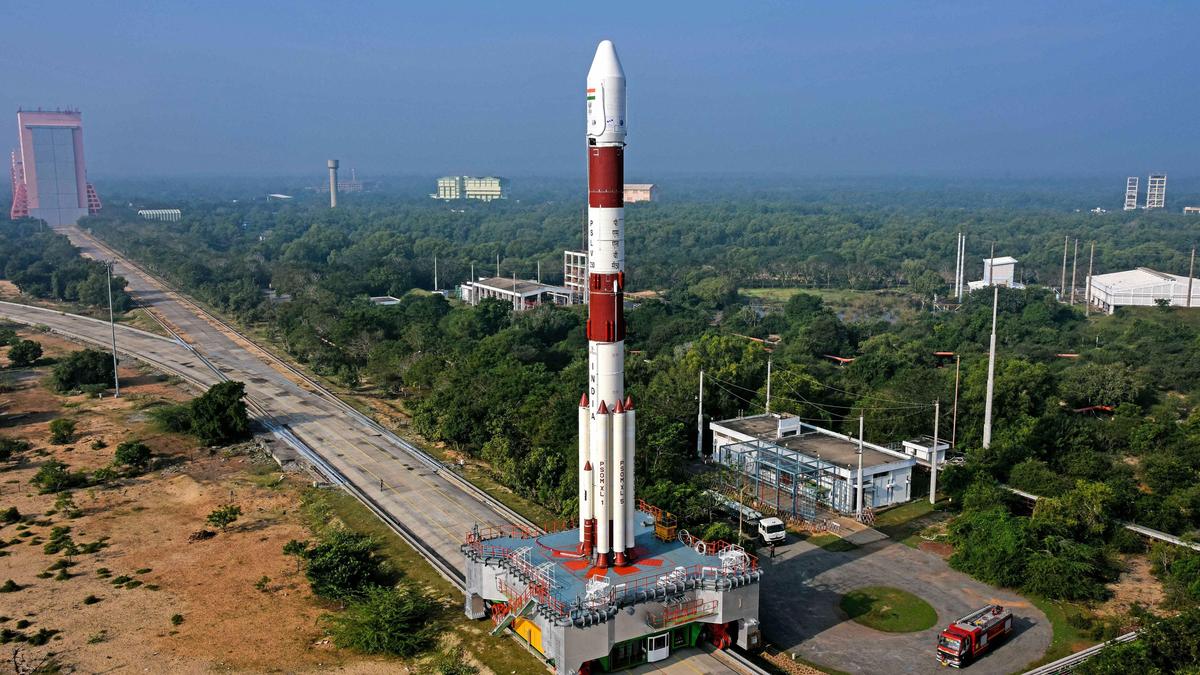
ISRO is set to launch its PSLV-C62/EOS-N1 mission on January 12 from the Satish Dhawan Space Centre. This mission highlights India's ongoing advancements in space technology and Earth observation capabilities, making it a crucial topic for competitive exams focusing on science and technology, current affairs, and national achievements. Aspirants should note the mission name, launch vehicle, and date.
Revision structure
Monthly events and exam calendar context
Static GK and one-liner notes
Quiz and mock-test revision path
Key points
Exam-ready takeaways
The launch is slated for January 12.
The mission will be launched from the first launch pad of the Satish Dhawan Space Centre.
The launch time is 10:17 a.m. IST.
The launch vehicle for this mission is PSLV-C62.
Detailed analysis
Full exam-oriented breakdown
The announcement of ISRO's PSLV-C62/EOS-N1 mission launch on January 12 from the Satish Dhawan Space Centre marks another significant stride in India's robust space program. This mission, leveraging the capabilities of the Polar Satellite Launch Vehicle (PSLV), underscores the nation's continuous commitment to advancing its Earth observation capabilities and indigenous space technology. For competitive exam aspirants, understanding this mission goes beyond mere facts; it requires grasping the historical context, strategic importance, and broader implications for India. ISRO, established in 1969, has been a cornerstone of India's scientific and technological progress. Its mandate extends from developing space technology to its application for national development. The PSLV, often dubbed ISRO's 'workhorse' launch vehicle, has been instrumental in placing numerous Indian and foreign satellites into orbit. Since its first successful launch in 1994, the PSLV has demonstrated remarkable reliability and versatility, capable of launching satellites into various orbits, including sun-synchronous polar orbits crucial for Earth observation. This consistent performance has not only solidified India's position as a reliable launch service provider but also enabled the nation to build a sophisticated fleet of remote sensing satellites. The EOS-N1 satellite, an Earth Observation Satellite, is designed to provide critical data for a multitude of applications. Earth observation satellites are essentially remote sensing platforms equipped with advanced cameras and sensors that collect information about the Earth's surface, atmosphere, and oceans. The data gathered from such satellites is invaluable for diverse sectors, including agriculture (crop health monitoring, yield estimation), forestry (deforestation mapping, forest fire detection), urban planning, water resource management, mineral exploration, and environmental monitoring (pollution tracking, climate change studies). Moreover, these satellites play a crucial role in disaster management, offering timely information for flood mapping, cyclone tracking, and drought assessment, thereby aiding relief efforts and preparedness. Key stakeholders in this mission primarily include the Indian Space Research Organisation (ISRO), which functions under the Department of Space (DoS), directly reporting to the Prime Minister's Office. This centralized control ensures strategic alignment with national priorities. Beyond ISRO, entities like Antrix Corporation (ISRO's commercial arm) and NewSpace India Limited (NSIL), established in 2019 to scale up private sector participation in the Indian space industry, are increasingly playing roles in commercializing ISRO's technologies and launch services. The government's continued financial and policy support is the bedrock of these missions. This mission holds immense significance for India. Economically, the data from EOS-N1 can lead to more efficient resource management, boosting productivity in agriculture and other sectors. Strategically, Earth observation satellites provide critical intelligence for national security, including border surveillance and maritime domain awareness, enhancing India's overall strategic autonomy. Socially, the data aids in better governance through informed decision-making in disaster preparedness and environmental conservation. Furthermore, such missions reinforce India's self-reliance (Atmanirbhar Bharat) in advanced technology, reducing dependence on foreign sources for critical space-based services. Historically, India's journey in Earth observation began with satellites like Aryabhata (1975) and progressed through the IRS (Indian Remote Sensing) series, Cartosat, and Risat satellites, showcasing a continuous and evolving capability. Looking ahead, the successful deployment of EOS-N1 contributes to India's growing constellation of Earth observation satellites, enhancing data revisit capabilities and resolution. This aligns with India's ambitious new Space Policy (2023), which aims to foster greater private sector participation across the entire value chain of the space economy, from satellite manufacturing to launch services and data applications. The increased flow of data will further stimulate innovation in geospatial applications and artificial intelligence, creating new economic opportunities. India's commitment to the peaceful uses of outer space, as reflected in its adherence to the UN Outer Space Treaty, underscores its responsible approach to space exploration. While no direct constitutional article explicitly mandates space exploration, the spirit of scientific temper enshrined in Article 51A(h) as a fundamental duty, along with the Directive Principles of State Policy (e.g., Article 38 and 39) promoting social and economic welfare, broadly supports scientific endeavors like space missions that contribute to national development and public good. The institutional framework for space activities is governed by the executive power of the Union, under the Department of Space, established through an executive order in 1972.
How to study
Turn news into exam marks
Revise monthly events by exam family instead of reading random updates.
Pair one-liners with mock tests so mistakes become the next revision list.
Keep state job pages, calendar pages and GK packs connected in one path.