

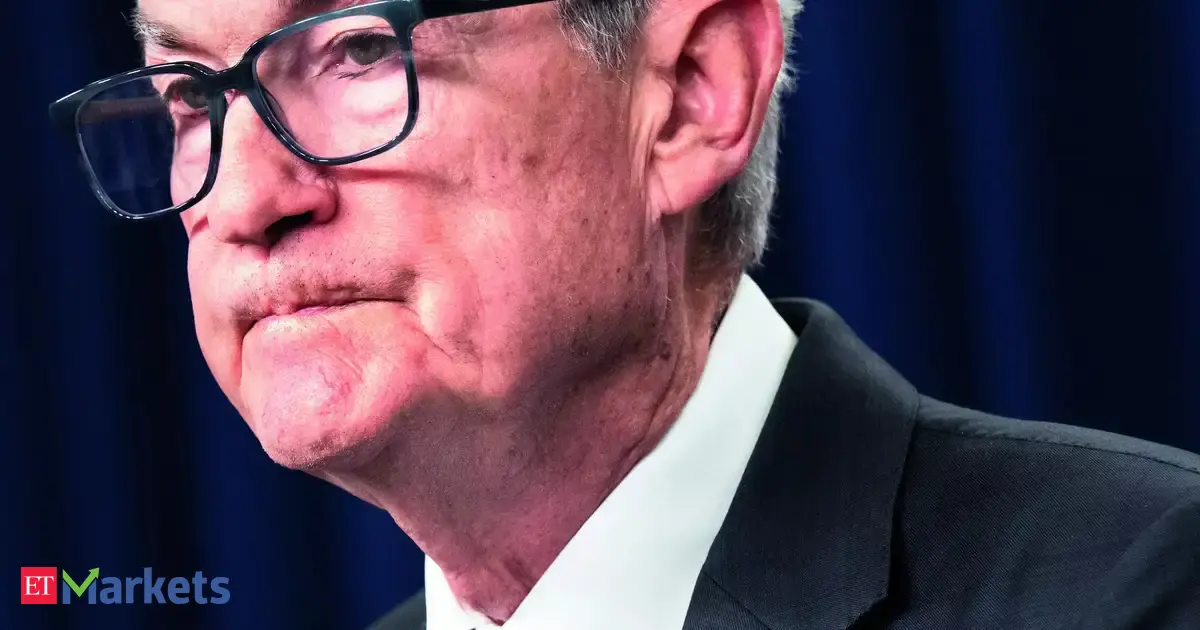
The U.S. Justice Department has initiated a probe concerning Federal Reserve Chair Jerome Powell.
GK and monthly revision
Fed probe rekindles diversification debate as investors weigh ‘Sell USA’ risks
The U.S. Justice Department's probe into Federal Reserve Chair Jerome Powell has reignited discussions among investors about diversifying portfolios away from the USA. This development raises concerns about the Federal Reserve's independence and adds to existing worries regarding U.S. fiscal health and debt. For competitive exams, this highlights the interconnectedness of global financial markets and the impact of central bank governance on investor sentiment and capital flows.
Revision structure
Monthly events and exam calendar context
Static GK and one-liner notes
Quiz and mock-test revision path
Key points
Exam-ready takeaways
This probe has rekindled investor interest in diversifying portfolios away from the United States.
A key concern highlighted by this development is the perceived independence of the U.S. Federal Reserve.
The situation exacerbates existing worries among investors regarding U.S. fiscal health and national debt.
Potential long-term implications include gradual shifts in global capital allocation away from the U.S. market.
Detailed analysis
Full exam-oriented breakdown
The news of a U.S. Justice Department probe concerning Federal Reserve Chair Jerome Powell has sent ripples across global financial markets, reigniting the critical debate surrounding central bank independence and its implications for investor confidence and capital allocation. While the immediate market reaction might appear calm, the underlying concerns are profound, pointing towards potential long-term shifts in global economic dynamics. **Background Context: The Federal Reserve and its Independence** To truly grasp the significance of this development, one must understand the pivotal role of the U.S. Federal Reserve. Established by the Federal Reserve Act of 1913, the Fed serves as the central bank of the United States. Its primary mandates include maximizing employment, stabilizing prices, and moderating long-term interest rates. To achieve these goals, the Fed is designed to operate with a degree of independence from political influence, allowing it to make monetary policy decisions based on economic data rather than short-term political expediency. This independence is enshrined in its structure, where its governors serve fixed terms and its funding comes from its own operations rather than congressional appropriations. The credibility of a central bank, largely stemming from its perceived independence, is paramount for market stability and effective policy transmission. **What Happened: The Probe and its Implications** The article highlights a U.S. Justice Department probe concerning Federal Reserve Chair Jerome Powell. While the specifics of the probe are not detailed in the provided context, such investigations typically relate to conduct, transparency, or potential conflicts of interest within the institution or its leadership. Historically, concerns about ethical conduct and potential insider trading by Fed officials have surfaced, leading to calls for stricter rules and oversight. This particular probe, irrespective of its specific findings, casts a shadow over the Fed's perceived independence and integrity. For investors, this raises a crucial question: if the leadership of the world's most influential central bank is under scrutiny, how reliable are its policy decisions and how robust is its institutional framework? This uncertainty, compounded by existing worries about the U.S.'s escalating fiscal health and national debt – which stood at over $34 trillion in early 2024 – prompts investors to reconsider their concentrated exposure to the U.S. market. **Key Stakeholders Involved** Several entities are central to this development: 1. **U.S. Justice Department:** As the initiating body, it represents the executive branch's legal arm, responsible for investigating and prosecuting federal crimes, thus asserting a check on powerful institutions. 2. **Federal Reserve (Chair Jerome Powell and other officials):** The subject of the probe, whose institutional integrity and leadership are being questioned. Their actions and responses will be crucial in restoring confidence. 3. **Global Investors:** The primary actors reacting to the news, considering portfolio diversification. Their collective decisions to 'Sell USA' or reallocate capital will have significant market ramifications. 4. **U.S. Government (Treasury and Congress):** These bodies are intrinsically linked to the nation's fiscal health and debt. Any loss of investor confidence impacts their ability to finance debt at favorable rates. 5. **International Financial Institutions and Other Central Banks:** They observe these developments closely, as U.S. financial stability has systemic global implications. **Significance for India** For India, a major emerging economy, the implications of this 'Sell USA' risk are multifaceted: * **Capital Flows:** A potential shift of global capital away from the U.S. could mean increased Foreign Portfolio Investment (FPI) and Foreign Direct Investment (FDI) into promising emerging markets like India. This could boost India's capital markets and provide much-needed funding for infrastructure and economic growth. * **Rupee Stability:** Any significant weakening of the U.S. dollar due to capital outflows could potentially strengthen the Indian Rupee, making imports cheaper and easing inflationary pressures. However, excessive volatility in global currencies can also pose challenges for India's export competitiveness. * **Monetary Policy:** The Reserve Bank of India (RBI) closely monitors global monetary conditions, especially the Fed's actions. A loss of confidence in the Fed's independence could introduce greater uncertainty into global monetary policy, forcing the RBI to be more agile and proactive in its domestic policy formulation to safeguard India's economic interests. * **Trade and External Sector:** U.S. economic stability directly impacts global demand. Any significant downturn or prolonged uncertainty in the U.S. could affect India's exports to its second-largest trading partner, though diversification of capital away from the U.S. might also open new trade avenues. **Historical Context and Broader Themes** The debate over central bank independence is not new. Throughout history, governments have often been tempted to influence central banks for short-term political gains, leading to inflationary spirals or financial instability. The 1970s in the U.S., marked by high inflation, are often cited as a period when the Fed faced significant political pressure. Globally, countries have grappled with the optimal balance between central bank autonomy and democratic accountability. In India, while the RBI operates with statutory independence derived from the Reserve Bank of India Act, 1934, the relationship between the government and the RBI has seen its share of tensions, particularly regarding interest rate decisions, reserves management, and regulatory oversight. This situation highlights the universal themes of good governance, institutional integrity, transparency, and the delicate balance of power between different arms of the state. **Future Implications** Looking ahead, this probe and the ensuing diversification debate could trigger several outcomes. Firstly, it might accelerate the trend of global capital reallocation, potentially benefiting other stable economies and emerging markets. Secondly, it could intensify scrutiny on central bank governance and ethical standards worldwide, pushing for greater transparency and accountability. Thirdly, should the perceived independence of the Fed be significantly eroded, it could diminish the U.S. dollar's role as the dominant global reserve currency over the long term, fostering a more multipolar financial world. For India, this presents both opportunities to attract more investment and challenges in navigating a potentially more volatile and uncertain global financial landscape. The need for robust domestic economic policies, fiscal prudence, and strong regulatory frameworks becomes even more critical to capitalize on these shifts.
How to study
Turn news into exam marks
Revise monthly events by exam family instead of reading random updates.
Pair one-liners with mock tests so mistakes become the next revision list.
Keep state job pages, calendar pages and GK packs connected in one path.