

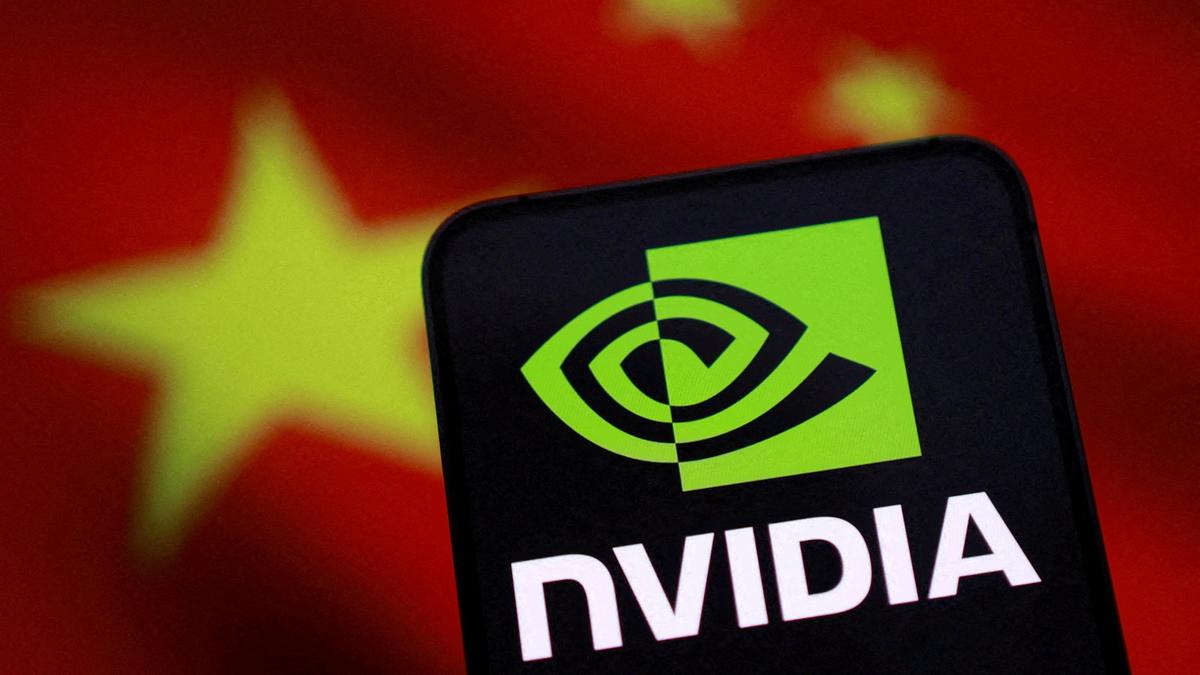
The US government has allowed Nvidia to export advanced AI chips to China.
GK and monthly revision
US allows Nvidia to send advanced AI chips to China with restrictions
The US government has permitted Nvidia to export some of its advanced AI chips to China, albeit with specific restrictions. This decision follows advocacy from Nvidia CEO Jensen Huang, highlighting the complex balance between economic interests of US tech companies and Washington's national security concerns regarding China's technological advancement. For competitive exams, this signifies the ongoing US-China tech rivalry and its impact on global supply chains and trade policies.
Revision structure
Monthly events and exam calendar context
Static GK and one-liner notes
Quiz and mock-test revision path
Key points
Exam-ready takeaways
The permission for export comes with specific restrictions imposed by the US.
Nvidia's Chief Executive, Jensen Huang, advocated for the company to sell these chips in China.
The products involved are 'advanced AI chips', crucial for artificial intelligence development.
This move reflects the intricate dynamics of US-China technology trade and national security policies.
Detailed analysis
Full exam-oriented breakdown
The US government's decision to allow Nvidia to export some of its advanced AI chips to China, albeit with significant restrictions, is a nuanced development in the ongoing US-China tech rivalry. This move, advocated by Nvidia's CEO Jensen Huang, highlights the complex interplay between Washington's national security imperatives and the economic interests of American technology giants. Understanding this situation requires delving into its background, key players, implications for India, and future trajectory. **Background Context: The Genesis of Tech Tensions** The US-China tech rivalry is a defining feature of 21st-century geopolitics. It escalated significantly due to US concerns over China's rapid technological advancement, particularly its potential use in military modernization and surveillance. The US government fears that advanced semiconductors, crucial for Artificial Intelligence (AI) and high-performance computing, could enhance China's military capabilities and its authoritarian surveillance state. This led to a series of stringent export controls, notably those imposed by the Biden administration in October 2022. These controls aimed to restrict China's access to advanced chips and chip-making equipment, effectively slowing down its progress in critical technological domains. Companies like Huawei and SMIC were placed on the 'Entity List,' severely limiting their access to US technology. This broader strategy is complemented by domestic initiatives like the CHIPS and Science Act (2022), which seeks to bolster US semiconductor manufacturing and reduce reliance on foreign supply chains. **What Happened: A Strategic Concession with Strings Attached** Nvidia, a global leader in designing Graphics Processing Units (GPUs) essential for AI, found itself caught in the crossfire. The initial US restrictions prevented Nvidia from selling its most powerful chips (like the A100 and H100) to China. To navigate this, Nvidia developed downgraded versions, such as the A800 and H800, specifically for the Chinese market, which complied with the existing export thresholds. The recent decision implies that the US government has permitted the continued export of these modified chips, or potentially other advanced but restricted models, to China. This isn't a complete reversal of policy but rather a calculated concession. It acknowledges the economic reality that denying US companies access to a massive market like China could harm their revenue and R&D capabilities, potentially impacting their global competitiveness. Nvidia CEO Jensen Huang explicitly argued that cutting off sales to China would significantly damage US industry. **Key Stakeholders and Their Motivations** 1. **US Government (Department of Commerce, Department of Defense)**: Primarily driven by national security concerns, aiming to maintain a technological edge over China. However, it also balances this with the economic health of US companies and the desire to avoid a complete
How to study
Turn news into exam marks
Revise monthly events by exam family instead of reading random updates.
Pair one-liners with mock tests so mistakes become the next revision list.
Keep state job pages, calendar pages and GK packs connected in one path.