

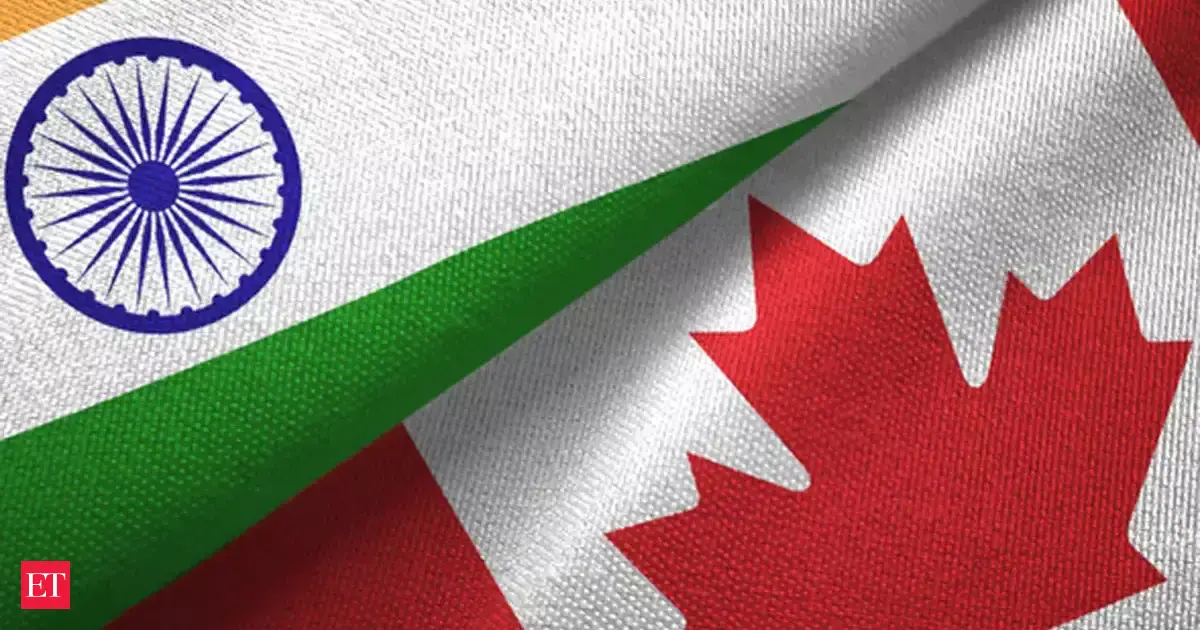
India and Canada are working to finalize the scope for a bilateral trade pact.
GK and monthly revision
India, Canada working to finalise scope for bilateral trade pact: Commerce Secretary
India and Canada are actively working to finalize the scope for a bilateral trade pact, marking a significant step in their economic relations. Talks, which were paused by Canada in 2023, are now set to resume from the beginning, reflecting changes in the global trade landscape. This initiative is crucial for boosting bilateral trade and investment, making it a key topic for competitive exams focusing on international relations and economic policy.
Revision structure
Monthly events and exam calendar context
Static GK and one-liner notes
Quiz and mock-test revision path
Key points
Exam-ready takeaways
Canada had previously paused negotiations for the trade pact in 2023.
The discussions are set to resume from the beginning due to changes in global trade.
The announcement regarding the resumption of talks was made by the Commerce Secretary.
The objective is to establish a comprehensive bilateral trade agreement between the two nations.
Detailed analysis
Full exam-oriented breakdown
The recent announcement by India's Commerce Secretary regarding the resumption of bilateral trade pact talks with Canada marks a crucial juncture in the economic and diplomatic relationship between the two nations. This development is particularly significant given the turbulent phase their relationship experienced in 2023, making it a key topic for aspirants preparing for competitive exams. **Background Context and Historical Trajectory:** India and Canada, two prominent Commonwealth nations, have historically shared a relationship rooted in democratic values and a substantial Indian diaspora in Canada. Economic engagement, however, has often lagged behind its potential. The idea of a comprehensive trade agreement, specifically a Comprehensive Economic Partnership Agreement (CEPA), has been on the table for over a decade. Formal negotiations for a CEPA began way back in 2010. Over the years, multiple rounds of talks were held, aiming to reduce tariffs, improve market access for goods and services, and facilitate investment. By 2022, significant progress was reported, and both sides even contemplated an 'Early Progress Trade Agreement' (EPTA) as a stepping stone towards a full CEPA. This EPTA was intended to cover specific sectors and provide immediate benefits while broader CEPA negotiations continued. **The Pause and Resumption:** However, this positive momentum came to an abrupt halt in September 2023 when Canada unilaterally paused the negotiations. This decision was largely attributed to the severe diplomatic strain that emerged following Canadian Prime Minister Justin Trudeau's allegations regarding the involvement of the Indian government in the killing of Hardeep Singh Nijjar, a designated terrorist by India, in Surrey, British Columbia. India vehemently denied these allegations, leading to a tit-for-tat expulsion of diplomats and a noticeable cooling of bilateral ties. The current development signifies a deliberate effort by both countries to de-hyphenate trade from political tensions, recognizing the mutual economic benefits. The decision to resume talks 'from the beginning' suggests a recalibration of approach, possibly to reflect changed global trade dynamics and to build a fresh consensus on the scope and ambition of the pact, rather than simply picking up from where they left off. **Key Stakeholders Involved:** On the Indian side, the **Ministry of Commerce and Industry**, led by the Commerce Secretary, is the primary driver of these negotiations. Indian businesses, particularly those in sectors like pharmaceuticals, textiles, IT services, and agricultural products, stand to gain from enhanced market access in Canada. The **Government of India** views this as part of its broader strategy to diversify trade partners and boost exports. In Canada, **Global Affairs Canada** and the **Ministry of International Trade** are the key government entities. Canadian businesses, particularly in areas like natural resources (oil, gas, minerals), agriculture (pulses, canola), and advanced technology, are keen to tap into India's vast and growing market. The **Indian diaspora in Canada** also acts as an important bridge, influencing policy and fostering economic ties. **Significance for India:** This bilateral trade pact holds immense significance for India. Economically, Canada, a G7 nation, offers a stable and affluent market for Indian goods and services. A trade agreement could lead to reduced tariffs on Indian exports, making them more competitive. This would particularly benefit sectors like textiles, apparel, pharmaceuticals, IT services, and automotive components. Furthermore, it could attract significant Canadian investment into India's infrastructure, energy, and technology sectors, aligning with India's 'Make in India' initiative and its goal of becoming a $5 trillion economy. From a geopolitical perspective, strengthening economic ties with Canada helps India diversify its strategic partnerships, reducing over-reliance on any single region and enhancing its global influence. It also aligns with India's broader foreign policy objectives of fostering open and rules-based international trade. **Constitutional and Policy Framework:** India's ability to enter into and implement international treaties and agreements is primarily governed by **Article 253 of the Constitution**, which empowers Parliament to make laws for implementing any international treaty, agreement, or convention, or any decision made at any international conference, association, or other body. This ensures that international commitments can be legally enforced domestically. Additionally, the subject of 'foreign affairs' and 'trade and commerce with foreign countries' falls under the **Union List (Entry 14, 41, and 42 of the Seventh Schedule)**, granting the central government exclusive jurisdiction over such matters. The negotiations are also guided by India's overarching **Foreign Trade Policy (FTP)**, which outlines the government's strategy for promoting exports and imports, and its commitment to multilateral trade frameworks like the WTO. **Future Implications:** The resumption of talks, despite past diplomatic hurdles, underscores the mutual recognition of the strategic economic imperative. If successful, a trade pact could significantly boost bilateral trade, which currently stands at around $8 billion, well below its potential. It could also help stabilize the broader diplomatic relationship, fostering trust and cooperation in other areas. However, challenges remain, including differing regulatory standards, intellectual property rights protection, and sensitive issues like agricultural market access. The success of these renewed negotiations will depend on both sides' willingness to compromise and prioritize long-term economic gains over short-term political considerations. It will also set a precedent for how India manages trade relations with other developed economies amidst complex geopolitical landscapes.
How to study
Turn news into exam marks
Revise monthly events by exam family instead of reading random updates.
Pair one-liners with mock tests so mistakes become the next revision list.
Keep state job pages, calendar pages and GK packs connected in one path.