

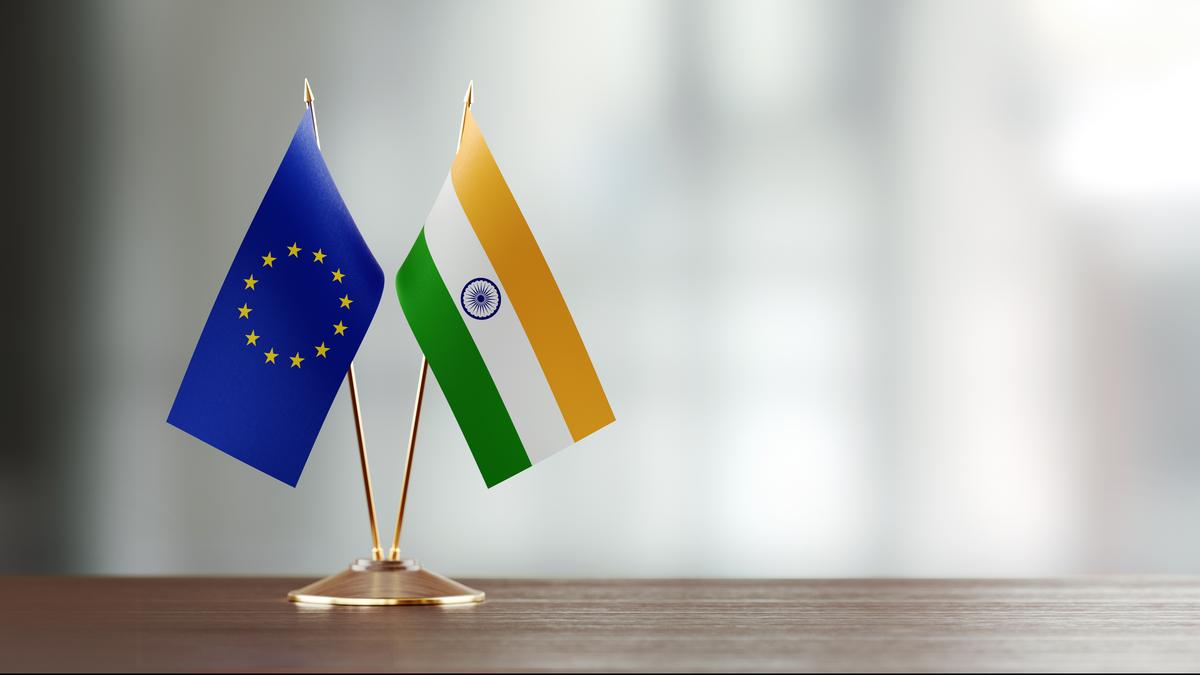
Top EU leaders are anticipated to visit India as guests for the Republic Day celebrations.
GK and monthly revision
Top EU leaders to visit India as Republic Day guests; likely to sign trade deal
Top EU leaders are expected to visit India as Republic Day guests, with a significant EU-India trade deal likely to be signed. Commerce Secretary Rajesh Agrawal confirmed both sides are close to finalizing the deal, specifically noting the exclusion of "sensitive agricultural" items. This development is crucial for competitive exams, highlighting India's international trade relations, economic policy, and diplomatic engagements with major global blocs.
Revision structure
Monthly events and exam calendar context
Static GK and one-liner notes
Quiz and mock-test revision path
Key points
Exam-ready takeaways
A major EU-India trade deal is expected to be signed during the visit.
India's Commerce Secretary, Rajesh Agrawal, confirmed that both sides are very close to finalizing the trade agreement.
The proposed EU-India trade deal will specifically exclude "sensitive agricultural" items from its purview.
The visit and potential deal signify a strengthening of economic and strategic ties between India and the European Union.
Detailed analysis
Full exam-oriented breakdown
The impending visit of top European Union (EU) leaders to India for Republic Day celebrations, coupled with the strong likelihood of signing a significant EU-India trade deal, marks a pivotal moment in India's foreign policy and economic trajectory. This development underscores India's growing stature on the global stage and its strategic efforts to diversify and strengthen economic partnerships. **Background Context and Historical Trajectory:** India and the EU have a long-standing relationship, elevated to a 'Strategic Partnership' in 2004. Trade and economic cooperation have always been central to this partnership. The initial negotiations for a Broad-based Trade and Investment Agreement (BTIA) were launched in 2007, aiming for a comprehensive pact covering goods, services, investment, and intellectual property rights. However, these talks faced significant hurdles and were suspended in 2013 due to persistent disagreements on various issues, including market access for European automobiles, wines and spirits, data security, intellectual property enforcement, and India's demands for greater mobility for its professionals. For nearly a decade, the negotiations remained stalled, despite periodic attempts to revive them. The geopolitical landscape, particularly the growing assertiveness of China and disruptions to global supply chains during the COVID-19 pandemic, provided a renewed impetus. In June 2022, India and the EU officially relaunched negotiations for a Free Trade Agreement (FTA), along with a separate Investment Protection Agreement (IPA) and an Agreement on Geographical Indications (GIs), reflecting a shared commitment to deepen economic engagement. **The Current Momentum and Key Developments:** The current news signals a significant breakthrough in these relaunched negotiations. The anticipated visit of top EU leaders as Republic Day guests elevates the diplomatic significance of the occasion, providing a high-profile platform for the signing of the trade deal. Commerce Secretary Rajesh Agrawal's statement confirming both sides are 'very close' to finalizing the deal is a strong indicator of progress. A crucial aspect highlighted is the exclusion of 'sensitive agricultural items' from the deal's purview. This concession is vital for India, which has a large and politically significant agricultural sector. Protecting domestic farmers from potential adverse impacts of increased imports has historically been a non-negotiable for India in trade negotiations, and this flexibility from the EU side has likely accelerated the agreement. **Key Stakeholders and Their Interests:** 1. **India (Government, Commerce Ministry, various sectors):** India seeks to boost its exports, attract foreign direct investment (FDI), gain access to advanced European technology, and diversify its supply chains away from over-reliance on certain regions. The deal is expected to create jobs and foster economic growth. However, India also needs to protect its domestic industries, especially agriculture and certain manufacturing sectors, from intense competition. 2. **European Union (European Commission, member states, industries):** The EU aims to gain greater access to India's vast and rapidly growing market of 1.4 billion people. India represents a significant opportunity for European businesses in areas like machinery, chemicals, pharmaceuticals, and services. The EU also views India as a crucial strategic partner in the Indo-Pacific region, essential for geopolitical balancing and upholding a rules-based international order. 3. **Indian Farmers/Agricultural Sector:** As a 'sensitive' sector, its interests are paramount. The exclusion of specific agricultural products aims to safeguard the livelihoods of millions of Indian farmers from potential price drops due to cheaper European imports. 4. **Indian Industry (Textiles, Pharmaceuticals, IT, Automotive):** While some sectors like IT and pharmaceuticals stand to gain significantly from reduced tariffs and non-tariff barriers, others, like certain manufacturing segments, may face increased competition. **Significance for India: Economic and Geopolitical Impact:** This potential trade deal holds immense significance for India. Economically, the EU is India's third-largest trading partner, and a comprehensive FTA could significantly boost bilateral trade, which stood at over $120 billion in goods in 2022-23. It could provide Indian goods and services preferential access to one of the world's largest single markets, stimulating exports, fostering innovation, and creating employment opportunities. From a geopolitical perspective, the deal strengthens India's 'multi-alignment' strategy, reducing its economic dependence on any single country or bloc. It aligns with India's broader foreign policy objectives of forging deeper ties with like-minded democracies and enhancing its strategic autonomy. This partnership can also serve as a counterweight in a complex global environment, particularly concerning supply chain resilience and security cooperation. **Constitutional and Policy Framework:** The signing and implementation of such an international trade agreement in India involve several constitutional provisions and policy frameworks. **Article 253** of the Indian Constitution grants Parliament the power to make any law for implementing any treaty, agreement, or convention with any other country or international body. This article would be crucial for the legal enforcement of the trade deal within India. Furthermore, **Article 51**, a Directive Principle of State Policy, mandates the state to endeavor to promote international peace and security, maintain just and honourable relations between nations, foster respect for international law and treaty obligations, and encourage settlement of international disputes by arbitration. These principles guide India's engagement in international agreements. The deal will also interact with India's **Foreign Trade Policy** and its commitments under the **World Trade Organization (WTO)**, ensuring compliance with multilateral trade rules. **Future Implications:** Looking ahead, a successful EU-India trade deal could open doors for deeper collaboration beyond economics, including climate change, digital transformation, security, and research & development. However, challenges remain in effective implementation, managing the impact on domestic industries, and navigating potential non-tariff barriers. The deal would signal a robust commitment from both sides to a rules-based international trading system and a shared vision for a stable and prosperous global order. It positions India as an increasingly attractive destination for global investment and a reliable partner in a multipolar world.
How to study
Turn news into exam marks
Revise monthly events by exam family instead of reading random updates.
Pair one-liners with mock tests so mistakes become the next revision list.
Keep state job pages, calendar pages and GK packs connected in one path.