

The Directorate General of Civil Aviation (DGCA) levied a penalty on IndiGo airline.
GK and monthly revision
DGCA levies ₹20.4 crore penalty on IndiGo for flight disruptions in December
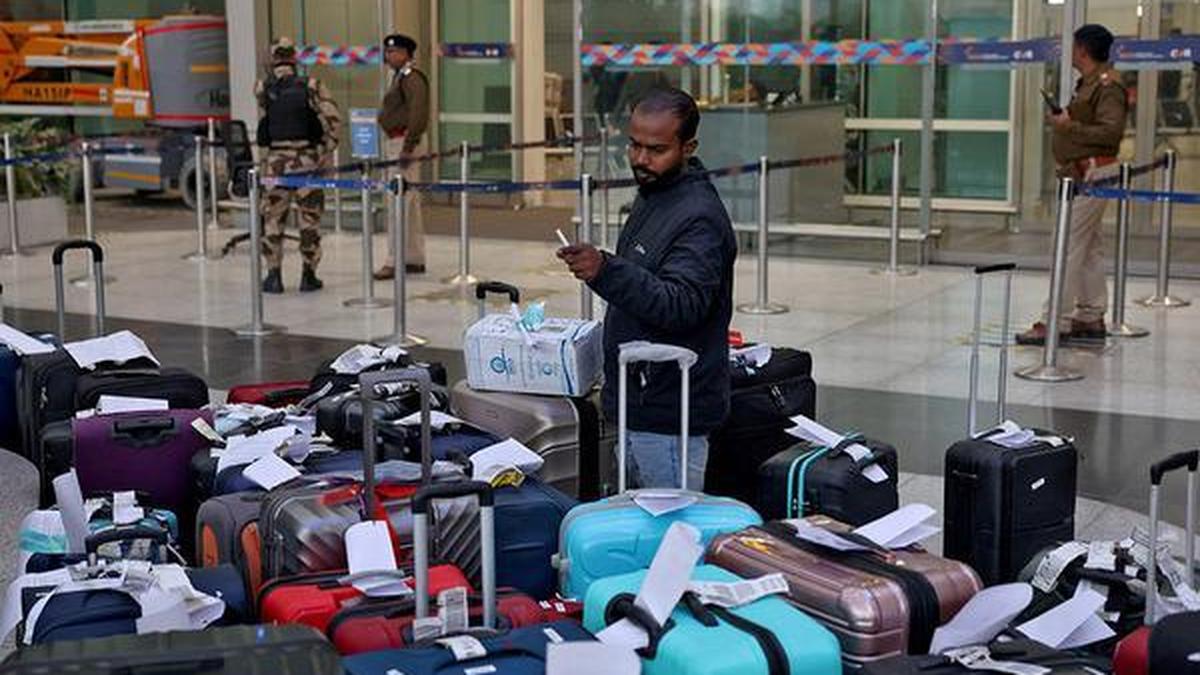
The Directorate General of Civil Aviation (DGCA) has imposed a significant penalty of ₹20.4 crore on IndiGo airline. This action was taken due to widespread flight disruptions experienced by the airline in December, which the DGCA attributed to an excessive focus on maximizing the utilization of crew, aircraft, and network resources. This event is important for competitive exams as it highlights the regulatory oversight function of the DGCA in ensuring operational efficiency and passenger service standards in the Indian aviation sector.
Revision structure
Monthly events and exam calendar context
Static GK and one-liner notes
Quiz and mock-test revision path
Key points
Exam-ready takeaways
The penalty amount imposed on IndiGo is ₹20.4 crore.
The penalty was for widespread flight disruptions that occurred during December.
DGCA's enquiry found IndiGo's "excessive focus on maximising utilisation of crew, aircraft and network resources" as the reason for disruptions.
This action underscores DGCA's role as the primary regulatory body for civil aviation in India.
Detailed analysis
Full exam-oriented breakdown
The Indian aviation sector, a cornerstone of the nation's economic growth and connectivity, has witnessed unprecedented expansion over the last two decades. With this rapid growth comes the critical need for robust regulatory oversight to ensure safety, efficiency, and passenger welfare. The recent penalty of ₹20.4 crore imposed by the Directorate General of Civil Aviation (DGCA) on IndiGo, India's largest airline, for widespread flight disruptions in December, serves as a stark reminder of this regulatory imperative. **Background Context and What Happened:** IndiGo, known for its low-cost carrier model and extensive network, faced significant operational challenges in December, a peak travel season. Passengers experienced numerous delays and cancellations, leading to widespread frustration and complaints. The DGCA, acting on these complaints and its own surveillance, initiated an inquiry. The probe concluded that IndiGo's operational strategy, characterized by an "excessive focus on maximising utilisation of crew, aircraft and network resources," was the root cause of these disruptions. Essentially, the airline was pushing its assets and personnel to their limits without adequate buffers, making the entire system vulnerable to even minor operational glitches like weather changes or unexpected technical issues. This lack of resilience led to a cascading effect of delays and cancellations across its network, severely impacting passenger schedules and convenience. The ₹20.4 crore penalty underscores the DGCA's serious view of this operational lapse and its impact on passenger service standards. **Key Stakeholders Involved:** 1. **Directorate General of Civil Aviation (DGCA):** This is the primary regulatory body for civil aviation in India, operating under the Ministry of Civil Aviation. Its mandate includes ensuring airworthiness standards, regulating air transport services, licensing of personnel, and investigating incidents. The DGCA derives its powers primarily from the Aircraft Act, 1934, and the Aircraft Rules, 1937, along with various Civil Aviation Requirements (CARs) issued periodically. In this instance, DGCA acted as the watchdog, conducting the inquiry and levying the penalty. 2. **IndiGo (InterGlobe Aviation Ltd.):** As India's largest airline by market share, IndiGo is a crucial player in the domestic and international aviation landscape. The penalty directly impacts its financial standing and reputation. The airline's operational strategy, aimed at cost efficiency and high asset utilization, came under scrutiny. 3. **Passengers:** They are the ultimate beneficiaries of a well-regulated aviation sector. The disruptions directly affected their travel plans, leading to financial losses, inconvenience, and stress. DGCA's action is primarily aimed at protecting passenger rights and ensuring reliable service. 4. **Ministry of Civil Aviation:** The parent ministry provides policy direction and oversees the functioning of the DGCA and other bodies like the Airports Authority of India (AAI). 5. **Other Airlines:** This action sets a precedent for the entire industry, signalling that regulatory compliance and passenger service cannot be compromised for commercial gains. **Why This Matters for India:** This incident is significant for India on several fronts. Firstly, it reaffirms the DGCA's role as a robust and independent regulator, crucial for maintaining safety and operational standards in a rapidly expanding sector. India is projected to become the third-largest aviation market by 2024, and effective regulation is paramount for this growth to be sustainable and reliable. Secondly, it highlights the importance of passenger rights and consumer protection in the aviation industry. With millions flying annually, ensuring timely and reliable service is not just about convenience but also about economic productivity and trust in public services. Thirdly, it underscores the delicate balance between commercial objectives (like maximizing utilization for profitability) and operational resilience. Airlines must invest adequately in crew, aircraft maintenance, and contingency planning to absorb shocks without compromising service quality. This incident also has economic implications, as flight disruptions can negatively impact tourism, business travel, and overall economic activity. **Historical Context and Future Implications:** Historically, the Indian aviation sector has seen periods of rapid growth interspersed with challenges, including airline failures (e.g., Kingfisher Airlines, Jet Airways) and operational issues. The DGCA has consistently evolved its regulatory framework, introducing stringent CARs related to flight duty time limitations (FDTL) for crew, maintenance schedules, and passenger compensation during delays/cancellations. This penalty is not an isolated event but part of DGCA's ongoing efforts to enforce these standards. The future implications are significant: IndiGo will likely be compelled to review and adjust its operational strategies, potentially increasing crew strength, aircraft spares, and operational buffers to build greater resilience. This could lead to higher operational costs, which might eventually reflect in ticket prices, or force the airline to find efficiencies elsewhere. For other airlines, it serves as a strong deterrent, encouraging them to prioritize operational robustness over aggressive utilization targets. This action could lead to a broader industry-wide focus on enhancing operational reliability and passenger satisfaction, ultimately benefiting the Indian aviation ecosystem and strengthening passenger confidence. **Related Constitutional Articles, Acts, or Policies:** While there isn't a direct constitutional article, the regulatory powers of the DGCA are derived from parliamentary legislation. Key acts and policies include: * **Aircraft Act, 1934:** The foundational legislation governing the manufacture, possession, use, operation, sale, import, and export of aircraft in India. It empowers the central government to make rules for various aspects of civil aviation. * **Aircraft Rules, 1937:** Detailed rules framed under the Aircraft Act, covering areas like airworthiness, licensing, air transport services, and accident investigation. * **Civil Aviation Requirements (CARs):** These are detailed regulations and guidelines issued by the DGCA on various aspects, including Flight Duty Time Limitations (FDTL) for flight crew, maintenance procedures, and passenger rights (e.g., compensation for denied boarding, cancellation, and delays) under Section 3, Series M, Part IV of CARs. This specific penalty relates directly to the operational efficiency and passenger service standards outlined in these CARs. * **Consumer Protection Act, 2019:** Passengers affected by such disruptions also have avenues for redressal under this Act, which empowers consumers to seek compensation for deficient services.
How to study
Turn news into exam marks
Revise monthly events by exam family instead of reading random updates.
Pair one-liners with mock tests so mistakes become the next revision list.
Keep state job pages, calendar pages and GK packs connected in one path.