

The government aims to formally recognise 1 lakh tribal healers from Scheduled Tribes (STs).
GK and monthly revision
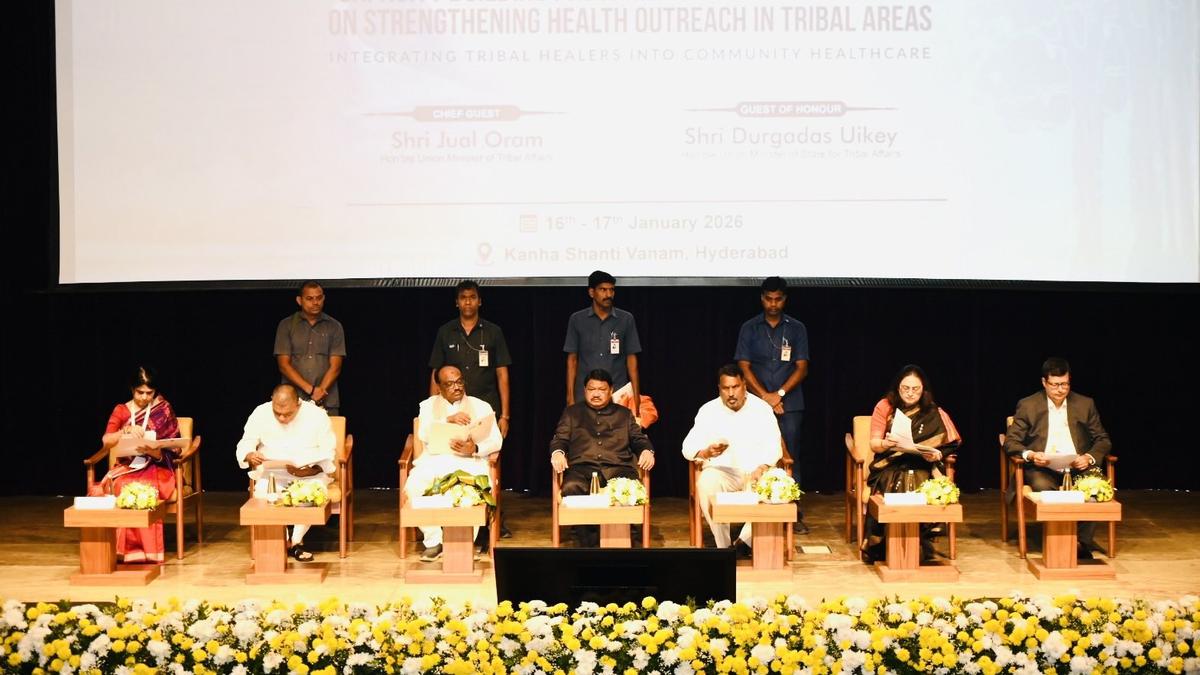
Government aims to ‘formally recognise’ 1 lakh tribal healers from STs as ‘partners in health services’
The Ministry of Tribal Affairs plans to formally recognise 1 lakh tribal healers from Scheduled Tribes as partners in health services, aiming to integrate traditional knowledge. This initiative is supported by an MoU with ICMR–Regional Medical Research Centre, Bhubaneswar, to establish India's first National Tribal Health Observatory, named Bharat Tribal Health Observatory. This move is significant for enhancing tribal healthcare, preserving traditional healing, and generating critical health data for policy formulation, making it relevant for social welfare and health policy questions in competitive exams.
Revision structure
Monthly events and exam calendar context
Static GK and one-liner notes
Quiz and mock-test revision path
Key points
Exam-ready takeaways
The Ministry of Tribal Affairs is leading the initiative to integrate tribal healers into health services.
An MoU was signed between the Ministry of Tribal Affairs and ICMR–Regional Medical Research Centre, Bhubaneswar.
The MoU facilitates the establishment of India's first National Tribal Health Observatory.
The National Tribal Health Observatory will be known as the Bharat Tribal Health Observatory.
Detailed analysis
Full exam-oriented breakdown
India's rich tapestry of cultures includes numerous tribal communities, each with unique traditions, knowledge systems, and healthcare practices. For centuries, these communities have relied on traditional healers—known by various local names such as Vaids, Ojhas, and Gunis—who possess deep knowledge of local flora, fauna, and spiritual healing methods. However, these traditional healers have largely remained outside the formal healthcare system, leading to a disconnect between indigenous healing practices and modern medicine, often leaving tribal populations underserved. The government's recent initiative to formally recognise 1 lakh tribal healers from Scheduled Tribes (STs) as 'partners in health services' marks a significant paradigm shift. This move, spearheaded by the Ministry of Tribal Affairs, aims to integrate these traditional knowledge holders into the mainstream healthcare delivery mechanism. The objective is multi-faceted: to leverage their profound understanding of local ailments and remedies, enhance healthcare access in remote tribal areas where modern medical facilities are scarce, and importantly, to preserve and validate indigenous healing systems that are at risk of being lost. This initiative is not merely about recognition; it's about formalizing a collaboration that respects cultural contexts and improves health outcomes. A pivotal component of this initiative is the establishment of India's first National Tribal Health Observatory, to be known as the Bharat Tribal Health Observatory. This observatory is being set up through a Memorandum of Understanding (MoU) between the Ministry of Tribal Affairs and the ICMR–Regional Medical Research Centre, Bhubaneswar. The observatory's primary role will be to collect, analyse, and disseminate comprehensive health data pertaining to tribal populations. This data-driven approach is crucial for understanding specific health challenges, disease patterns, and the effectiveness of various interventions, including traditional healing practices. By providing robust evidence, the observatory will enable the formulation of targeted, culturally sensitive, and effective health policies for tribal communities. Key stakeholders in this ambitious project include the Ministry of Tribal Affairs, which is the nodal agency driving the policy and implementation; the ICMR–Regional Medical Research Centre, Bhubaneswar, providing the scientific and research expertise for the observatory; and crucially, the tribal communities and their traditional healers, who are both beneficiaries and active participants. The Ministry of Health and Family Welfare is also an implicit stakeholder, as the eventual goal is to integrate these healers into the broader national health framework, potentially complementing existing public health programs like Ayushman Bharat. This initiative holds immense significance for India. Socially, it addresses a long-standing issue of healthcare inequity, ensuring that vulnerable tribal populations receive better and culturally appropriate care. It also fosters social justice by recognizing the invaluable contribution of tribal knowledge systems. Economically, by improving health, it can enhance the productivity and well-being of tribal communities, contributing to inclusive growth. Politically, it reinforces the government's commitment to tribal welfare and inclusive development, aligning with the constitutional mandate to protect and promote the interests of STs. Furthermore, it places India at the forefront of integrating traditional and modern medicine, potentially offering models for other nations grappling with similar challenges. The historical context of tribal healthcare in India reveals a pattern of neglect and a lack of understanding of their unique needs. Post-independence, while various welfare schemes were introduced, the formal healthcare system often struggled to penetrate remote tribal areas due to geographical barriers, language differences, and cultural insensitivity. Traditional healers, despite being the primary healthcare providers for their communities, lacked formal recognition or support. This new initiative seeks to bridge this historical gap by actively involving traditional healers, thereby building trust and making healthcare more accessible and acceptable. It also aligns with the global movement towards recognizing indigenous knowledge and protecting traditional practices, as highlighted by conventions on biodiversity and intellectual property rights. From a constitutional perspective, this initiative aligns directly with Article 46 of the Directive Principles of State Policy (DPSP), which mandates the State to promote with special care the educational and economic interests of the weaker sections of the people, and, in particular, of the Scheduled Castes and the Scheduled Tribes, and to protect them from social injustice and all forms of exploitation. Furthermore, the provisions under Article 244, dealing with the administration of Scheduled Areas and Tribal Areas through the Fifth and Sixth Schedules, underscore the special responsibility of the state towards tribal welfare. The National Health Policy (2017) also emphasizes health equity, universal access, and the integration of AYUSH (Ayurveda, Yoga & Naturopathy, Unani, Siddha and Homoeopathy) systems into national healthcare delivery, which this initiative complements by including a crucial component of traditional tribal medicine. Looking ahead, the future implications are profound. Successful implementation could lead to significantly improved health indicators among tribal populations, reduced infant mortality rates, and better management of chronic and infectious diseases. However, challenges such as standardizing traditional practices, ensuring quality control, providing adequate training and remuneration to healers, and addressing potential ethical dilemmas related to intellectual property of traditional knowledge will need careful navigation. The Bharat Tribal Health Observatory will be critical in providing the necessary data to overcome these challenges and refine policies over time. This initiative could also pave the way for greater research into traditional medicines, potentially leading to new drug discoveries and a deeper understanding of holistic health, positioning India as a leader in integrating diverse medical systems for universal health coverage.
How to study
Turn news into exam marks
Revise monthly events by exam family instead of reading random updates.
Pair one-liners with mock tests so mistakes become the next revision list.
Keep state job pages, calendar pages and GK packs connected in one path.