

Denmark has proposed a NATO surveillance mission specifically for Greenland.
GK and monthly revision
Denmark proposes NATO surveillance mission for Greenland
Denmark has proposed a NATO surveillance mission for Greenland, highlighting the Arctic's increasing strategic importance for collective security. This move signifies growing geopolitical interest in the Arctic region, driven by climate change and resource potential. For competitive exams, this underscores the evolving role of NATO and the strategic significance of Greenland in international relations and geography.
Revision structure
Monthly events and exam calendar context
Static GK and one-liner notes
Quiz and mock-test revision path
Key points
Exam-ready takeaways
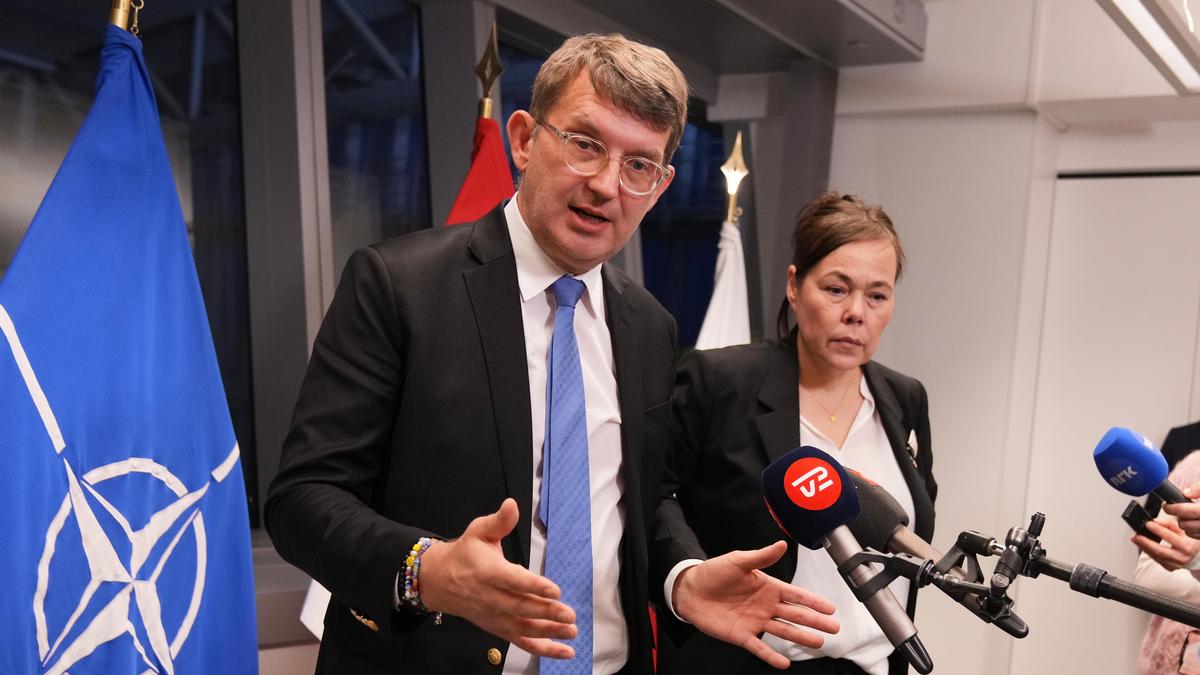
The discussions involved Mr. Rutte, the Dutch Prime Minister, and Danish and Greenlandic officials.
The primary focus of the proposed mission is the Arctic region.
The rationale for the mission is the Arctic's critical importance to collective security.
Greenland is an autonomous territory within the Kingdom of Denmark, strategically located in the Arctic.
Detailed analysis
Full exam-oriented breakdown
The recent proposal by Denmark for a NATO surveillance mission in Greenland marks a significant development in the evolving geopolitics of the Arctic region. This move underscores the increasing strategic importance of the Arctic, driven by a confluence of climate change, resource potential, and renewed great power competition. Understanding this proposal requires delving into its background, key players, and far-reaching implications, particularly for a rising global power like India. The **background context** for this proposal lies in the dramatic transformation of the Arctic. For decades, the region was considered a frozen frontier, largely inaccessible and militarily dormant since the end of the Cold War. However, accelerating climate change has led to the rapid melting of Arctic ice, opening up new shipping routes (like the Northern Sea Route, Transpolar Sea Route) and making vast reserves of natural resources (oil, gas, rare earth minerals) more accessible. This has ignited a scramble for influence, with Arctic nations like Russia, the United States, Canada, Norway, and others asserting their claims and interests. Russia, in particular, has significantly bolstered its military presence along its Arctic coastline, reactivating Cold War-era bases and deploying advanced military hardware, including icebreakers and submarines. This rising militarization and potential for resource exploitation have raised concerns among Western allies, prompting a re-evaluation of their Arctic strategies. **What happened** is that Denmark, a key NATO member and sovereign over Greenland, proposed a NATO surveillance mission for the vast autonomous territory. This proposal was discussed at high levels, including between Dutch Prime Minister Mark Rutte and Danish and Greenlandic officials. The core rationale, as articulated by Mr. Rutte, is the critical importance of the Arctic, including Greenland, to "collective security." This highlights a shift from viewing the Arctic primarily through an environmental or scientific lens to one dominated by security considerations and geopolitical competition. **Key stakeholders** involved include Denmark, the proposing nation, which seeks to enhance security in its territorial domain. Greenland, an autonomous territory within the Kingdom of Denmark, holds a crucial position due to its strategic location and immense resource potential. While largely self-governing, its foreign and security policy remains linked to Copenhagen. NATO, the transatlantic military alliance, is the intended implementer, seeking to project its collective defense capabilities into the Arctic. Other significant stakeholders are the United States, which has long viewed Greenland as strategically vital (even attempting to buy it in 2019), and Russia, whose growing military footprint in the Arctic is a primary driver for NATO's increased attention. Non-Arctic states like China also have vested interests, viewing the Arctic as a potential future trade corridor and source of resources, leading to its self-proclamation as a "near-Arctic state." **Why this matters for India** is multifaceted. While geographically distant, India has significant stakes in the Arctic. India launched its comprehensive 'Arctic Policy' in March 2022, outlining six pillars: scientific research, climate and environmental protection, economic and human development, transportation and connectivity, governance and international cooperation, and national capacity building. India has maintained an observer status in the Arctic Council since 2013 and operates its research station, 'Himadri,' in Svalbard, Norway, since 2008. Increased militarization and geopolitical tensions in the Arctic could disrupt global supply chains, including potential future shipping routes that might benefit India's trade. Furthermore, changes in Arctic ice directly impact global climate patterns, affecting the Indian monsoon and sea levels, which are critical for India's food security and coastal populations. India's commitment to multilateralism and peaceful resolution of disputes, as enshrined in Article 51 of its Constitution (which directs the state to promote international peace and security), means it would prefer a stable, rules-based order in the Arctic rather than an arena of military confrontation. India's energy security and access to critical minerals could also be indirectly affected by developments in the resource-rich Arctic. **Historically**, the Arctic was a key strategic theatre during the Cold War, primarily for submarine operations and as a potential route for intercontinental ballistic missiles. Post-Cold War, the region saw a period of reduced military focus, with cooperation dominating through forums like the Arctic Council, established in 1996. However, Russia's renewed assertiveness, particularly following the 2014 annexation of Crimea and the ongoing war in Ukraine, has revived Cold War anxieties and shifted the focus back to security. Greenland's autonomy within Denmark, granted in 1979 and further expanded in 2009, allows it greater control over its internal affairs and resources, but defense and foreign policy largely remain with Denmark, making its strategic importance a shared concern. The **future implications** are profound. A NATO surveillance mission in Greenland would significantly increase the alliance's presence and intelligence-gathering capabilities in the High North. This could lead to a further militarization spiral, potentially escalating tensions with Russia. It might also strain the cooperative spirit within the Arctic Council, an important forum for addressing common challenges like climate change and sustainable development. The delicate balance between economic exploitation, environmental protection, and strategic interests will become even more precarious. For India, these developments necessitate a careful diplomatic approach, balancing its scientific and economic interests with its commitment to a peaceful and sustainable Arctic, potentially requiring stronger engagement with both Arctic and non-Arctic stakeholders to safeguard its long-term interests and advocate for a rules-based international order under the framework of international laws like the United Nations Convention on the Law of the Sea (UNCLOS).
How to study
Turn news into exam marks
Revise monthly events by exam family instead of reading random updates.
Pair one-liners with mock tests so mistakes become the next revision list.
Keep state job pages, calendar pages and GK packs connected in one path.