

India is currently preparing its Union Budget 2026, signaling future economic policy directions.
GK and monthly revision
Budget 2026 may be another step towards manufacturing 'atmanirbharta' for a power shift
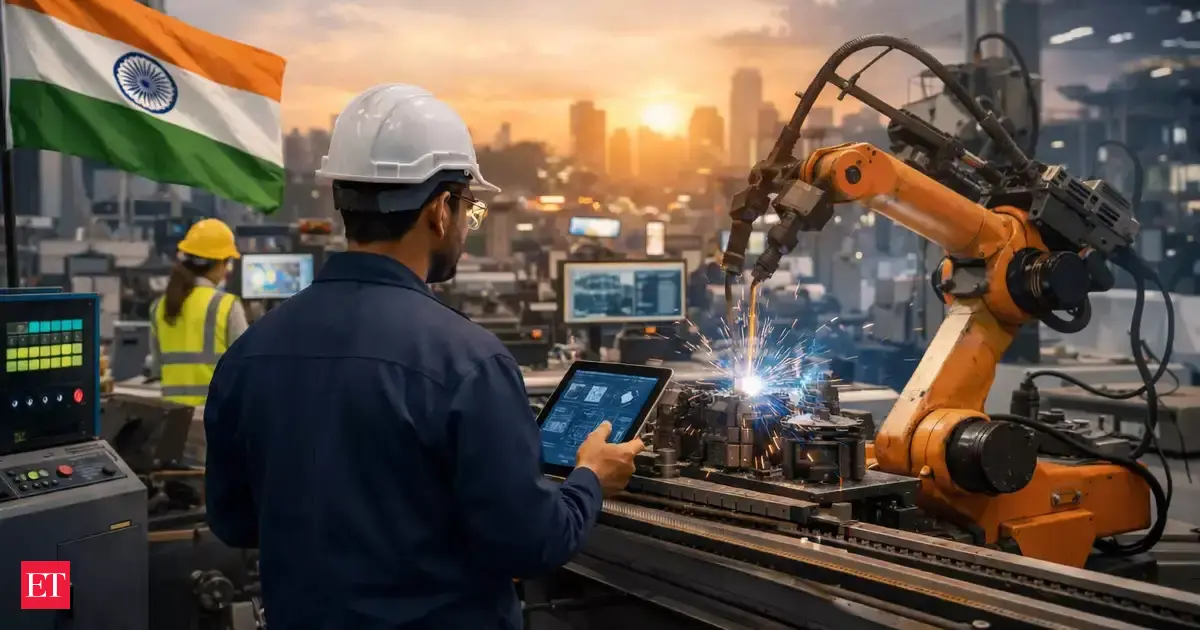
India is preparing its Union Budget 2026, which is anticipated to significantly prioritize the manufacturing sector to foster 'atmanirbharta' and boost its contribution to Gross Value Added (GVA). The budget is expected to address critical challenges like labor reforms, infrastructure development, and ease of doing business initiatives. This strategic focus is crucial as India maintains its position as the fastest-growing major economy amidst global uncertainties, making it highly relevant for competitive exams on economic policy and national development.
Revision structure
Monthly events and exam calendar context
Static GK and one-liner notes
Quiz and mock-test revision path
Key points
Exam-ready takeaways
The upcoming Budget 2026 is expected to prioritize the manufacturing sector to achieve 'atmanirbharta' (self-reliance).
India is recognized as the 'fastest-growing major economy' globally, a key economic indicator.
The budget plans to address challenges such as labor reforms, infrastructure, and accelerating ease of doing business initiatives.
Support for Micro, Small, and Medium Enterprises (MSMEs) facing U.S. tariff headwinds is also a key expectation.
Detailed analysis
Full exam-oriented breakdown
India's Union Budget 2026 is shaping up to be a pivotal moment for the nation's economic trajectory, with a strong emphasis on bolstering the manufacturing sector to achieve 'Atmanirbharta' or self-reliance. This strategic focus comes at a time when India stands out as the fastest-growing major economy globally, navigating an environment of significant international uncertainty. The drive towards manufacturing 'atmanirbharta' is not new, but its urgency has intensified. Historically, India's economic development post-independence saw significant state-led industrialization through policies like the Industrial Policy Resolutions of 1948 and 1956, aiming for self-sufficiency. However, the 1991 economic reforms liberalized the economy, shifting focus towards services. While the services sector has been a robust growth engine, its capacity for large-scale job creation, particularly for semi-skilled and unskilled labor, is limited. The 'Make in India' initiative, launched in 2014, marked a renewed push to make India a global manufacturing hub, aiming to increase manufacturing's share of GDP from 15% to 25% and create 100 million jobs by 2022 (though these targets have been revised). The 'Atmanirbhar Bharat Abhiyan', announced in May 2020 amidst the COVID-19 pandemic, further cemented the vision of a self-reliant India, integrating global supply chains while reducing critical dependencies. The upcoming Budget 2026 is expected to be a significant fiscal instrument in accelerating this vision, building upon the foundations laid by schemes like the Production Linked Incentive (PLI) schemes. The core of the Budget 2026's strategy is to address long-standing impediments to manufacturing growth. This includes comprehensive labor reforms, which are crucial for enhancing ease of doing business and attracting both domestic and foreign investment. The four new labor codes – the Code on Wages 2019, the Industrial Relations Code 2020, the Occupational Safety, Health and Working Conditions Code 2020, and the Code on Social Security 2020 – aim to simplify and rationalize existing labor laws, providing flexibility to industries while protecting workers' rights. Furthermore, significant investments in infrastructure development, such as roads, ports, logistics, and power, are anticipated to reduce manufacturing costs and improve connectivity, aligning with initiatives like the National Infrastructure Pipeline (NIP) and PM Gati Shakti. Enhancing the 'ease of doing business' through further regulatory simplification and digital interventions will be another key thrust, building on India's improved ranking in the World Bank's Ease of Doing Business index prior to its discontinuation. Crucially, the budget is also expected to offer targeted support to Micro, Small, and Medium Enterprises (MSMEs), which are often the backbone of the manufacturing sector but face challenges like access to credit, technology adoption, and international trade headwinds, such as U.S. tariffs. Key stakeholders in this budgetary exercise include the Ministry of Finance, responsible for drafting and implementing the budget; NITI Aayog, which provides strategic policy guidance; various line ministries such as the Ministry of Commerce & Industry, Ministry of MSME, and Ministry of Labour & Employment, who will implement specific schemes; and the Reserve Bank of India, which manages monetary policy complementing fiscal measures. The private sector, encompassing large corporations and MSMEs, is a vital stakeholder as the primary recipient and driver of these policies. International investors and trading partners also play a role, influencing trade policies and foreign direct investment (FDI). This focus on manufacturing holds immense significance for India. Economically, it aims to boost the sector's contribution to Gross Value Added (GVA), create millions of jobs for India's large youth demographic, enhance export competitiveness, reduce reliance on critical imports (e.g., electronics, defense equipment), and build resilient supply chains. Socially, increased manufacturing activity can lead to skill development, urban and rural employment generation, and more balanced regional development. Politically, it strengthens India's strategic autonomy and fulfills the vision of a self-reliant nation capable of meeting its own needs and contributing to global production. From a constitutional perspective, while the budget itself is a financial statement mandated by Article 112, the underlying policies align with the Directive Principles of State Policy (DPSP) in Part IV of the Constitution, particularly Article 39(a) (securing adequate means of livelihood) and Article 43 (securing a living wage and conditions of work ensuring a decent standard of life), by promoting industrial growth and employment. The future implications are substantial. A successful push could solidify India's position as a global manufacturing hub, attracting greater FDI, fostering technological innovation, and integrating India more deeply into global value chains. It could also lead to a 'power shift' in the global economic landscape, with India emerging as a reliable alternative to existing manufacturing powerhouses. However, challenges remain, including ensuring environmental sustainability, bridging skill gaps through robust vocational training, navigating global trade protectionism, and ensuring equitable distribution of growth benefits. The Budget 2026, therefore, is not just an annual financial exercise but a blueprint for India's sustained economic growth and its aspirations for a prominent role in the 21st-century global economy.
How to study
Turn news into exam marks
Revise monthly events by exam family instead of reading random updates.
Pair one-liners with mock tests so mistakes become the next revision list.
Keep state job pages, calendar pages and GK packs connected in one path.