

Gold prices surged to near Rs 1.50 lakh.
GK and monthly revision
Gold prices near Rs 1.50 lakh, silver up Rs 7,900 as Greenland concerns drive rally. Too late to buy?
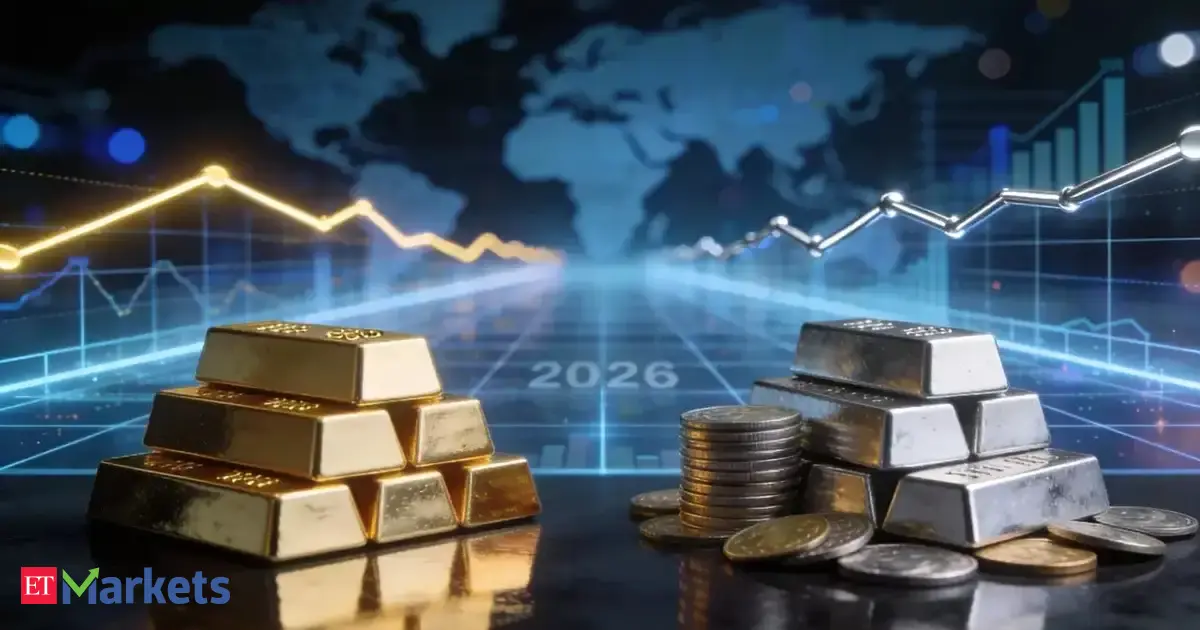
Gold and silver prices surged to record highs on Tuesday, with gold nearing Rs 1.50 lakh and silver up Rs 7,900. This rally was primarily driven by renewed trade war concerns following US President Donald Trump's tariff threats related to Greenland, prompting investors to seek safe-haven assets. This event is crucial for understanding global economic indicators, commodity markets, and the impact of geopolitical events on financial stability for competitive exams.
Revision structure
Monthly events and exam calendar context
Static GK and one-liner notes
Quiz and mock-test revision path
Key points
Exam-ready takeaways
Silver prices increased by Rs 7,900.
The surge in gold and silver prices occurred on Tuesday.
The rally was driven by US President Donald Trump's tariff threats.
The tariff threats were specifically linked to Greenland, prompting investors to seek safe-haven assets.
Detailed analysis
Full exam-oriented breakdown
The surge in gold and silver prices to record highs, as reported, driven by geopolitical concerns related to Greenland and US tariff threats, offers a compelling case study for understanding the intricate links between geopolitics, global economics, and commodity markets. For competitive exam aspirants, this event provides a rich tapestry of concepts from international relations, macroeconomics, and financial markets. **Background Context and What Happened:** Historically, gold has been revered as a 'safe-haven' asset, a store of value that investors flock to during times of economic uncertainty, political instability, or market volatility. Silver often follows gold's trajectory due to its dual role as both a precious metal and an industrial commodity. The backdrop to this particular surge was the ongoing global trade tensions, primarily the US-China trade war, which had already created an environment of heightened caution among investors. Against this existing climate, US President Donald Trump's unexpected interest in purchasing Greenland from Denmark, and subsequent hints of tariff threats if the deal didn't materialize, added a fresh layer of geopolitical uncertainty. While seemingly an unusual trigger, this specific event signaled a further escalation of protectionist rhetoric and a willingness to use economic leverage in diplomatic disputes. This prompted a swift reaction in financial markets, with investors divesting from riskier assets like equities and moving into traditional safe havens, causing gold prices to near Rs 1.50 lakh and silver to surge by Rs 7,900. **Key Stakeholders Involved:** Several key stakeholders play crucial roles in such events. Firstly, the **US Administration** (represented by President Trump) initiated the geopolitical tension with its unconventional approach to Greenland. Secondly, **Denmark** (which governs Greenland) and **Greenland itself** became central to the diplomatic dispute, albeit indirectly impacting commodity prices. Thirdly, **Global Investors**, including institutional funds, hedge funds, and individual investors, are the primary drivers of safe-haven demand, reacting to perceived risks. Fourthly, **Central Banks** worldwide, especially the US Federal Reserve, European Central Bank, and the Reserve Bank of India, are significant holders of gold reserves and their monetary policy decisions (e.g., interest rate changes, quantitative easing) heavily influence market sentiment and gold prices. Finally, **Commodity Traders and Speculators** on exchanges like COMEX (for global prices) and MCX (Multi Commodity Exchange of India) amplify price movements, reacting to news and economic indicators. **Why This Matters for India:** For India, a major consumer and importer of gold, such price surges have significant economic implications. India's deep cultural affinity for gold means it is a significant component of household savings and a major import item. Higher international gold prices lead to a larger **Current Account Deficit (CAD)**, as India has to spend more foreign exchange to import the same quantity of gold. This puts pressure on the Indian Rupee, potentially leading to its depreciation, which in turn makes other imports more expensive and can fuel **inflation**. The **Reserve Bank of India (RBI)**, mandated with maintaining price stability (as per the RBI Act, 1934), must closely monitor these developments, as they can complicate monetary policy decisions. The **Ministry of Finance** also plays a role through its fiscal policies, including import duties on gold, which can be adjusted to manage demand and curb imports. Moreover, the surge impacts millions of Indian households, affecting their investment decisions and wealth management strategies. Gold's role as a traditional hedge against inflation makes its price movements a critical indicator for the common citizen. **Historical Context and Future Implications:** Gold's role as a safe haven dates back centuries, solidified through various economic crises, wars, and periods of hyperinflation. From the Gold Standard era to its current status as a reserve asset for central banks post-Bretton Woods, its intrinsic value and limited supply have made it a reliable store of wealth. This recent rally is a continuation of this historical trend, reinforced by modern global interconnectedness. Looking ahead, the future implications are multi-faceted. Persistent global trade tensions, geopolitical instability (e.g., conflicts, unconventional diplomacy), and uncertainties surrounding global economic growth will likely ensure continued volatility in commodity markets, particularly for gold and silver. Central banks might continue to accumulate gold as part of their diversification strategies, further supporting prices. For India, proactive management of its external sector, diversification of energy sources, and promotion of domestic manufacturing to reduce non-essential imports become even more critical to mitigate the impact of such global shocks. The government's **Foreign Trade Policy** and various initiatives like 'Make in India' are crucial in this context. While specific constitutional articles directly governing commodity prices are rare, the broader mandate for economic justice and welfare enshrined in the **Directive Principles of State Policy (Articles 38 and 39)** guides the government's overall economic policy framework to ensure stability and protect citizens from adverse economic impacts. The **Union Budget** also outlines specific measures and duties related to gold imports, reflecting the government's efforts to manage its economic impact.
How to study
Turn news into exam marks
Revise monthly events by exam family instead of reading random updates.
Pair one-liners with mock tests so mistakes become the next revision list.
Keep state job pages, calendar pages and GK packs connected in one path.