

The incident occurred in the Tamil Nadu (T.N.) Assembly.
GK and monthly revision
T.N. Assembly: Total breakdown of law and order under DMK’s rule, alleges Palaniswami
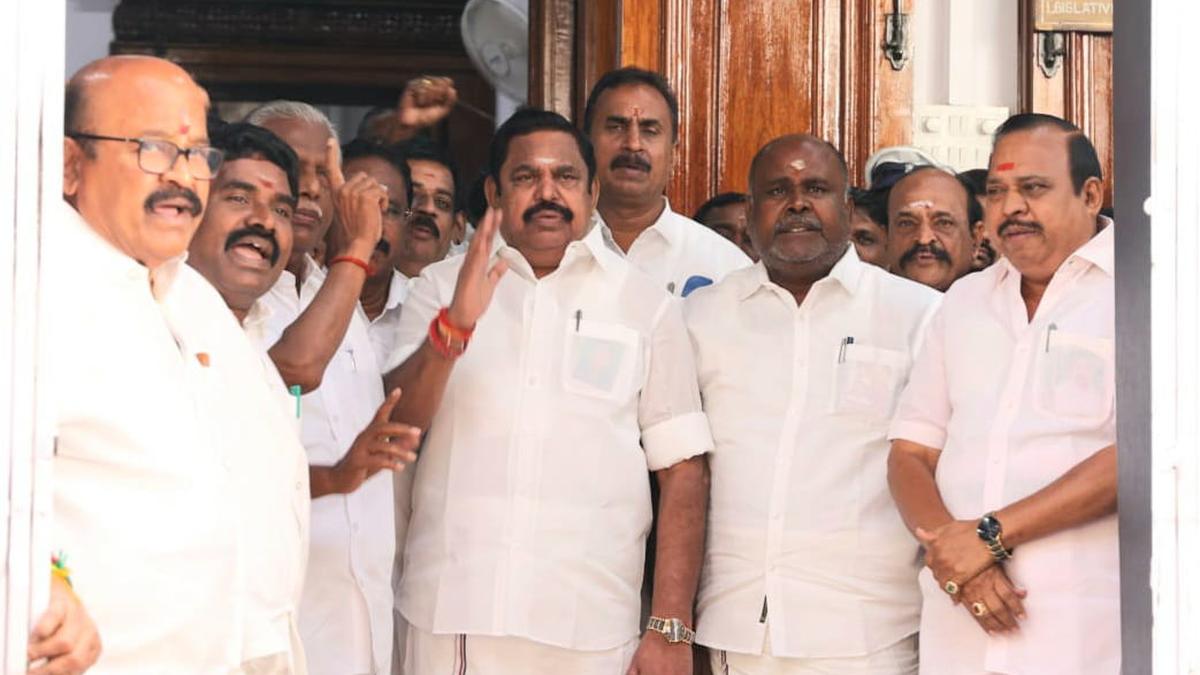
AIADMK leader Palaniswami alleged a total breakdown of law and order under DMK rule in the Tamil Nadu Assembly. More significantly for exams, he highlighted a violation of established convention during the Governor's address, where the Chief Minister reportedly made remarks that went on record alongside the Governor's speech. This incident is crucial for understanding the constitutional roles of Governor and Chief Minister, legislative procedures, and parliamentary conventions in state assemblies, making it relevant for polity sections of competitive exams.
Revision structure
Monthly events and exam calendar context
Static GK and one-liner notes
Quiz and mock-test revision path
Key points
Exam-ready takeaways
AIADMK leader Edappadi K. Palaniswami raised the allegations.
The core issue involved the Chief Minister's remarks during the Governor's address.
Palaniswami alleged this action violated "established convention" of legislative proceedings.
The context included a walkout by the Governor from the Assembly.
Detailed analysis
Full exam-oriented breakdown
The recent incident in the Tamil Nadu Assembly, where the AIADMK leader Edappadi K. Palaniswami alleged a breakdown of law and order and, more specifically, a violation of legislative convention during the Governor's address, offers a crucial lens through which to understand the intricate dynamics of India's federal structure and parliamentary democracy. This event, culminating in the Governor's walkout and the Chief Minister's alleged remarks going on record during what should be solely the Governor's address, highlights persistent points of friction between elected state governments and the office of the Governor. **Background Context and What Happened:** Under the Indian Constitution, specifically Article 176, the Governor of a state addresses the Legislative Assembly at the commencement of the first session after each general election and at the commencement of the first session of each year. This address is prepared by the Council of Ministers and outlines the government's policies, programs, and legislative agenda for the upcoming year. By established parliamentary convention, the Governor reads this address, and while members may interject or protest, the official record typically only reflects the Governor's speech. The controversy in the Tamil Nadu Assembly arose when, according to AIADMK leader Palaniswami, the Chief Minister made remarks that were recorded alongside the Governor's speech, leading to a perceived breach of this convention. The situation escalated to the point where the Governor reportedly walked out of the Assembly, signaling a deep disagreement with the proceedings. **Key Stakeholders Involved:** 1. **The Governor:** As the constitutional head of the state (Article 153) and a representative of the Union government, the Governor plays a pivotal role in the state's legislative and executive functions. Their address to the Assembly is a constitutional obligation and a formal exposition of the government's policy. The Governor's walkout signifies a strong protest against what was perceived as an unconstitutional or unconventional act. 2. **The Chief Minister and the Ruling DMK Government:** The Chief Minister is the elected head of the state government, leading the Council of Ministers (Article 163). While responsible for the address's content, the manner of its presentation and the adherence to legislative conventions fall within the collective responsibility of the government and the Speaker. The Chief Minister's alleged remarks going on record indicate a potential assertion of the elected government's authority, possibly challenging the conventional role of the Governor. 3. **AIADMK (Opposition):** As the principal opposition party, AIADMK's role is to scrutinize the government's actions and highlight any perceived constitutional or procedural irregularities. Palaniswami's allegations serve to hold the ruling party accountable and draw public and constitutional attention to the incident. 4. **The Speaker of the Assembly:** The Speaker is the ultimate arbiter of parliamentary decorum and procedures within the Assembly (Article 178). Their role in maintaining order and ensuring adherence to established conventions and rules is crucial. The Speaker's handling of the situation, particularly concerning what goes on record, is central to the controversy. **Why This Matters for India and Historical Context:** This incident is not an isolated event but rather a recurring theme in India's federal polity. The office of the Governor has historically been a flashpoint in Centre-State relations, often viewed by state governments as an agent of the central government rather than a neutral constitutional head. Commissions like the Sarkaria Commission (1983) and the Punchhi Commission (2007) have extensively studied the Governor's role, recommending reforms to ensure their independence and prevent misuse of the office. Past instances include controversies over the appointment/dismissal of Chief Ministers, assent to bills, and imposition of President's Rule (Article 356). The present event underscores the ongoing tension between the constitutional mandate of the Governor and the democratic mandate of the elected state government. It brings to the forefront the delicate balance between written constitutional provisions and unwritten parliamentary conventions, both vital for the smooth functioning of democracy. **Future Implications:** Such incidents can have several future implications. Firstly, they can further strain Centre-State relations, especially when the ruling party at the Centre differs from that in the state. Secondly, they erode parliamentary decorum and the sanctity of legislative procedures, setting potentially problematic precedents. Thirdly, they fuel debates about the need for clearer guidelines regarding the Governor's role, particularly in addressing the legislature and handling disagreements with the Council of Ministers. The incident might also prompt calls for a re-evaluation of the powers and limitations of both the Governor and the Chief Minister during legislative sessions, aiming to strengthen constitutional morality and democratic traditions. Ultimately, maintaining the dignity of constitutional offices and adhering to established conventions is paramount for the robust health of India's democratic institutions.
How to study
Turn news into exam marks
Revise monthly events by exam family instead of reading random updates.
Pair one-liners with mock tests so mistakes become the next revision list.
Keep state job pages, calendar pages and GK packs connected in one path.