

Iranian state TV issued the first official death toll from recent protests.
GK and monthly revision
Iranian state TV issues first official death toll from recent protests, saying 3,117 were killed
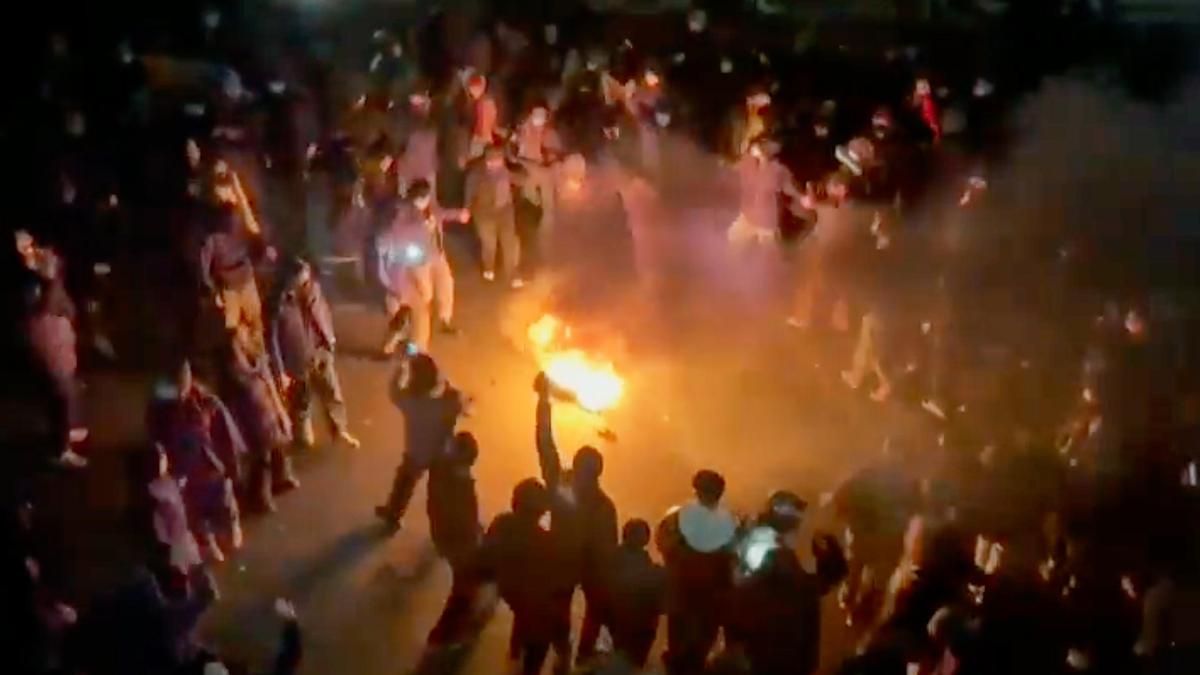
Iranian state TV has issued its first official death toll from recent protests, reporting 3,117 fatalities. This significant admission highlights the severity of the government's crackdown and its international implications. The incident led to Foreign Minister Abbas Araghchi's invitation to the World Economic Forum in Davos being rescinded, underscoring global concern and making it relevant for understanding international relations and human rights issues for competitive exams.
Revision structure
Monthly events and exam calendar context
Static GK and one-liner notes
Quiz and mock-test revision path
Key points
Exam-ready takeaways
The official death toll reported from the recent protests in Iran is 3,117.
Iran's Foreign Minister, Abbas Araghchi, had his invitation to the World Economic Forum rescinded.
The World Economic Forum event where Abbas Araghchi's invitation was rescinded is held in Davos.
A U.S. aircraft carrier group was observed moving west toward the Middle East from Asia concurrently.
Detailed analysis
Full exam-oriented breakdown
The reported death toll of 3,117 from recent protests in Iran, as admitted by Iranian state TV, marks a grim and significant moment in the country's recent history. This unprecedented official acknowledgement sheds light on the scale and severity of the government's crackdown on dissent, a pattern that has unfortunately recurred in Iran over the past decades. The immediate international repercussions, such as the rescinding of Foreign Minister Abbas Araghchi's invitation to the World Economic Forum in Davos, underscore the global condemnation and concern over human rights violations. **Background Context and What Happened:** The protests in Iran typically stem from a confluence of factors including economic hardship, high unemployment, rampant corruption, and restrictions on social and political freedoms. While the specific trigger for the protests mentioned in the article isn't detailed, previous major waves of unrest, such as the 2019 fuel price protests or the 2022 Mahsa Amini protests, have seen widespread participation and brutal state responses. These demonstrations often begin with specific grievances but quickly escalate into broader demands for political change and an end to the current system. The Iranian government, a theocratic regime, has consistently used its security apparatus, including the Islamic Revolutionary Guard Corps (IRGC) and Basij militia, to quell dissent with force. The admission of 3,117 fatalities suggests an extremely violent suppression, likely involving live ammunition, arbitrary arrests, and torture, leading to a death toll that is among the highest for a single protest wave in recent Iranian history. **Key Stakeholders Involved:** At the forefront are the **Iranian Government** (led by the Supreme Leader Ali Khamenei and the President, along with the powerful IRGC), whose primary interest is maintaining its grip on power and suppressing any challenge to its authority. They employ state media to control narratives and security forces to enforce order. The **Iranian Protesters** comprise a diverse cross-section of society – students, women, workers, and ethnic minorities – who are driven by a desire for economic betterment, greater freedoms, and political reform. Internationally, **Western nations** (like the USA and EU), **human rights organizations** (e.g., Amnesty International, Human Rights Watch), and multilateral bodies like the **United Nations** and the **World Economic Forum (WEF)** are key stakeholders. Their interests lie in upholding human rights, promoting regional stability, and, in the case of Western powers, leveraging sanctions and diplomatic pressure to influence Iran's behavior. The mention of a **U.S. aircraft carrier group** moving towards the Middle East signals the ongoing strategic interest and military presence of the United States in the region, often viewed as a deterrent or a show of force amidst regional tensions. **Why This Matters for India:** India's relationship with Iran is complex, balancing strategic interests with geopolitical realities. The instability in Iran and the international condemnation have several implications for India: 1. **Energy Security:** Iran has historically been a significant oil supplier to India. While U.S. sanctions have reduced India's reliance on Iranian oil, regional instability can impact global oil prices and supply chains, directly affecting India's energy security and import bill. India needs stable energy sources to fuel its growing economy. 2. **Chabahar Port:** India's strategic investment in the Chabahar Port is crucial for connectivity to Afghanistan and Central Asia, bypassing Pakistan. Political instability or further international isolation of Iran could jeopardize the project's progress and its effectiveness as a trade and transit corridor for India, impacting its 'Connect Central Asia' policy. 3. **Geopolitical Balancing Act:** India navigates a delicate balance between its historical ties and strategic partnership with Iran and its growing strategic alignment with Western powers, particularly the U.S. Human rights concerns and sanctions against Iran complicate this balance, requiring astute diplomacy from New Delhi. 4. **Indian Diaspora:** The safety and well-being of the Indian diaspora residing in Iran are always a concern during periods of unrest. **Historical Context and Future Implications:** Iran has a history of significant protests, including the 2009 Green Movement, the 2017-18 economic protests, and the 2019 fuel protests, each met with varying degrees of state repression. This pattern indicates deep-seated grievances within Iranian society that the government has failed to address effectively. The future implications are multi-faceted. Domestically, the severe crackdown is likely to further deepen public resentment, potentially leading to future, more organized, and perhaps more violent, protests. Internationally, the admission of such a high death toll will likely intensify calls for accountability, potentially leading to further sanctions and diplomatic isolation for Iran. This could impact the already fragile negotiations surrounding the Joint Comprehensive Plan of Action (JCPOA) or the Iran nuclear deal. For India, the instability could mean continued uncertainty regarding the Chabahar Port project and the need to constantly recalibrate its foreign policy to protect its energy and strategic interests while upholding international norms. **Related Constitutional Articles, Acts, or Policies:** While no direct Indian constitutional articles govern Iran's internal affairs, India's foreign policy is guided by principles enshrined in its Constitution. **Article 51** of the Indian Constitution, a Directive Principle of State Policy, mandates the state to 'endeavour to promote international peace and security; maintain just and honourable relations between nations; foster respect for international law and treaty obligations; and encourage settlement of international disputes by arbitration.' While India generally adheres to a policy of non-interference in the internal affairs of other sovereign nations, its foreign policy also reflects a commitment to human rights and international law, often expressed through multilateral forums. Policies like India's **'Act East'** and **'Connect Central Asia'** initiatives are directly linked to the success of projects like Chabahar Port, making stability in Iran critical for India's regional connectivity goals. India's energy security policies, aiming for diversification of crude oil sources, also play a significant role in its engagement with countries like Iran.
How to study
Turn news into exam marks
Revise monthly events by exam family instead of reading random updates.
Pair one-liners with mock tests so mistakes become the next revision list.
Keep state job pages, calendar pages and GK packs connected in one path.