

Sambhal Chief Judicial Magistrate (CJM) Vibhanshu Sudheer was transferred.
GK and monthly revision
Opposition slams transfer of magistrate who ordered FIR against cops in Sambhal violence case
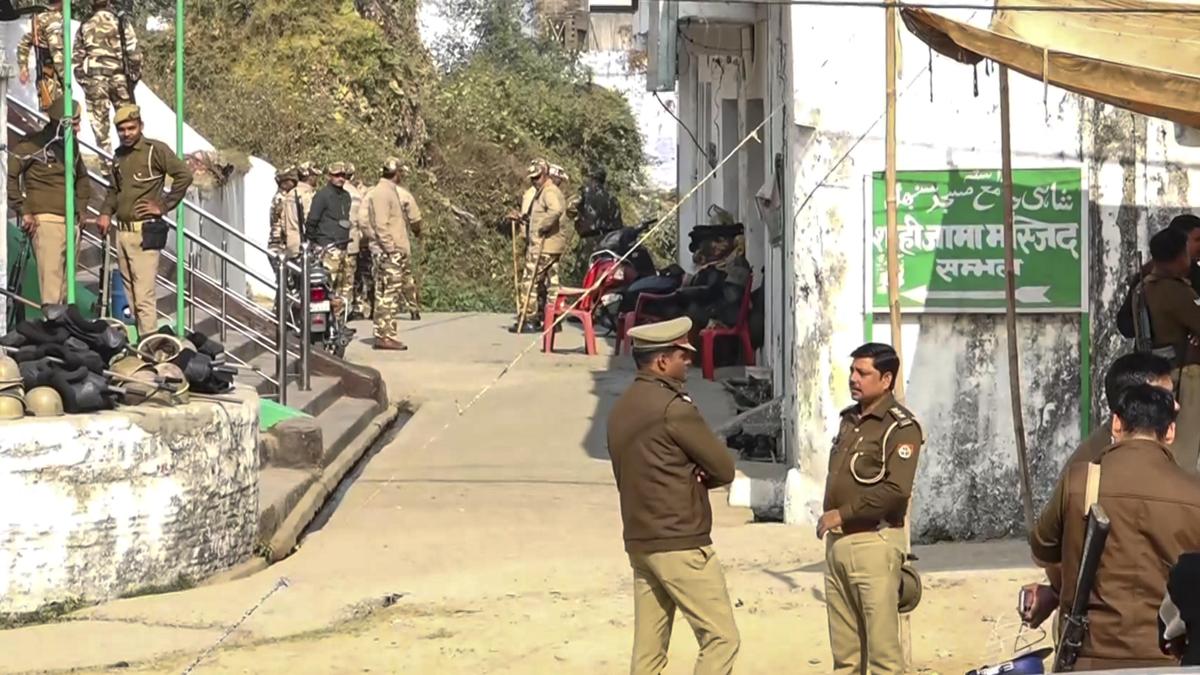
Sambhal Chief Judicial Magistrate (CJM) Vibhanshu Sudheer was transferred to Sultanpur as Civil Judge (Senior Division) just days after he directed an FIR against police officers in a violence case. This move has drawn criticism from the Congress party, terming it "politically motivated," and from lawyers who argue it undermines judicial independence. The incident highlights concerns regarding the autonomy of the lower judiciary and its potential impact on governance and the rule of law, making it relevant for discussions on judicial independence and administrative transfers.
Revision structure
Monthly events and exam calendar context
Static GK and one-liner notes
Quiz and mock-test revision path
Key points
Exam-ready takeaways
The transfer moved him to Sultanpur as Civil Judge (Senior Division).
The transfer occurred days after he ordered an FIR against police officers in a Sambhal violence case.
The Congress party criticized the transfer as "politically motivated."
Lawyers stated the transfer undermines "judicial independence."
Detailed analysis
Full exam-oriented breakdown
The recent transfer of Sambhal Chief Judicial Magistrate (CJM) Vibhanshu Sudheer to Sultanpur as Civil Judge (Senior Division) just days after he ordered an FIR against police officers in a local violence case has ignited a significant debate about judicial independence in India. This incident, while seemingly a routine administrative transfer, has been sharply criticized by political parties like the Congress and various legal experts, who view it as potentially punitive and politically motivated, thereby undermining the autonomy of the lower judiciary. To truly grasp the significance, let's delve into the background. The incident stems from a violence case in Sambhal where certain police officers were allegedly involved or negligent, prompting the CJM to exercise his judicial power to direct the registration of a First Information Report (FIR) against them. This is a crucial function of the judiciary, ensuring that law enforcement agencies are held accountable for their actions and that justice is accessible to all, including those aggrieved by state actors. The CJM, as the head of the criminal court in the district, holds significant power to oversee police investigations and ensure adherence to legal procedures. His order to register an FIR was a direct exercise of this authority, aimed at initiating a formal investigation into the conduct of police personnel. The swiftness of the transfer – occurring merely days after the controversial order – is what has raised eyebrows. While judicial transfers are a routine administrative exercise, their timing and perceived motivation often come under scrutiny, particularly when they follow a decision that challenges powerful entities. The transfer of a judicial officer from a Chief Judicial Magistrate post, which carries significant administrative and judicial responsibilities, to a Civil Judge (Senior Division) role, while not necessarily a demotion in terms of rank, can be perceived as an unfavorable lateral move, especially if it disrupts ongoing judicial proceedings or is seen as a reaction to a specific judgment. Key stakeholders in this episode include CJM Vibhanshu Sudheer himself, whose judicial integrity and independence are at the heart of the matter. The police officers against whom the FIR was ordered are also central, representing the executive arm of the state whose actions were questioned. The High Court, typically responsible for the administrative control and transfers of subordinate judiciary under **Article 235 of the Constitution**, is another critical stakeholder. This article vests in the High Court the control over district courts and courts subordinate thereto, including matters of posting, promotion, and grant of leave. Political parties, like the Congress, become stakeholders by voicing concerns, framing the issue as a challenge to democratic principles and accusing the government of interference. Finally, the legal fraternity plays a vital role by advocating for judicial independence and expressing apprehension about the potential chilling effect on other judicial officers. This incident matters immensely for India because it directly impacts the bedrock principle of judicial independence. A free and fearless judiciary is indispensable for maintaining the rule of law, protecting fundamental rights, and ensuring checks and balances in a democracy. If judicial officers perceive that their decisions, especially those against powerful state functionaries, can lead to punitive transfers, it could foster an environment of fear and compromise their ability to deliver justice impartially. This erodes public trust in the judiciary, which is the last resort for citizens seeking justice. It also affects the accountability of law enforcement, as a judiciary hesitant to question police actions can lead to impunity and a breakdown of democratic governance. Historically, concerns about judicial transfers, particularly of High Court judges, have been debated extensively, leading to the evolution of the Collegium system. While this case involves the subordinate judiciary, the underlying principle remains the same: safeguarding the judiciary from executive influence. The Supreme Court has, in various judgments, emphasized the importance of insulating the judiciary from external pressures to ensure its independence. While Article 235 grants the High Court administrative control, this power must be exercised judiciously and not in a manner that undermines the independence of individual judges or the judiciary as a whole. The broader theme here is the delicate balance of powers – the executive, legislature, and judiciary – and the need for each to operate without undue interference from the others, as envisioned by the Constitution. The future implications of such incidents are significant. If such transfers become a pattern, it could create a 'chilling effect' on the lower judiciary, making judges reluctant to pass orders that might displease the executive or other powerful entities. This would severely undermine the constitutional mandate of the judiciary. It also highlights the need for greater transparency and clear, objective policies regarding judicial transfers, especially for the subordinate judiciary. While administrative exigencies are often cited, the perception of political motivation can cause irreparable damage to institutional credibility. Upholding judicial independence requires not just constitutional provisions but also the robust commitment of all arms of the state to respect and protect the judiciary's autonomy, ensuring that justice is dispensed without fear or favor.
How to study
Turn news into exam marks
Revise monthly events by exam family instead of reading random updates.
Pair one-liners with mock tests so mistakes become the next revision list.
Keep state job pages, calendar pages and GK packs connected in one path.