

The Indian Rupee (INR) depreciated to an all-time low of 91.28 against the US Dollar (USD).
GK and monthly revision
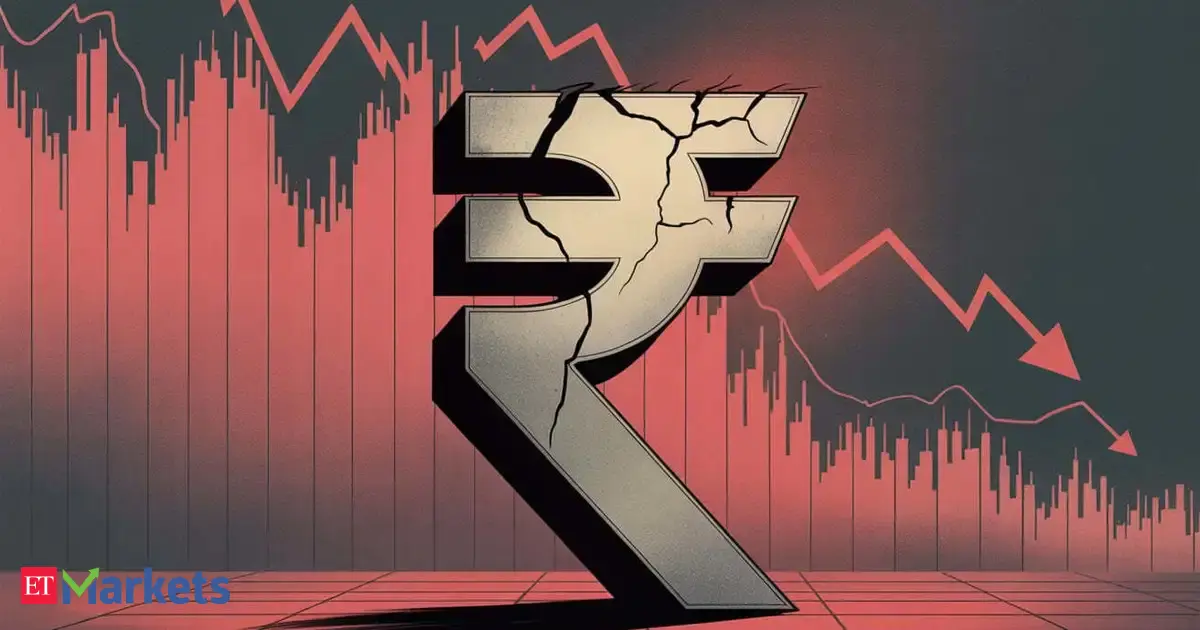
Rupee slips to record low of 91.28 as Greenland dispute stokes risk aversion
The Indian Rupee depreciated to an all-time low of 91.28 against the US Dollar on Wednesday, primarily due to strong dollar demand, global economic uncertainties, and foreign capital outflow. This event is crucial for understanding India's macroeconomic stability, import costs, and the Reserve Bank of India's monetary policy interventions. It highlights the interplay of global and domestic factors on currency valuation for competitive exams.
Revision structure
Monthly events and exam calendar context
Static GK and one-liner notes
Quiz and mock-test revision path
Key points
Exam-ready takeaways
This record low occurred on a Wednesday, driven by global economic jitters and strong dollar demand.
Key factors contributing to the fall include geopolitical uncertainties and foreign capital outflow from the domestic stock market.
Experts suggest further depreciation is possible without intervention from the Reserve Bank of India (RBI).
A weaker rupee impacts India's import bill, potentially leading to higher inflation and affecting trade balance.
Detailed analysis
Full exam-oriented breakdown
The recent depreciation of the Indian Rupee (INR) to a record low of 91.28 against the US Dollar (USD) is a critical economic event that competitive exam aspirants must thoroughly understand. This movement is not an isolated incident but a complex interplay of global and domestic economic forces, highlighting India's interconnectedness with the world economy. **Background Context and What Happened:** Currency valuation is fundamentally governed by demand and supply dynamics. When demand for a currency (like the USD) is high relative to another (like the INR), the former appreciates, and the latter depreciates. The rupee's slide to 91.28 on a Wednesday was primarily driven by a 'strong dollar demand' globally. The US dollar often acts as a safe-haven asset during times of uncertainty, attracting investments as global investors seek stability. This flight to safety is exacerbated by 'global economic jitters' – concerns over a potential global recession, high inflation in major economies, and the aggressive monetary tightening by central banks like the US Federal Reserve, which makes dollar-denominated assets more attractive. Furthermore, 'geopolitical uncertainties' (such as ongoing conflicts or trade disputes) contribute to risk aversion, leading investors to pull capital from emerging markets like India. A significant factor was also 'foreign capital outflow' from the domestic stock market, as Foreign Institutional Investors (FIIs) sold their holdings in Indian equities and debt, converting rupees to dollars to repatriate funds, thus increasing demand for the dollar and supply of the rupee. **Key Stakeholders Involved:** Several entities are directly impacted by or play a role in currency fluctuations: 1. **Reserve Bank of India (RBI):** As the central bank, the RBI is the primary custodian of India's monetary policy and foreign exchange reserves. Its role is crucial in maintaining financial stability, managing inflation, and intervening in the forex market to curb excessive volatility. The article explicitly mentions that 'experts suggest the rupee could slide further unless the RBI intervenes,' underscoring its pivotal role. 2. **Ministry of Finance/Government of India:** The government's fiscal policies, trade policies, and efforts to attract Foreign Direct Investment (FDI) indirectly influence currency stability. A stable government and sound economic policies instill confidence in investors. 3. **Exporters:** A weaker rupee generally benefits exporters, as they receive more rupees for every dollar earned from their foreign sales, making Indian goods and services more competitive in international markets. 4. **Importers:** Conversely, a weaker rupee is detrimental to importers. They have to pay more rupees to purchase the same amount of foreign currency (dollars) to pay for imported goods (like crude oil, electronics, capital goods), increasing their costs. 5. **Foreign Institutional Investors (FIIs) and Domestic Investors:** Their investment decisions significantly impact capital flows. FII outflows, as seen in this instance, directly pressure the rupee. Domestic investors and businesses also react to currency movements in their investment and hedging strategies. 6. **Domestic Consumers:** Ultimately, consumers bear the brunt of imported inflation. If essential imports like crude oil become more expensive, it translates into higher fuel prices, transportation costs, and eventually, higher prices for a wide range of goods and services. **Why This Matters for India and Future Implications:** This depreciation has profound implications for India's economy. Firstly, it fuels **inflation**. India is a major importer of crude oil and other essential commodities. A weaker rupee means the country pays more for these imports, leading to higher domestic prices for fuel, food, and manufactured goods. This 'imported inflation' can erode purchasing power and complicate the RBI's inflation-targeting mandate. Secondly, it exacerbates India's **trade deficit** and **current account deficit**. While exports might get a boost, the inelastic demand for critical imports often means the overall import bill rises substantially. Thirdly, it increases the **cost of servicing foreign debt** for both the government and private entities, as more rupees are needed to pay back dollar-denominated loans. This can strain corporate balance sheets and government finances. Fourthly, it can **deter foreign investment** if currency volatility is perceived as a significant risk, impacting long-term economic growth. Looking ahead, the RBI is likely to closely monitor the situation and may intervene in the foreign exchange market by selling dollars from its reserves to stabilize the rupee, as it has done historically. Such interventions, however, can deplete forex reserves. The government might also explore measures to boost exports, attract more FDI, and encourage remittances to increase dollar inflows. The long-term stability of the rupee will depend on India's macroeconomic fundamentals, global economic stability, and effective policy responses from the RBI and the government. **Related Constitutional Articles, Acts, or Policies:** While there isn't a direct constitutional article governing currency value, the overall economic framework is shaped by constitutional principles and specific legislation: * **The Reserve Bank of India Act, 1934:** This Act establishes the RBI and defines its powers and functions, including monetary policy, currency management, and regulation of the banking system. Section 20 and 21 of the Act pertain to the RBI's role as banker to the government and its responsibility for monetary operations. * **Foreign Exchange Management Act (FEMA), 1999:** This Act consolidated and amended the law relating to foreign exchange with the objective of facilitating external trade and payments and promoting the orderly development and maintenance of the foreign exchange market in India. It replaced the more stringent FERA (Foreign Exchange Regulation Act, 1973), signaling a shift towards a more liberalized economy. * **Monetary Policy Committee (MPC):** Established under the RBI Act, the MPC is tasked with fixing the benchmark interest rate (repo rate) to achieve the inflation target while keeping in mind the objective of growth. While direct currency intervention is an RBI operational decision, the broader monetary policy stance influences capital flows and, consequently, the rupee's value. * **Article 282 and Article 292 of the Indian Constitution:** These articles deal with the borrowing powers of the Union and States, which are relevant to managing external debt, a factor impacting currency stability. The overall economic health, guided by Directive Principles of State Policy (Articles 38, 39, 41), aims for economic justice and welfare, which are indirectly affected by currency stability and inflation. This event underscores the dynamic nature of global finance and the constant vigil required by policymakers to maintain economic equilibrium.
How to study
Turn news into exam marks
Revise monthly events by exam family instead of reading random updates.
Pair one-liners with mock tests so mistakes become the next revision list.
Keep state job pages, calendar pages and GK packs connected in one path.