

The upcoming national Census is scheduled for 2027.
GK and monthly revision
Census 2027 first phase to have 33 questions
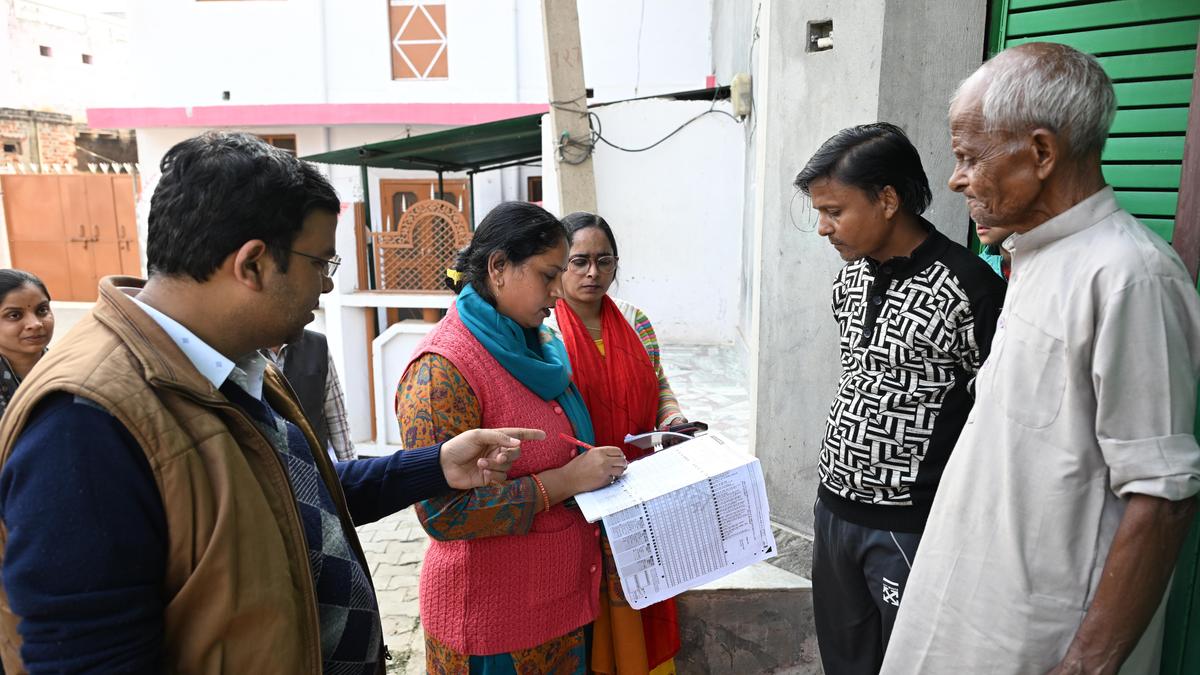
The first phase of the upcoming Census 2027 will feature 33 questions focusing on housing and household amenities. This data collection is crucial for government policy formulation, resource allocation, and understanding demographic and socio-economic trends across India. For competitive exams, understanding the Census methodology, key questions, and its significance for national planning is highly important.
Revision structure
Monthly events and exam calendar context
Static GK and one-liner notes
Quiz and mock-test revision path
Key points
Exam-ready takeaways
The first phase of the Census 2027 will comprise exactly 33 questions.
Questions in the first phase will cover housing details such as 'Census house number' and 'material of floor of the house'.
Socio-economic indicators include 'whether the head of the household belongs to a Scheduled Caste/Scheduled Tribe'.
Essential amenities surveyed include 'main source of drinking water' and 'access to toilet'.
Detailed analysis
Full exam-oriented breakdown
The upcoming Census 2027, with its first phase featuring 33 crucial questions, marks a pivotal moment for India's administrative and developmental landscape. The Census, a decennial exercise, is far more than a mere headcount; it is a comprehensive snapshot of the nation's demographic, social, and economic realities. India's last complete Census was conducted in 2011, and the 2021 Census was delayed due to the COVID-19 pandemic and subsequent logistical challenges. This delay underscores the urgency and significance of the 2027 exercise in providing up-to-date data for effective governance. The first phase of the Census, known as the 'House Listing and Housing Census,' is designed to collect data on all buildings, houses, and household amenities. The 33 questions outlined for this phase are meticulously crafted to capture essential details that inform policy formulation. These include basic identifiers like 'Census house number,' structural aspects such as 'material of floor of the house,' and critical socio-economic indicators like 'whether the head of the household belongs to a Scheduled Caste/Scheduled Tribe.' Furthermore, questions on fundamental amenities like the 'main source of drinking water' and 'access to toilet' directly feed into assessing the reach and impact of various government welfare schemes. Key stakeholders in this monumental exercise are numerous and diverse. At the apex is the **Registrar General and Census Commissioner of India (RGI)**, operating under the Ministry of Home Affairs. The RGI is statutorily responsible for planning, executing, and disseminating the Census data. State governments and local bodies play a crucial role in the ground-level implementation, providing personnel (teachers, government employees) who act as enumerators, and facilitating training and logistical support. Ultimately, every citizen is a stakeholder, as their accurate participation ensures the reliability of the data. Beyond the immediate execution, institutions like **NITI Aayog**, various Union Ministries (e.g., Jal Shakti, Housing and Urban Affairs, Social Justice and Empowerment), and even private sector entities rely heavily on Census data for planning, research, and resource allocation. The significance of the Census for India cannot be overstated. Firstly, it is the bedrock for **policy formulation and implementation**. Data on housing conditions, access to basic amenities, and caste demographics directly informs targeted interventions under schemes like the Pradhan Mantri Awas Yojana, Jal Jeevan Mission, and Swachh Bharat Abhiyan. The information on SC/ST households is vital for crafting affirmative action policies and ensuring equitable distribution of resources under constitutional mandates. Secondly, Census data is fundamental for **resource allocation and political representation**. The recommendations of the **Finance Commission (Article 280)** for the devolution of funds from the Centre to states heavily rely on population figures. Similarly, the **Delimitation Commission (Articles 82 and 170)** uses Census data to redraw parliamentary and assembly constituencies, ensuring fair representation based on population changes. Thirdly, it provides invaluable insights into **demographic and socio-economic trends**, helping us understand urbanization patterns, migration, literacy rates, and the overall developmental trajectory of the nation. This evidence-based approach is crucial for good governance and inclusive growth. Historically, the Census in India has a long lineage, with the first synchronized Census conducted in 1881 during British rule, establishing the decennial tradition. Post-independence, the **Census Act of 1948** provides the legal framework for its conduct, making it mandatory for citizens to provide information. The constitutional mandate for the Census is enshrined in **Article 246** of the Constitution, which places 'Census' at Entry 69 of the Union List (Seventh Schedule), signifying it as an exclusive legislative subject for the Parliament. Looking ahead, the Census 2027 is expected to leverage technology extensively, potentially utilizing mobile applications for data collection, enhancing accuracy and reducing delays. The updated data will be critical for India's pursuit of its Sustainable Development Goals (SDGs) and for navigating complex challenges like climate change, rapid urbanization, and an aging population. The findings will undoubtedly reshape political discourse, influence electoral strategies, and guide India's developmental agenda for the next decade, ensuring that policies are grounded in current realities and cater to the evolving needs of its vast and diverse population. The 33 questions in the first phase are just the beginning of a massive data-gathering exercise that will shape India's future.
How to study
Turn news into exam marks
Revise monthly events by exam family instead of reading random updates.
Pair one-liners with mock tests so mistakes become the next revision list.
Keep state job pages, calendar pages and GK packs connected in one path.