

David Rubenstein, cofounder of Carlyle Group, projected India could become the world's largest economy.
GK and monthly revision
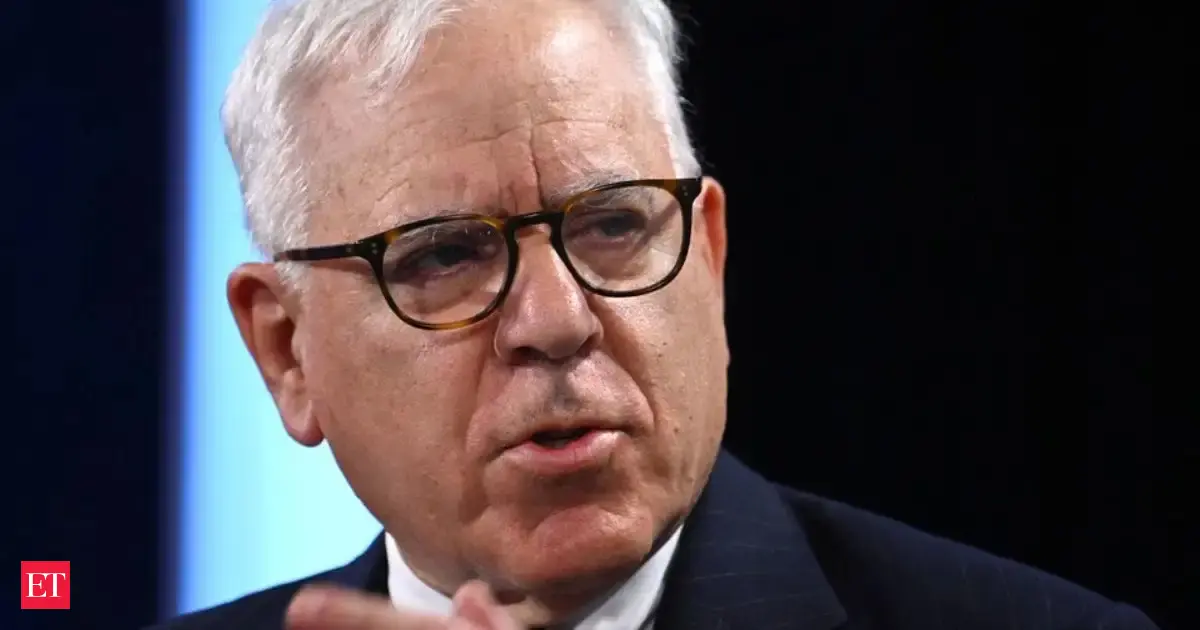
ET@Davos 2026: India could become the world’s biggest economy within decades, says David Rubenstein
David Rubenstein, cofounder of Carlyle Group, projected that India could become the world's largest economy within two to three decades, highlighting positive US-India relations. This forecast underscores India's growing economic potential and global significance. For competitive exams, this emphasizes economic projections, key global financial figures, and India's position in the global economy, making it relevant for economic and current affairs sections.
Revision structure
Monthly events and exam calendar context
Static GK and one-liner notes
Quiz and mock-test revision path
Key points
Exam-ready takeaways
The projection states India could achieve this status within two to three decades.
Rubenstein also noted positive US-India relations during his discussion.
He advised Indian policymakers to embrace global private credit and equity investments.
The projection was made in the context of ET@Davos.
Detailed analysis
Full exam-oriented breakdown
India's economic trajectory has been a subject of intense global scrutiny and optimism, especially in recent years. David Rubenstein's projection at ET@Davos 2026, stating that India could become the world's largest economy within two to three decades, is a significant endorsement from a prominent global financial figure. This forecast isn't merely an optimistic outlook but is rooted in India's sustained economic growth, demographic advantages, and ongoing structural reforms. **Background Context:** India is currently the world's fifth-largest economy by nominal GDP, having surpassed the UK in 2022. Its journey from a largely agrarian economy post-independence to a services-led, increasingly industrialized nation has been remarkable. The economic liberalization reforms of 1991, spearheaded by then-Finance Minister Dr. Manmohan Singh, marked a pivotal shift, opening India's economy to global markets and fostering private sector growth. Since then, India has maintained a robust growth rate, often ranking among the fastest-growing major economies globally. This consistent performance, coupled with a vast domestic market and a young, aspirational population, forms the bedrock for such ambitious projections. **What Happened:** David Rubenstein, co-founder of the Carlyle Group, a leading global investment firm, made this bold projection during the ET@Davos 2026 event. His statement highlighted India's potential to ascend to the top economic position, surpassing current giants like the United States and China, within a timeframe of 20-30 years. Crucially, Rubenstein also emphasized the positive trajectory of US-India relations, underscoring the strategic alignment and growing economic ties between the two nations. Furthermore, he offered a specific piece of advice to Indian policymakers: to actively embrace global private credit and equity investments. This, he argued, would be instrumental in fueling local entrepreneurship and, critically, in retaining valuable talent within India, preventing a 'brain drain' and fostering a vibrant innovation ecosystem. **Key Stakeholders Involved:** The primary stakeholder is **India itself**, encompassing its government (policymakers, regulators), its burgeoning private sector (entrepreneurs, corporations), and its vast population (consumers, workforce). The government's role in creating a stable, predictable policy environment and investing in infrastructure is paramount. **David Rubenstein and the Carlyle Group** represent the global investment community. Their views are significant as they influence large capital flows into emerging markets. Their advice on private credit and equity highlights the crucial role of international capital in financing India's growth ambitions. The **United States** is another key stakeholder, given the improving bilateral relations and the potential for increased trade, investment, and strategic cooperation, which can further accelerate India's economic ascent. Finally, **other global economies and financial institutions** are stakeholders, as India's rise will inevitably reshape global trade patterns, supply chains, and geopolitical dynamics. **Why This Matters for India:** This projection carries immense significance for India. Economically, becoming the world's largest economy would translate into unprecedented wealth creation, job opportunities for its massive workforce, and substantial improvements in living standards. It would enable greater investment in critical sectors like education, healthcare, and infrastructure. Geopolitically, an economically dominant India would wield significantly greater influence on the global stage, enhancing its voice in international forums, shaping global policies, and strengthening its strategic autonomy. Socially, sustained economic growth is crucial for poverty alleviation, reducing income inequality (though this remains a challenge), and fostering a sense of national pride and aspiration. It reinforces India's 'soft power' and its appeal as a destination for talent and investment. **Historical Context:** India's economic journey can be broadly segmented. Post-independence until 1991, it largely followed a socialist-inspired, mixed-economy model with significant state control, often termed the 'Hindu rate of growth' due to its modest pace. The 1991 reforms dramatically changed this, ushering in an era of liberalization, privatization, and globalization. Subsequent governments have largely continued this path, albeit with varying degrees of emphasis. India's current trajectory is a direct outcome of these reforms, coupled with a growing entrepreneurial spirit and a young demographic. This journey mirrors, in some ways, China's economic rise since the late 1970s, though India's democratic framework presents a distinct path. **Future Implications:** Achieving the status of the world's largest economy presents both enormous opportunities and significant challenges. For India to realize this potential, sustained, inclusive growth is essential. This requires continuous reforms in areas like land and labor, strengthening the manufacturing sector, investing heavily in human capital development (education and skill training), and ensuring environmental sustainability. Addressing issues like income inequality, improving ease of doing business, and enhancing infrastructure will be crucial. From a constitutional perspective, the **Directive Principles of State Policy (DPSP)**, particularly **Article 38** (State to secure a social order for the promotion of welfare of the people) and **Article 39** (certain principles of policy to be followed by the State, like distribution of material resources and prevention of concentration of wealth), underscore the need for growth to be equitable and inclusive. Government policies like 'Make in India' and 'Atmanirbhar Bharat' are geared towards boosting domestic manufacturing and reducing import dependence, contributing to economic self-reliance and growth. The successful implementation of these policies, along with continued attraction of foreign capital through robust **FDI policies**, will be key. India's growing economic heft will also necessitate a more prominent role in global governance and climate action, further shaping its international relations. **Related Constitutional Articles, Acts, or Policies:** * **Directive Principles of State Policy (Part IV of the Constitution):** Specifically, Articles 38 and 39 guide the state to promote the welfare of the people by securing a social order and ensuring economic justice, which are fundamental to sustainable economic growth and equitable distribution of wealth. * **Economic Reforms of 1991:** Though not a specific constitutional article, these landmark policy changes (liberalization, privatization, globalization) transformed India's economic landscape and laid the foundation for its current growth trajectory. * **Companies Act, 2013:** Governs the incorporation, responsibilities of companies and their directors, crucial for fostering a robust corporate sector and attracting investments. * **Foreign Exchange Management Act (FEMA), 1999:** Regulates foreign exchange transactions in India, vital for managing capital inflows and outflows, including private credit and equity investments. * **Government Schemes and Policies:** 'Make in India', 'Startup India', 'Digital India', 'Production Linked Incentive (PLI)' schemes, and various ease of doing business reforms are direct policy interventions aimed at accelerating economic growth, fostering entrepreneurship, and attracting investment.
How to study
Turn news into exam marks
Revise monthly events by exam family instead of reading random updates.
Pair one-liners with mock tests so mistakes become the next revision list.
Keep state job pages, calendar pages and GK packs connected in one path.