

The Directorate General of Civil Aviation (DGCA) reduced IndiGo's winter flight schedule.
GK and monthly revision
Government asks airlines to submit requests for IndiGo’s vacated slots
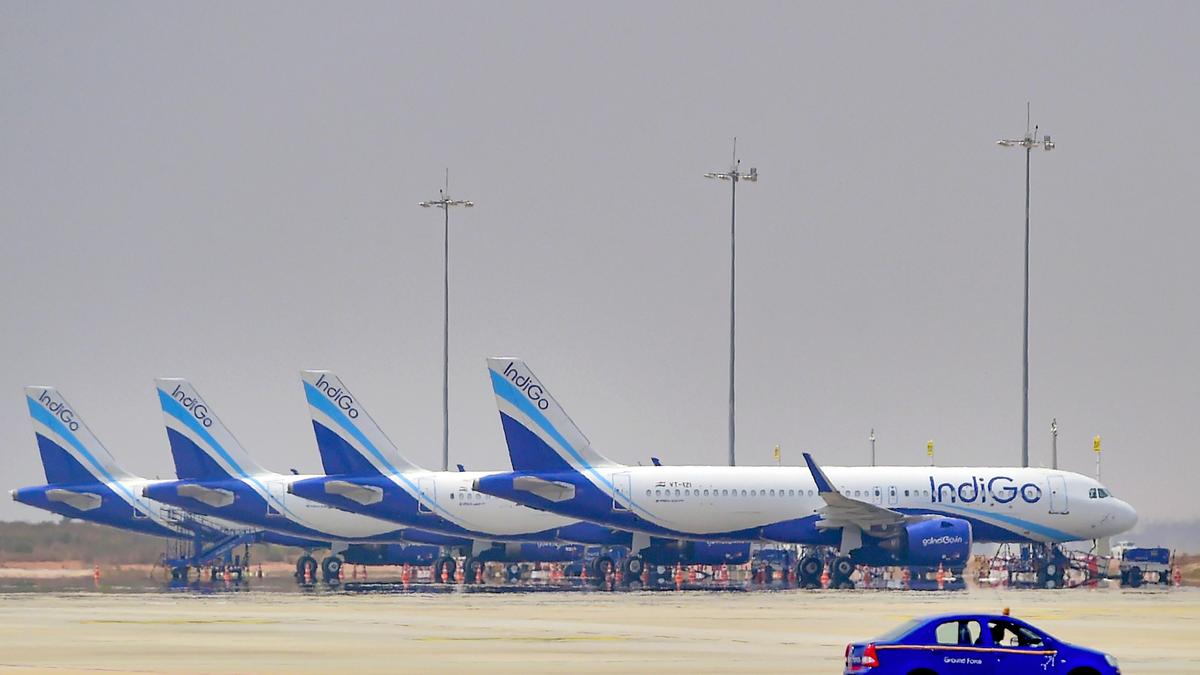
The Directorate General of Civil Aviation (DGCA) reduced IndiGo's winter flight schedule by 10% due to massive operational disruptions. Consequently, the government is inviting other airlines to submit requests for these newly vacated flight slots. This action highlights the DGCA's regulatory oversight in ensuring airline operational efficiency and passenger convenience, making it relevant for understanding India's aviation sector for competitive exams.
Revision structure
Monthly events and exam calendar context
Static GK and one-liner notes
Quiz and mock-test revision path
Key points
Exam-ready takeaways
IndiGo's winter schedule was reduced by 10%.
The DGCA's action was taken due to "massive disruptions" caused by IndiGo.
The government has asked other airlines to submit requests for these vacated flight slots.
The measure aims to reallocate operational capacity within the aviation sector.
Detailed analysis
Full exam-oriented breakdown
The Directorate General of Civil Aviation (DGCA)'s decision to reduce IndiGo's winter flight schedule by 10% and subsequently invite other airlines to bid for these vacated slots marks a significant moment in India's aviation sector. This action underscores the DGCA's proactive regulatory role in maintaining operational efficiency, ensuring passenger convenience, and fostering a competitive environment within the rapidly expanding Indian skies. It’s a crucial development for understanding the interplay between government regulation, corporate responsibility, and consumer welfare. **Background Context: The Turbulence Before the Cut** India's aviation sector has witnessed phenomenal growth over the past two decades, driven by economic liberalization and rising disposable incomes. IndiGo, as the largest airline by market share, has been a key player in this expansion, known for its low-cost model and extensive network. However, rapid expansion, coupled with supply chain issues and maintenance challenges, can sometimes strain an airline's operational capabilities. In the period leading up to this DGCA action, IndiGo, like some other carriers, faced a surge in flight delays, cancellations, and other operational disruptions, leading to widespread passenger complaints. While specific reasons for IndiGo's 'massive disruptions' were not detailed in the quick summary, industry observers often point to factors like aircraft groundings due to engine issues (e.g., Pratt & Whitney engines requiring inspection and repair), crew shortages, or air traffic control congestion as potential contributors. These disruptions not only inconvenience passengers but also damage the airline's reputation and can have broader economic implications. **The DGCA's Decisive Action and Its Rationale** Responding to these persistent operational issues, the DGCA, as the primary regulatory body for civil aviation in India, invoked its powers to reduce IndiGo's winter flight schedule by 10%. This measure, effective for the winter schedule period (typically from late October to late March), is a direct consequence of the airline's inability to maintain its declared schedule without causing significant disruptions. The subsequent invitation to other airlines to submit requests for these newly vacated slots serves a dual purpose: first, it ensures that the overall air travel capacity in the market is not significantly reduced, thereby mitigating potential fare hikes due to scarcity; and second, it introduces an element of competition, allowing more operationally stable airlines to expand their presence and offer services on these routes. This reallocation mechanism aims to optimize resource utilization across the sector. **Key Stakeholders and Their Roles** Several key stakeholders are directly impacted by this development. The **Directorate General of Civil Aviation (DGCA)** is at the forefront, exercising its statutory powers derived from the **Aircraft Act, 1934**, and the **Aircraft Rules, 1937**. Its primary mandate is to ensure the safety of air transport and regulate air service operators. This action demonstrates its commitment to passenger welfare and operational discipline. **IndiGo**, as the affected airline, now faces the challenge of streamlining its operations to avoid future penalties and potential loss of market share. This move serves as a strong signal to prioritize operational reliability. **Other airlines** (such as Air India, Vistara, Akasa Air, SpiceJet) stand to benefit by potentially acquiring new slots, expanding their networks, and capturing a larger share of the market. Most importantly, **passengers** are the ultimate beneficiaries, as the measure aims to reduce disruptions, improve on-time performance across the sector, and potentially offer more choices and competitive fares through increased competition. The **Ministry of Civil Aviation** provides the overarching policy framework, including the **National Civil Aviation Policy, 2016**, within which the DGCA operates. **Significance for India and Future Implications** This regulatory intervention holds significant implications for India. Economically, a reliable and efficient aviation sector is crucial for business, tourism, and connectivity, supporting economic growth. Disruptions can hinder these aspects, impacting GDP. The DGCA's action reinforces the principle of regulatory oversight, demonstrating that market dominance does not exempt an entity from accountability. It sends a clear message across the industry that operational stability and passenger service are paramount. Historically, India's aviation sector has seen periods of rapid growth and consolidation, interspersed with challenges like airline bankruptcies and operational issues. Strong regulatory bodies like the DGCA are essential to navigate these complexities and ensure sustainable growth. Looking ahead, this event could lead to increased scrutiny of airline operational plans and a greater emphasis on proactive measures to prevent disruptions. IndiGo will likely focus on addressing its underlying operational challenges, which could include better fleet management, crew scheduling, and maintenance protocols. For other airlines, it presents an opportunity for strategic expansion, potentially leading to new routes or increased frequencies on existing ones, thereby enhancing connectivity across the country, especially under initiatives like the UDAN (Ude Desh ka Aam Naagrik) scheme. This regulatory action serves as a crucial precedent, highlighting the DGCA's commitment to robust enforcement and consumer protection within India's dynamic aviation landscape.
How to study
Turn news into exam marks
Revise monthly events by exam family instead of reading random updates.
Pair one-liners with mock tests so mistakes become the next revision list.
Keep state job pages, calendar pages and GK packs connected in one path.