

Over 10,000 km of road projects have been sanctioned under the Pradhan Mantri Gram Sadak Yojana-IV (PMGSY-IV).
GK and monthly revision
Over 10,000 km of roads sanctioned under Pradhan Mantri Gram Sadak Yojana-IV: Govt
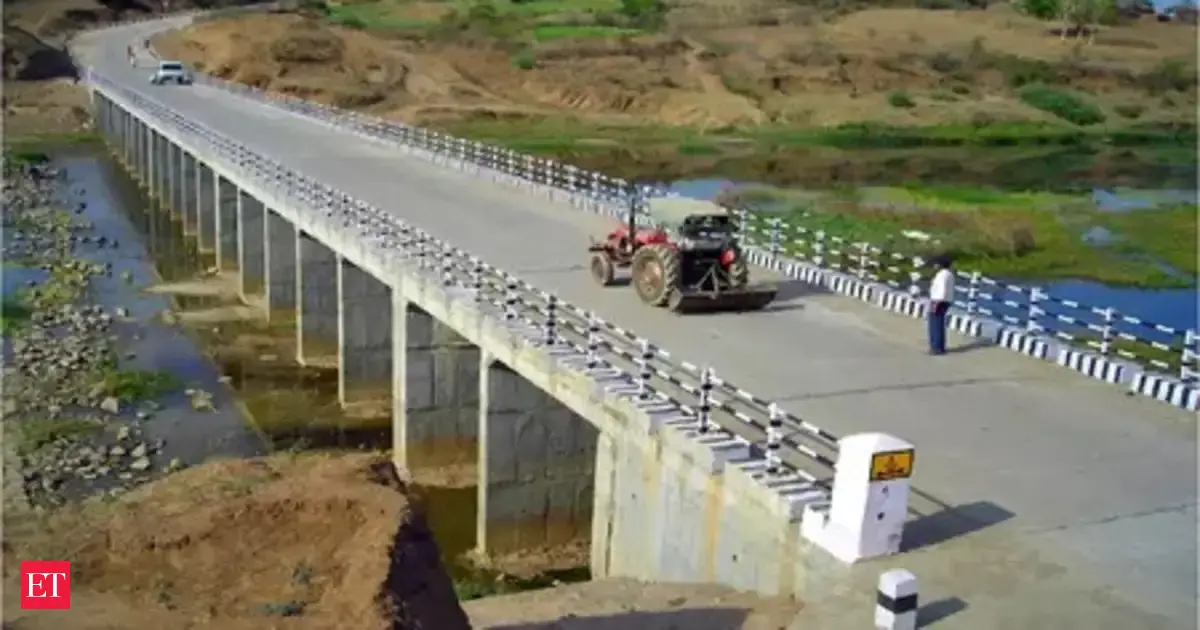
Over 10,000 km of road projects have been sanctioned for six states under the Pradhan Mantri Gram Sadak Yojana-IV (PMGSY-IV). This significant infrastructure development aims to provide connectivity to 3,270 isolated habitations, fostering inclusive growth. It is crucial for bridging gaps in essential services like healthcare, education, and livelihoods, solidifying the foundation for a developed India and is important for exam questions on rural development schemes.
Revision structure
Monthly events and exam calendar context
Static GK and one-liner notes
Quiz and mock-test revision path
Key points
Exam-ready takeaways
The sanctioned projects are spread across six states in India.
The initiative aims to provide connectivity to 3,270 isolated habitations.
PMGSY-IV focuses on fostering inclusive growth and unlocking opportunities in rural areas.
The scheme seeks to bridge gaps in critical services such as healthcare, education, and livelihoods.
Detailed analysis
Full exam-oriented breakdown
The recent sanctioning of over 10,000 km of road projects across six states under the Pradhan Mantri Gram Sadak Yojana-IV (PMGSY-IV) is a significant step in India's ongoing commitment to rural development and infrastructure. This initiative aims to connect 3,270 isolated habitations, underscoring the government's focus on bridging the developmental divide between rural and urban areas. To truly grasp its importance, we must delve into the scheme's origins, evolution, and far-reaching implications. **The Genesis and Evolution of PMGSY:** The Pradhan Mantri Gram Sadak Yojana (PMGSY) was launched on December 25, 2000, by the then Prime Minister Atal Bihari Vajpayee. At its core, the scheme addressed a critical lacuna in India's development narrative: the pervasive lack of all-weather road connectivity in rural areas. Millions of people in India's villages were cut off from basic services, markets, and opportunities due to impassable roads, especially during monsoons. The initial objective of PMGSY-I was to provide single all-weather road connectivity to eligible unconnected habitations with a population of 500 persons and above (in plain areas) and 250 persons and above (in hill states, tribal areas, and desert areas). The scheme evolved through various phases. PMGSY-II, launched in 2013, aimed at upgrading existing rural road networks to improve their efficiency and connectivity to rural growth centers. PMGSY-III, approved in 2019, focused on consolidating the existing rural road network by upgrading 1,25,000 km of existing 'Through Routes' and 'Major Rural Links' that connect habitations to Gramin Agricultural Markets (GrAMs), higher secondary schools, and hospitals. Now, PMGSY-IV represents a continuation of this strategic vision, focusing on expanding the network to even more remote habitations and solidifying the gains made in previous phases. **PMGSY-IV: Connecting the Unconnected:** The latest sanction of over 10,000 km of roads under PMGSY-IV directly targets 3,270 isolated habitations, emphasizing the principle of 'Antyodaya' – uplifting the last person. This phase particularly focuses on areas that might have been left out in previous phases due to various reasons, including difficult terrain, security concerns, or administrative hurdles. The objective remains consistent: to foster inclusive growth by ensuring that no community is left behind due to lack of physical access. This directly translates into improved access to essential services like healthcare, education, and economic opportunities, which are cornerstones of human development. **Key Stakeholders and Their Roles:** The successful implementation of PMGSY involves multiple stakeholders. The **Ministry of Rural Development** is the nodal ministry at the central level, responsible for policy formulation, funding, and overall monitoring. At the state level, **State Rural Road Development Agencies (SRRDAs)** are the executing bodies, responsible for project preparation, technical sanction, and financial management. **District Panchayats** play a crucial role in identifying eligible habitations, prioritizing roads, and monitoring construction quality and maintenance. **Contractors and construction companies** are vital for the actual execution of projects, while **local communities** are the primary beneficiaries, often providing valuable feedback and participating in social audits. **Significance for India's Development:** PMGSY is more than just a road-building scheme; it's a powerful tool for socio-economic transformation. Economically, it provides farmers with better access to markets, enabling them to fetch better prices for their produce and reducing post-harvest losses. It also facilitates the growth of non-farm rural enterprises and reduces transportation costs for goods and services. Socially, all-weather roads improve access to healthcare facilities, reducing maternal and infant mortality rates, and ensuring timely medical attention. They also enhance access to educational institutions, increasing school enrollment and attendance, particularly for girls. Furthermore, improved connectivity fosters greater social interaction, reduces isolation, and can contribute to better law and order by facilitating easier access for administrative and security forces. **Constitutional and Policy Context:** The spirit of PMGSY is deeply rooted in the **Directive Principles of State Policy (DPSP)** enshrined in Part IV of the Indian Constitution. Articles like **Article 38** (State to secure a social order for the promotion of welfare of the people), **Article 39** (State to direct its policy towards securing adequate means of livelihood and equitable distribution of material resources), **Article 41** (Right to work, to education and to public assistance in certain cases), and **Article 47** (Duty of the State to raise the level of nutrition and the standard of living and to improve public health) all find resonance in the scheme's objectives. By providing basic infrastructure, the government is fulfilling its constitutional mandate to create an egalitarian society and improve the quality of life for its citizens. The involvement of Panchayati Raj Institutions in planning and monitoring also aligns with the decentralization objectives of the **73rd and 74th Constitutional Amendment Acts**. **Broader Themes and Future Implications:** PMGSY is a cornerstone of India's broader strategy for inclusive growth and achieving the vision of a 'Viksit Bharat' (Developed India) by 2047. It directly contributes to several **Sustainable Development Goals (SDGs)**, particularly SDG 9 (Industry, Innovation, and Infrastructure) and SDG 11 (Sustainable Cities and Communities). The future implications include continued emphasis on durable, climate-resilient roads, leveraging green technologies, and integrating digital solutions for monitoring and maintenance. Challenges such as ensuring quality construction, timely maintenance, and addressing issues of land acquisition will remain critical. The success of PMGSY-IV will not only connect villages but also further integrate rural India into the national economy, unlocking its immense potential for growth and development.
How to study
Turn news into exam marks
Revise monthly events by exam family instead of reading random updates.
Pair one-liners with mock tests so mistakes become the next revision list.
Keep state job pages, calendar pages and GK packs connected in one path.