

The Bank of Japan (BoJ) maintained its key interest rate at 0.75 percent.
GK and monthly revision
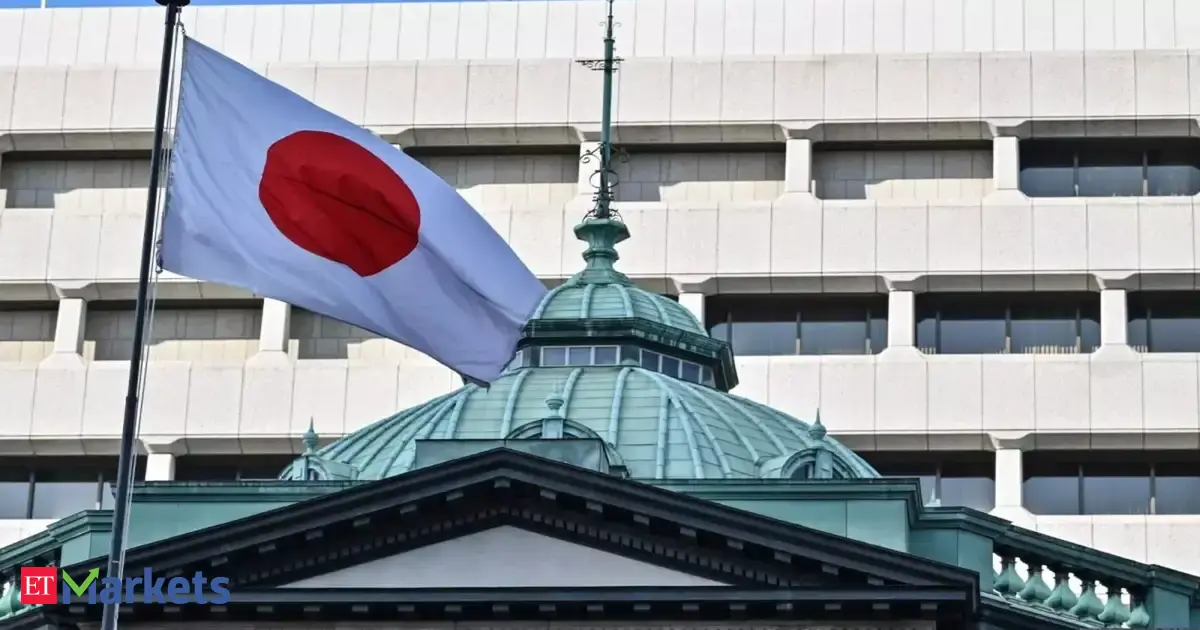
Bank of Japan keeps key interest rate unchanged at 0.75%
The Bank of Japan (BoJ) maintained its key interest rate at 0.75%, a decision widely anticipated by analysts, while projecting inflation to fall below 2% by early 2026. This reflects the central bank's cautious monetary policy amidst forecasts of moderate economic growth for Japan. For competitive exams, this highlights global central banking trends, key economic indicators, and significant political developments like the upcoming snap election.
Revision structure
Monthly events and exam calendar context
Static GK and one-liner notes
Quiz and mock-test revision path
Key points
Exam-ready takeaways
The BoJ anticipates inflation will fall below two percent in early 2026.
Japan's economy is projected to grow moderately.
The Prime Minister of Japan is Sanae Takaichi.
A snap election in Japan is scheduled for February 8.
Detailed analysis
Full exam-oriented breakdown
The Bank of Japan's (BoJ) decision to maintain its key interest rate at 0.75 percent, while projecting inflation to fall below two percent in early 2026 and anticipating moderate economic growth, offers a crucial glimpse into the cautious monetary policy approach of one of the world's largest economies. This move, coupled with the announcement of a snap election, presents a complex economic and political landscape for Japan, with significant implications for global finance and, by extension, India. **Background Context: Japan's Economic Labyrinth** To truly grasp the significance of the BoJ's decision, one must understand Japan's unique economic history. For decades, Japan grappled with deflation – a persistent fall in prices – following the bursting of its asset bubble in the early 1990s. This led to a period dubbed the 'Lost Decades,' characterized by stagnant growth, low inflation, and an aging population. In response, the BoJ embarked on unprecedented monetary easing, including quantitative easing, negative interest rates (from 2016), and yield curve control (YCC), aiming to stimulate inflation and economic activity. The goal was to achieve a stable 2% inflation target. The recent global surge in inflation, driven by supply chain disruptions and geopolitical events, presented a new challenge and an opportunity for Japan to finally escape its deflationary trap. However, the BoJ has remained exceptionally cautious, wary of premature tightening that could derail nascent economic recovery. **What Happened: A Steady Hand Amidst Shifting Tides** The BoJ's decision to keep the interest rate steady at 0.75 percent signals its assessment that while inflation has risen, it may not be sustainable above the 2% target in the long term without further intervention or organic demand growth. The projection for inflation to fall below two percent by early 2026 suggests the central bank believes current inflationary pressures are transient. This cautious stance contrasts with many other major central banks (like the US Federal Reserve or the European Central Bank) that have aggressively raised rates to combat high inflation. The forecast of moderate economic growth indicates a slow but steady recovery, aligning with the BoJ’s gradualist approach. Simultaneously, the political landscape is heating up, with Prime Minister Sanae Takaichi preparing for a snap election on February 8. Such elections often introduce policy uncertainty, as new governments may shift economic priorities or approaches to fiscal and monetary coordination. **Key Stakeholders and Their Roles** 1. **Bank of Japan (BoJ):** As Japan's central bank, its primary mandate is price stability and ensuring the stability of the financial system, as outlined in the Bank of Japan Act. Its decision to hold rates reflects its independent assessment of the economy. 2. **Japanese Government (Prime Minister Sanae Takaichi):** The government is responsible for fiscal policy, including taxation and public spending. A snap election indicates a desire for a fresh mandate or to capitalize on perceived political advantage. The government's policies, particularly those aimed at structural reforms and economic growth, work in tandem with the BoJ's monetary policy. 3. **Japanese Businesses and Consumers:** These are the ultimate beneficiaries or sufferers of economic policy. Stable interest rates can provide certainty for investment and borrowing, while inflation levels affect purchasing power and business costs. 4. **Global Investors and Markets:** Japan is a major global financier. Its interest rate decisions and economic outlook influence capital flows, currency markets (the Japanese Yen), and global bond yields. **Significance for India** Japan's economic stability and policy decisions hold considerable importance for India. As a major global economic power and a key strategic partner, Japan's economic trajectory impacts India through several channels: 1. **Foreign Direct Investment (FDI) and Foreign Portfolio Investment (FPI):** Japan is a significant source of FDI for India, particularly in infrastructure, manufacturing (e.g., automotive sector), and technology. Stable economic conditions in Japan encourage continued investment. Changes in Japanese interest rates could influence capital outflows from Japan, potentially impacting FPI into Indian markets. 2. **Trade Relations:** India and Japan have a Comprehensive Economic Partnership Agreement (CEPA). Japan's economic growth translates to demand for Indian exports, while its technological prowess benefits India's import needs. A stable Japanese economy ensures robust trade. 3. **Official Development Assistance (ODA):** Japan has historically been one of the largest providers of ODA to India, supporting critical infrastructure projects like the Delhi-Mumbai Industrial Corridor (DMIC) and the Mumbai-Ahmedabad High-Speed Rail project. A healthy Japanese economy ensures continued funding for such projects. 4. **Geopolitical Alignment:** Both nations are part of the Quad (Quadrilateral Security Dialogue), emphasizing shared democratic values and a free and open Indo-Pacific. Economic stability strengthens this strategic partnership. **Future Implications** The BoJ's continued caution suggests that any future interest rate hikes will be gradual and data-dependent. If global inflation persists or domestic demand strengthens more than expected, the BoJ might be compelled to reconsider its stance. The snap election adds a layer of political uncertainty; the outcome could influence fiscal priorities and the government's approach to economic reforms. For India, continued Japanese economic stability and investment are crucial for its growth ambitions, particularly in manufacturing and infrastructure. Any significant shift in Japan's economic policy or a downturn could have ripple effects on global capital flows and India's economic partnerships. **Related Constitutional Articles, Acts, or Policies** While the direct constitutional articles apply to India, we can draw parallels. In India, the **Reserve Bank of India Act, 1934**, establishes the RBI as the central monetary authority, similar to the Bank of Japan Act, 1949, which governs the BoJ. The objectives of price stability and economic growth are enshrined in the mandates of both central banks. For India, the Directive Principles of State Policy (DPSP) in **Part IV of the Constitution**, particularly **Article 38 (State to secure a social order for the promotion of welfare of the people)** and **Article 39 (certain principles of policy to be followed by the State)**, indirectly guide economic policies aimed at reducing economic disparities and promoting welfare, which monetary and fiscal policies ultimately serve. The government's role in managing the economy is also implicitly derived from its executive powers under **Article 73** and its legislative powers under **Articles 245 and 246** concerning economic matters listed in the Union and Concurrent Lists of the Seventh Schedule.
How to study
Turn news into exam marks
Revise monthly events by exam family instead of reading random updates.
Pair one-liners with mock tests so mistakes become the next revision list.
Keep state job pages, calendar pages and GK packs connected in one path.