

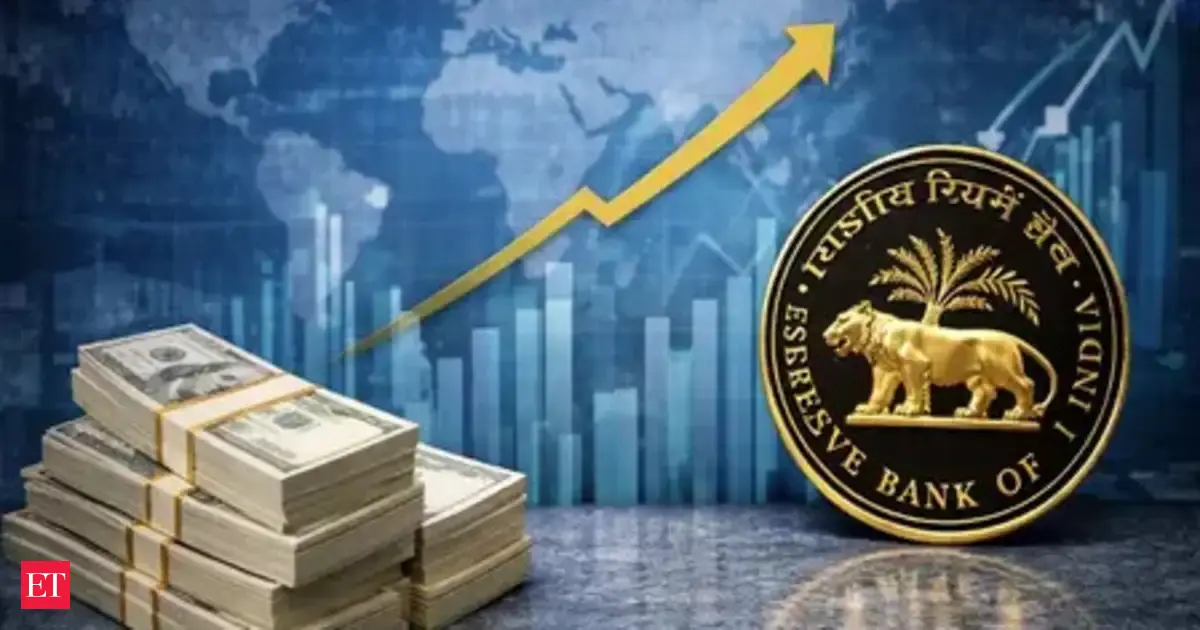
India's foreign exchange reserves reached a new high of $701.36 billion.
GK and monthly revision
India’s forex reserves up by $14.17 billion to $701.36 billion as of January 16
India's foreign exchange reserves surged by $14.17 billion, reaching an unprecedented high of $701.36 billion as of January 16, 2026. This significant increase, driven by a rise in foreign currency assets and gold holdings, reflects robust economic indicators. Managed by the Reserve Bank of India, these reserves are crucial for maintaining market stability and are a key metric for competitive exams.
Revision structure
Monthly events and exam calendar context
Static GK and one-liner notes
Quiz and mock-test revision path
Key points
Exam-ready takeaways
The increase in forex reserves was $14.17 billion in the week ending January 16, 2026.
The record high was recorded as of January 16, 2026.
The boost in reserves was primarily due to a rise in foreign currency assets and gold holdings.
The Reserve Bank of India (RBI) is responsible for managing India's foreign exchange reserves.
Detailed analysis
Full exam-oriented breakdown
India's foreign exchange reserves reaching an unprecedented $701.36 billion as of January 16, 2026, marks a significant milestone in the nation's economic journey. This surge of $14.17 billion in a single week underscores robust economic health and prudent financial management by the Reserve Bank of India (RBI). To truly grasp its importance, we must delve into the multifaceted aspects of forex reserves. **Background Context and Historical Perspective:** Foreign exchange reserves are essentially a country's holdings of foreign currencies, gold, Special Drawing Rights (SDRs), and its reserve position with the International Monetary Fund (IMF). These reserves act as a crucial buffer against external shocks and are vital for maintaining confidence in the economy. Historically, India has had a tumultuous relationship with its forex reserves. The most poignant example is the 1991 Balance of Payments (BoP) crisis when India's reserves dwindled to a mere $1.2 billion, barely enough to cover three weeks of imports. This crisis forced India to pledge its gold reserves and undertake sweeping economic reforms. From that precarious position, India has steadily built up its reserves, demonstrating a remarkable transformation in its economic resilience and global standing. The RBI, empowered by the Reserve Bank of India Act, 1934, is the custodian and manager of these reserves, tasked with their safe and liquid deployment. **What Happened and Key Stakeholders:** The recent increase to $701.36 billion was primarily driven by a rise in foreign currency assets (FCAs) and gold holdings. FCAs, which constitute the largest component, include investments in U.S. dollar-denominated assets, Euro, Pound Sterling, and Japanese Yen. The surge suggests strong capital inflows, possibly from Foreign Portfolio Investments (FPIs) and Foreign Direct Investments (FDIs), and a healthy current account balance. The key stakeholders in this scenario are: 1. **Reserve Bank of India (RBI):** As the central bank, the RBI is the primary manager of India's forex reserves. Its objectives include maintaining external sector stability, managing the exchange rate of the Rupee, and ensuring adequate liquidity in the market. The RBI intervenes in the forex market by buying or selling foreign currency to prevent excessive volatility of the Rupee, as mandated by the Foreign Exchange Management Act (FEMA), 1999. 2. **Government of India (Ministry of Finance):** The government's fiscal policies, trade policies, and overall economic agenda directly influence capital flows and the Balance of Payments, thereby impacting forex reserves. 3. **Foreign Institutional Investors (FIIs)/Foreign Portfolio Investors (FPIs) and Foreign Direct Investors (FDIs):** Their investments into Indian equities, debt markets, and new ventures contribute significantly to foreign currency inflows. 4. **Exporters and Importers:** A healthy export sector brings in foreign currency, while imports lead to outflows. A robust trade balance contributes positively to reserves. **Significance for India:** This record high in forex reserves holds immense significance for India: 1. **Economic Stability and Resilience:** High reserves provide a strong cushion against external shocks, such as global financial crises, commodity price volatility (like oil), or sudden capital outflows. This enhances the economy's ability to absorb such shocks without resorting to drastic measures. 2. **Exchange Rate Management:** The RBI can effectively intervene in the foreign exchange market to manage the Rupee's volatility. This prevents sharp depreciation (which can lead to imported inflation) or excessive appreciation (which can harm exports). 3. **Enhanced Import Cover:** A higher reserve figure means India can finance more months of imports, providing greater security for essential goods and services. 4. **Boost to International Confidence and Credit Rating:** Robust reserves signal a strong and stable economy, attracting more foreign investment and potentially leading to better credit ratings from international agencies. This translates to lower borrowing costs for Indian entities. 5. **Facilitation of External Debt Servicing:** Adequate reserves ensure India can comfortably meet its external debt obligations, thereby enhancing its credibility in international financial markets. **Future Implications:** While high reserves are generally positive, they also present certain challenges and future implications. The RBI gains greater flexibility in conducting monetary policy, as it is less constrained by external financing needs. India's growing economic heft could also translate into a stronger voice in international financial forums. However, persistently high inflows leading to reserve accumulation might necessitate 'sterilization' operations by the RBI to absorb excess liquidity, which can incur costs. Moreover, an accumulation of reserves might also lead to a debate on how best to utilize these reserves for productive investments, potentially through sovereign wealth funds. The sustained growth indicates India's increasing integration into the global economy and its strengthened position to navigate future uncertainties. **Related Constitutional Articles, Acts, or Policies:** * **Reserve Bank of India Act, 1934:** This act establishes the RBI and outlines its functions, including the management of India's monetary policy and foreign exchange reserves. * **Foreign Exchange Management Act (FEMA), 1999:** Replaced the stringent FERA (Foreign Exchange Regulation Act) of 1973, FEMA aims to facilitate external trade and payments and promote the orderly development and maintenance of the foreign exchange market in India. It governs all foreign exchange transactions. * **Balance of Payments (BoP):** While not an act, understanding the BoP (Current Account and Capital Account) is fundamental, as it explains the sources of foreign currency inflows and outflows that ultimately determine the level of reserves.
How to study
Turn news into exam marks
Revise monthly events by exam family instead of reading random updates.
Pair one-liners with mock tests so mistakes become the next revision list.
Keep state job pages, calendar pages and GK packs connected in one path.