

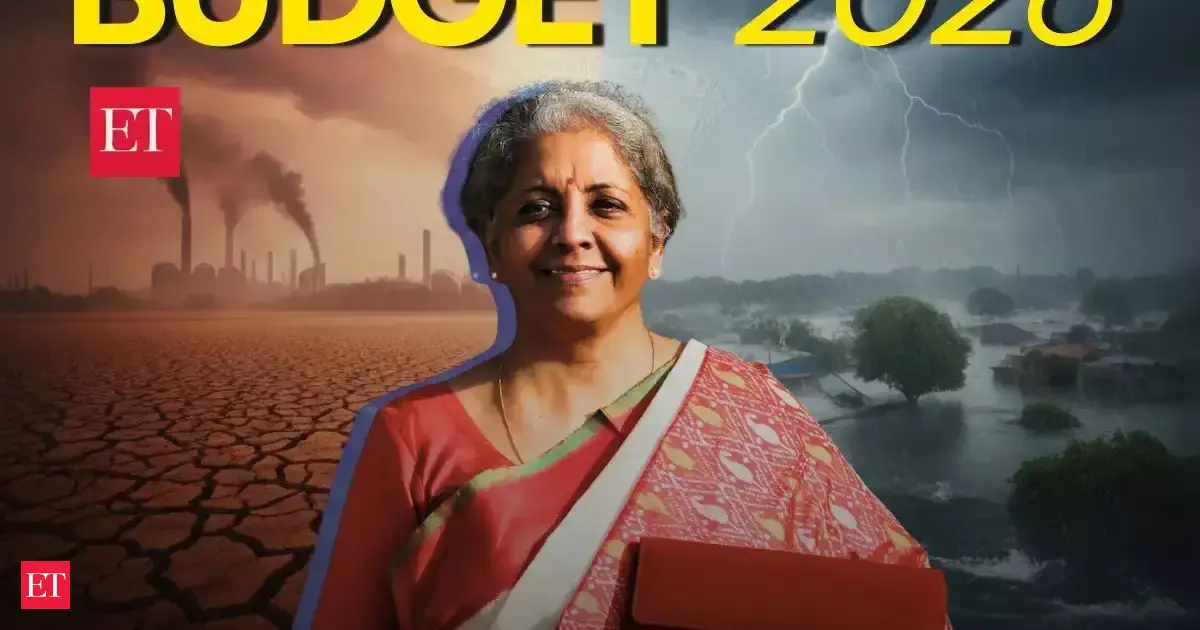
Union Budget 2026 is anticipated to significantly focus on executing climate action.
GK and monthly revision
Budget 2026: Money matters for the air you breathe and water you drink
The Union Budget 2026 is projected to heavily prioritize climate action, green infrastructure, and renewable energy, treating it as an industrial strategy. This focus is critical given the escalating climate crises like water stress, heatwaves, and air pollution. The budget aims to bridge adaptation finance gaps and propel India towards a multi-trillion dollar green economy, emphasizing water resilience and urban development, making it highly relevant for exams on economy, environment, and government policy.
Revision structure
Monthly events and exam calendar context
Static GK and one-liner notes
Quiz and mock-test revision path
Key points
Exam-ready takeaways
The budget is expected to frame climate action as an industrial strategy.
Significant investments are foreseen in green infrastructure and renewable energy.
A key objective is to bridge gaps in adaptation finance and ensure effective implementation.
The budget initiatives aim to contribute to a multi-trillion dollar green economy for India, with a focus on water resilience and urban development.
Detailed analysis
Full exam-oriented breakdown
The Union Budget 2026, as anticipated, marks a pivotal shift in India's economic strategy, treating climate action not merely as an environmental imperative but as a core industrial strategy. This approach is a direct response to the escalating climate crises India faces, including severe water stress, unprecedented heatwaves, frequent floods, and alarming levels of air pollution across its urban centers. The budget's emphasis on significant investments in green infrastructure and renewable energy, coupled with a focus on bridging adaptation finance gaps, underscores a comprehensive vision for a sustainable and resilient future. Historically, India's environmental policies have evolved from a focus on pollution control in the 1970s and 80s (e.g., Water (Prevention and Control of Pollution) Act, 1974; Air (Prevention and Control of Pollution) Act, 1981; Environment (Protection) Act, 1986) to a more proactive stance on climate change. A major milestone was the launch of the National Action Plan on Climate Change (NAPCC) in 2008, comprising eight national missions aimed at sustainable development. Internationally, India has been a vocal advocate for climate justice and has committed to ambitious Nationally Determined Contributions (NDCs) under the Paris Agreement, pledging to reduce the emissions intensity of its GDP by 45% by 2030 from 2005 levels and achieve about 50% cumulative electric power installed capacity from non-fossil fuel-based energy resources by 2030. More recently, at COP26 in Glasgow, India committed to achieving Net-Zero emissions by 2070, further solidifying its long-term climate goals. Key stakeholders in this ambitious budgetary direction include various government ministries (Ministry of Finance, Ministry of Environment, Forest and Climate Change, Ministry of New and Renewable Energy, Ministry of Jal Shakti), NITI Aayog, which plays a crucial role in policy formulation and monitoring, and public sector undertakings (PSUs) tasked with implementing large-scale green projects. The private sector is an equally vital stakeholder, expected to drive innovation, invest in green technologies, and adopt sustainable business practices, incentivized by policy support and financial mechanisms. International organizations and multilateral development banks will be critical in providing adaptation finance and technical assistance, while citizens and local bodies are essential for grassroots implementation, particularly in water resilience and urban development initiatives like the Swachh Bharat Mission (Urban 2.0) and Amrit Sarovar Mission. This strategic focus holds immense significance for India. Economically, framing climate action as an industrial strategy is poised to unlock a multi-trillion-dollar green economy. It will spur job creation in new sectors like renewable energy manufacturing, green hydrogen production, electric vehicle infrastructure, and sustainable construction. It enhances energy security by reducing reliance on volatile fossil fuel imports and positions India as a leader in green technologies, attracting foreign direct investment. Environmentally, the investments will lead to cleaner air and water, improved biodiversity, and reduced vulnerability to extreme weather events. Socially, better public health outcomes from reduced pollution, enhanced access to clean water through initiatives focusing on water resilience, and more livable urban spaces will significantly improve the quality of life for millions. Furthermore, it strengthens India's geopolitical standing as a responsible global actor and a champion of sustainable development, particularly through initiatives like the International Solar Alliance. Constitutionally, the spirit of environmental protection is embedded in the Directive Principles of State Policy (DPSP) and Fundamental Duties. Article 48A mandates the State to 'endeavour to protect and improve the environment and to safeguard the forests and wildlife of the country.' Concurrently, Article 51A(g) places a Fundamental Duty on every citizen 'to protect and improve the natural environment including forests, lakes, rivers and wildlife, and to have compassion for living creatures.' The budgetary allocations align with these constitutional mandates, translating them into actionable economic policy. Looking ahead, the Budget 2026's thrust on climate action will accelerate India's energy transition, driving further adoption of solar, wind, and potentially green hydrogen technologies. It will necessitate robust policy frameworks for a circular economy, waste management, and sustainable urban planning. The focus on adaptation finance will be critical for building resilience against inevitable climate impacts, especially in vulnerable regions. This approach is not just about mitigating climate change; it's about fundamentally reshaping India's development trajectory towards a sustainable, equitable, and prosperous future, aligning its economic growth with environmental stewardship and global climate goals.
How to study
Turn news into exam marks
Revise monthly events by exam family instead of reading random updates.
Pair one-liners with mock tests so mistakes become the next revision list.
Keep state job pages, calendar pages and GK packs connected in one path.