

India and the European Union (EU) are nearing the finalization of a Free Trade Agreement (FTA).
GK and monthly revision
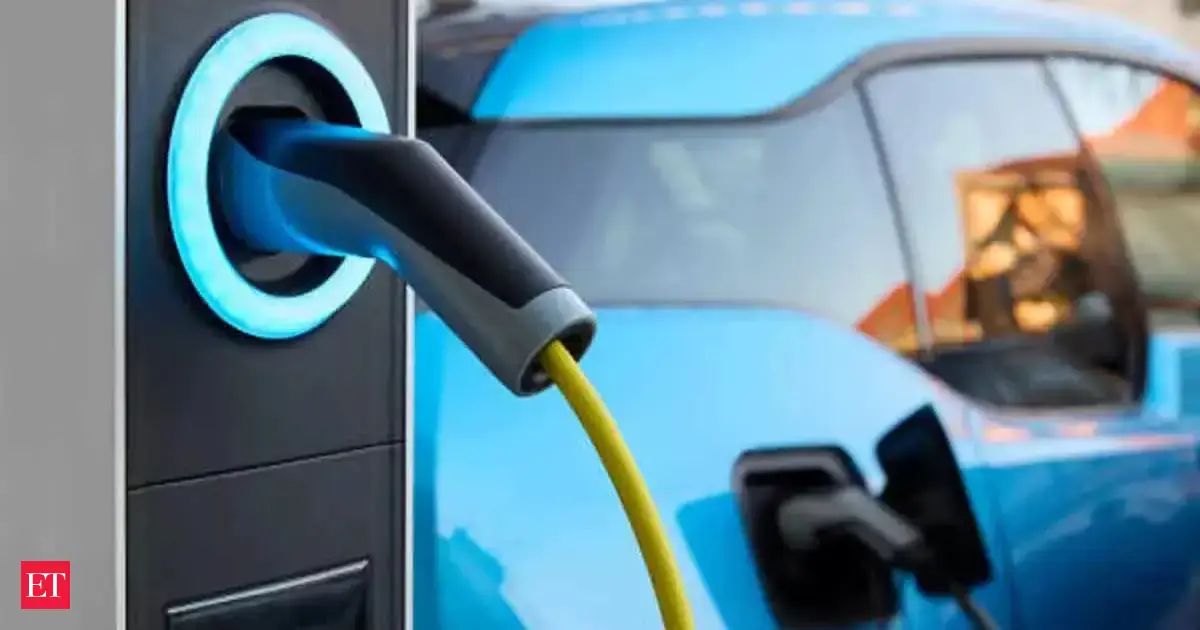
India-EU FTA likely to cut auto import duties, may spur surge in luxury EV imports
India and the European Union are nearing a Free Trade Agreement (FTA) that proposes to significantly reduce import duties on automobiles, including electric vehicles, to 10-15%. This development is crucial as it is expected to boost the sales of European luxury EVs in India and simultaneously position the country as a competitive manufacturing hub for these vehicles. For competitive exams, this highlights India's trade policy, economic integration, and the evolving EV market dynamics.
Revision structure
Monthly events and exam calendar context
Static GK and one-liner notes
Quiz and mock-test revision path
Key points
Exam-ready takeaways
The proposed FTA is expected to significantly reduce import duties on automobiles, including electric vehicles.
The import duties on automobiles are likely to be cut to a range of 10-15% under the agreement.
This move is anticipated to boost the sales of European luxury Electric Vehicles (EVs) in the Indian market.
The agreement aims to position India as a competitive manufacturing hub for electric vehicles.
Detailed analysis
Full exam-oriented breakdown
The impending Free Trade Agreement (FTA) between India and the European Union (EU), particularly its provision to significantly reduce import duties on automobiles, including electric vehicles (EVs), to 10-15%, represents a pivotal moment in India's economic and strategic trajectory. This development is not merely about car imports; it signifies a deeper integration into the global economy, a commitment to green mobility, and a strategic recalibration of India's international trade policy. **Background Context and Historical Journey:** India's engagement with the European Union, its largest trading partner, dates back decades. Formal negotiations for a Broad-based Trade and Investment Agreement (BTIA), the precursor to the current FTA, began in 2007. However, these talks stalled in 2013 due to significant differences on key issues such as market access for automobiles, data security, and intellectual property rights. The hiatus reflected a cautious approach by both sides. The renewed impetus for an FTA emerged in 2021, culminating in the official relaunch of negotiations in June 2022. This resumption was driven by a shared geopolitical vision, a desire to diversify supply chains in a post-pandemic world, and the growing recognition of mutual economic benefits. India's ‘Look East’ policy, now evolved into ‘Act East,’ and its broader strategy of forging comprehensive economic partnerships, underpins this renewed push. **What Has Happened and Proposed Changes:** Recent reports indicate that India and the EU are nearing the finalization of this ambitious FTA. A key component of the agreement is the proposed reduction of import duties on various automobiles, including electric vehicles, to a range of 10-15%. Currently, India imposes substantial import duties on fully built imported cars, often ranging from 60% to 100%, depending on engine size and cost, to protect its domestic manufacturing industry. This proposed reduction is a significant policy shift, aimed at opening up the Indian market to high-end European vehicles, particularly luxury EVs, which are currently prohibitively expensive due to these duties. **Key Stakeholders Involved:** On the Indian side, the **Government of India**, primarily the Ministry of Commerce & Industry, is the chief negotiator, balancing various domestic interests. **Domestic automobile manufacturers** like Tata Motors, Mahindra & Mahindra, and Maruti Suzuki are key stakeholders, as they stand to face increased competition but also potential opportunities for technology transfer and export. **Indian consumers** will benefit from greater choice and potentially lower prices for luxury EVs. For the **European Union**, the **European Commission** leads the negotiations on behalf of its 27 member states. **European luxury car manufacturers** (e.g., Mercedes-Benz, BMW, Audi, Porsche, Volkswagen) are major beneficiaries, eager to tap into India's growing market. The broader **European industry** also seeks greater access to India's vast consumer base and a stable investment environment. **Significance for India:** 1. **Economic Boost & FDI:** A finalized FTA is expected to significantly boost bilateral trade and attract Foreign Direct Investment (FDI) into India, not just in the automotive sector but across various industries. Increased competition could spur innovation and efficiency in the domestic auto sector. The reduction in duties on EVs could accelerate the adoption of green technology in India. This aligns with the 'Make in India' and 'Atmanirbhar Bharat' initiatives by encouraging local manufacturing of EV components and potentially positioning India as a regional EV manufacturing hub. It also supports India's commitment to achieving net-zero emissions by 2070. 2. **Consumer Choice & Technology Transfer:** Indian consumers will gain access to a wider range of advanced, high-quality European EVs, pushing domestic players to enhance their offerings. This could also lead to critical technology transfer and skill development within India's automotive ecosystem. 3. **Strategic Partnership:** The FTA deepens India's strategic partnership with the EU, a significant global economic and political bloc. This diversification of trade partners reduces over-reliance on any single region and strengthens India's geopolitical standing. 4. **Challenges for Domestic Industry:** While beneficial, the duty reduction presents a challenge to India's domestic auto manufacturers, who will face stiff competition from established global luxury brands. They will need to innovate rapidly, improve quality, and enhance cost-effectiveness to remain competitive. **Constitutional and Policy Framework:** India's power to enter into international agreements is enshrined in **Article 253 of the Constitution**, which empowers Parliament to make laws for implementing any treaty, agreement, or convention with any other country or any decision made at any international conference, association, or other body. Trade and commerce with foreign countries fall under **Entry 41 of the Union List in the Seventh Schedule**, granting the Parliament exclusive power to legislate on such matters. The **Foreign Trade (Development and Regulation) Act, 1992**, further governs India's foreign trade policy. Additionally, policies like the **FAME II (Faster Adoption and Manufacturing of Electric Vehicles) scheme** and the Production Linked Incentive (PLI) schemes for Advanced Chemistry Cell (ACC) Battery Storage and Automotive Sector demonstrate India's commitment to fostering a domestic EV ecosystem, which will need to adapt to the new trade realities. **Future Implications:** If the FTA is finalized with these provisions, India could witness a surge in luxury EV imports, which might initially cater to a niche market but will gradually expand as EV infrastructure improves. More importantly, it could incentivize European manufacturers to set up manufacturing bases in India to avoid even the reduced import duties and leverage India's cost-effective production capabilities for both domestic sales and exports to other markets. This would further cement India's ambition to become a global manufacturing hub. The long-term implications include accelerated EV adoption, enhanced R&D in green technologies, and a more integrated, competitive Indian automotive sector. However, ensuring a level playing field for domestic manufacturers and providing adequate support for their transition will be crucial for sustainable growth.
How to study
Turn news into exam marks
Revise monthly events by exam family instead of reading random updates.
Pair one-liners with mock tests so mistakes become the next revision list.
Keep state job pages, calendar pages and GK packs connected in one path.