

National Voters' Day is celebrated annually on January 25.
GK and monthly revision
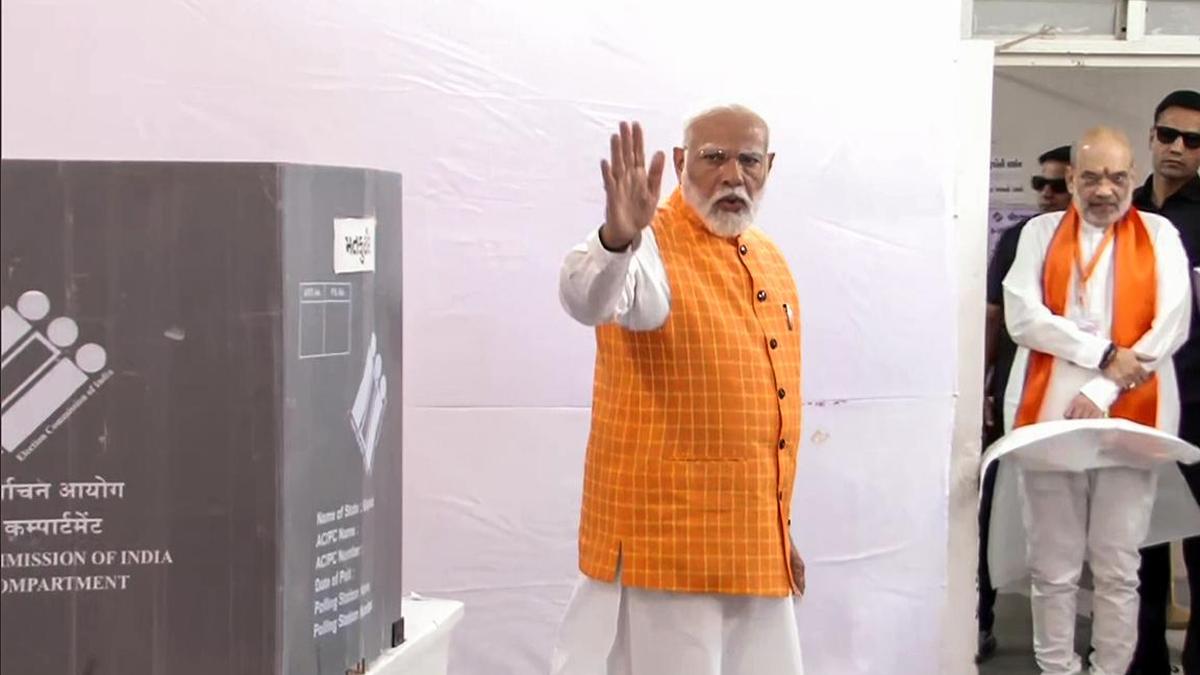
Participate in democratic processes, being voter greatest privilege: PM Modi
National Voters' Day is observed annually on January 25, commemorating the foundation of the Election Commission of India (ECI). Prime Minister Modi urged citizens to actively participate in democratic processes, highlighting voting as a great privilege. This event is significant for competitive exams as it covers constitutional bodies (ECI), important national days, and principles of democracy.
Revision structure
Monthly events and exam calendar context
Static GK and one-liner notes
Quiz and mock-test revision path
Key points
Exam-ready takeaways
The day marks the foundation day of the Election Commission of India (ECI).
The Election Commission of India was established on January 25, 1950.
Prime Minister Modi stated that being a voter is the "greatest privilege".
The observance aims to encourage participation in democratic processes, especially among young voters.
Detailed analysis
Full exam-oriented breakdown
India's journey as a sovereign, socialist, secular, democratic republic began with a profound commitment to democratic ideals, enshrined in its Constitution. A cornerstone of this commitment was the establishment of a robust, independent electoral body. This background sets the stage for understanding the significance of National Voters' Day, celebrated annually on January 25, a date that commemorates the foundation of the Election Commission of India (ECI) on January 25, 1950. The genesis of National Voters' Day itself is relatively recent, initiated in 2011 to mark the ECI's 61st foundation day. Its primary objective is to encourage greater participation of eligible voters, especially young and first-time voters, in the electoral process. By highlighting the importance of voting, the day aims to foster a stronger democratic culture and remind citizens of their fundamental role in shaping the nation's destiny. Prime Minister Modi's recent statement, characterizing being a voter as the "greatest privilege," perfectly encapsulates this sentiment, urging citizens to actively engage in the democratic processes that define India. The key stakeholders in this narrative are multifaceted. At the forefront is the **Election Commission of India (ECI)**, an autonomous constitutional body responsible for administering elections to the Lok Sabha, Rajya Sabha, State Legislative Assemblies, and the offices of the President and Vice President. Established under **Article 324** of the Constitution, the ECI is mandated to conduct free, fair, and impartial elections. Its independence is crucial for the integrity of India's democracy, safeguarding the electoral process from undue political influence. The **Government of India**, through its various ministries and leadership, plays a role in promoting voter awareness and facilitating the ECI's functions, often through campaigns and public addresses like those by the Prime Minister. Ultimately, the **citizens/voters** are the most critical stakeholders, as their participation validates the democratic exercise and determines the legitimacy of elected representatives. Political parties, though not directly organizing the day, are beneficiaries and participants in the electoral system overseen by the ECI. This annual observance holds immense significance for India. Politically, it reinforces the country's commitment to democratic principles and universal adult franchise, a revolutionary step taken at independence when many developed nations still had restricted suffrage. Socially, it promotes inclusivity, ensuring that every eligible citizen, irrespective of religion, race, caste, sex, or place of birth, has the right to vote (**Article 325**) and contribute to governance. This empowers marginalized sections and strengthens the fabric of a diverse society. Economically, a stable democratic government, born out of free and fair elections, provides the necessary environment for policy consistency, investment, and growth. India's vibrant democracy, sustained by the ECI's efforts, distinguishes it on the global stage as the world's largest democracy. Historically, the ECI faced monumental challenges in conducting the first general elections in 1951-52, involving nearly 173 million eligible voters, many of whom were illiterate. The successful execution of these elections, despite logistical hurdles, cemented India's democratic foundations. Over decades, the ECI has continuously evolved, introducing innovations like Electronic Voting Machines (EVMs) in the 1980s and Voter Verifiable Paper Audit Trail (VVPAT) systems more recently, enhancing transparency and efficiency. The **Representation of the People Acts of 1950 and 1951** further delineate the electoral process, voter registration, and conduct of elections, complementing the constitutional provisions. Looking ahead, the future implications of National Voters' Day and the ECI's role are substantial. The ECI continues to grapple with challenges such as voter apathy, particularly among urban populations, the influence of money and muscle power, and the spread of misinformation during elections. Future efforts will likely focus on leveraging technology for voter education, ensuring accessibility for persons with disabilities, and continuously refining electoral reforms to address emerging issues like criminalization of politics and transparency in political funding. The day serves as a constant reminder of the vigilance required to maintain the sanctity of the ballot and ensure that India's democracy remains robust and representative for generations to come, fulfilling the vision of **Article 326** which mandates elections based on adult suffrage.
How to study
Turn news into exam marks
Revise monthly events by exam family instead of reading random updates.
Pair one-liners with mock tests so mistakes become the next revision list.
Keep state job pages, calendar pages and GK packs connected in one path.