

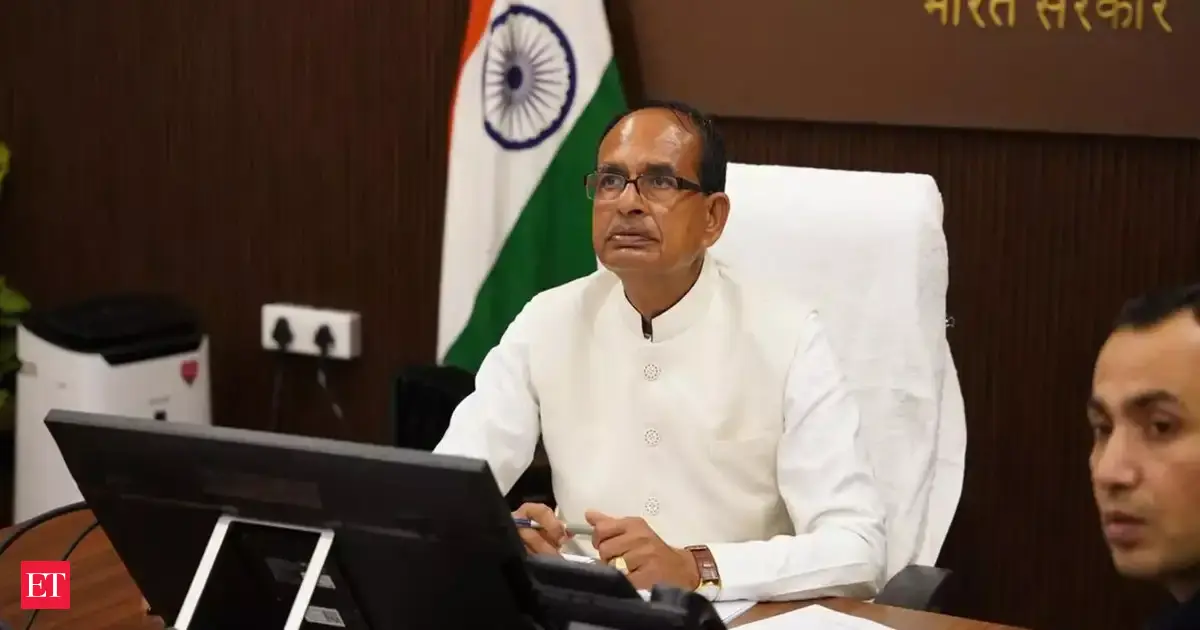
Union Minister Shivraj Singh Chouhan approved the procurement.
GK and monthly revision
Shivraj Singh Chouhan clears procurement of 3.37 lakh tonnes of tur in Maharashtra
Union Minister Shivraj Singh Chouhan approved the procurement of 3.37 lakh metric tons of tur in Maharashtra under the Price Support Scheme. This significant decision, valued at approximately Rs 2696 crore, aims to directly benefit farmers by ensuring procurement at Minimum Support Price. It highlights government intervention in agricultural markets and is crucial for understanding agricultural policy and farmer welfare initiatives for competitive exams.
Revision structure
Monthly events and exam calendar context
Static GK and one-liner notes
Quiz and mock-test revision path
Key points
Exam-ready takeaways
The procurement involves 3.37 lakh metric tons of 'tur' (pigeon pea).
The procurement will take place in Maharashtra.
The decision falls under the 'Price Support Scheme'.
The procurement is valued at approximately Rs 2696 crore at Minimum Support Price.
Detailed analysis
Full exam-oriented breakdown
The decision by Union Minister Shivraj Singh Chouhan to approve the procurement of 3.37 lakh metric tons of tur (pigeon pea) in Maharashtra under the Price Support Scheme (PSS) is a significant move with far-reaching implications for India's agricultural sector and farmer welfare. This action, valued at approximately Rs 2696 crore, directly addresses the persistent challenges faced by farmers, particularly price volatility and market gluts. **Background Context:** Indian agriculture, a cornerstone of the nation's economy, employs a substantial portion of its workforce. However, it is inherently vulnerable to various factors, including unpredictable weather patterns, fluctuating market prices, and inadequate infrastructure. Farmers often face distress sales when their produce floods the market, leading to prices plummeting below their cost of production. To mitigate this, the Indian government introduced the concept of Minimum Support Price (MSP) in the mid-1960s, primarily during the Green Revolution era. MSP is a guaranteed price for certain crops, ensuring a safety net for farmers. The Commission for Agricultural Costs and Prices (CACP) recommends MSPs for 22 mandated crops and Fair and Remunerative Price (FRP) for sugarcane. While MSP aims to protect farmers, effective procurement mechanisms are crucial to realize its benefits. The Price Support Scheme (PSS) is one such mechanism, implemented by central nodal agencies like NAFED (National Agricultural Cooperative Marketing Federation of India Ltd.) and FCI (Food Corporation of India), to procure specific crops (often pulses and oilseeds) when market prices fall below the announced MSP. **What Happened:** In this instance, Union Minister Shivraj Singh Chouhan, who heads the Ministry of Agriculture and Farmers Welfare, sanctioned the procurement of a substantial quantity of tur in Maharashtra. Maharashtra is a major producer of pulses, and tur is a critical crop for its farmers. The procurement, valued at Rs 2696 crore, ensures that farmers receive the Minimum Support Price for their produce, thereby shielding them from losses due to low market prices. A key directive accompanying this approval was the emphasis on direct procurement from farmers and the use of modern technology to ensure transparency and efficiency in the process. This highlights a commitment to minimize intermediaries and prevent exploitation of farmers. **Key Stakeholders Involved:** The primary beneficiaries of this decision are the **farmers** in Maharashtra who cultivate tur, as their income is secured. The **Government of India**, specifically the **Ministry of Agriculture and Farmers Welfare** led by Union Minister Shivraj Singh Chouhan, is the policy architect and funding authority. The **State Government of Maharashtra** plays a crucial role in facilitating the on-ground procurement operations, coordinating with central agencies. Implementing agencies such as **NAFED** and potentially **FCI** are responsible for the actual procurement process, including storage and distribution. Ultimately, **Indian consumers** indirectly benefit from stable availability of essential food items like pulses, contributing to overall food security. **Significance for India:** This procurement drive holds immense significance for India. Firstly, it directly addresses **farmer welfare** by providing a crucial income safety net, preventing distress sales, and reducing agrarian distress. This is vital for sustaining the livelihoods of millions. Secondly, it contributes to **food security** by incentivizing the cultivation of pulses, which are a critical source of protein and reduce India's reliance on imports. Historically, India has been a significant importer of pulses. Thirdly, it supports the **rural economy**, which is a major contributor to India's GDP and employment. Stable agricultural incomes translate into increased rural purchasing power, stimulating demand in other sectors. Politically, farmer welfare is a potent electoral issue, and such interventions demonstrate the government's commitment to the agricultural community. Furthermore, the emphasis on direct procurement and technology aligns with broader governance goals of transparency and efficiency, reducing corruption and ensuring benefits reach the intended recipients. **Historical Context:** The evolution of MSP and procurement policies is deeply intertwined with India's post-independence agricultural journey. Initially focused on cereals like wheat and rice during the Green Revolution to achieve self-sufficiency, the scope gradually expanded to include other crops, notably pulses and oilseeds, to promote diversification and address nutritional needs. The PSS for pulses and oilseeds gained prominence in recent decades as India sought to reduce its import bill for these commodities. Instances of farmer protests and suicides due to unremunerative prices have repeatedly underscored the critical need for effective government intervention mechanisms like PSS. **Future Implications:** This decision signals the government's continued commitment to intervening in agricultural markets to protect farmer interests. We can anticipate similar procurement operations for other crops and in other states facing similar market challenges. The emphasis on technology for transparency, such as direct bank transfers and digital monitoring of procurement centers, is likely to become a standard practice, enhancing accountability. However, such schemes also spark debates around their fiscal burden on the exchequer, potential market distortions, and the long-term sustainability of relying heavily on price support rather than market-oriented reforms. The government will need to balance farmer welfare with fiscal prudence and market efficiency. Moreover, consistent procurement at MSP can encourage farmers to stick to certain crops, potentially impacting crop diversification efforts and sustainable agricultural practices, especially concerning water-intensive crops. **Related Constitutional Articles, Acts, or Policies:** The constitutional framework relevant here includes the **Seventh Schedule**, which places 'Agriculture' under Entry 14 of the State List, and 'Trade and Commerce in, and Production, Supply and Distribution of, foodstuffs' under Entry 33 of the Concurrent List. This signifies shared responsibility between central and state governments. Directive Principles of State Policy (DPSP) like **Article 38** (State to secure a social order for the promotion of welfare of the people, striving to minimize inequalities) and **Article 39** (State to direct its policy towards securing adequate means of livelihood and equitable distribution of material resources) provide the broader constitutional mandate for such welfare-oriented economic policies. The **Commission for Agricultural Costs and Prices (CACP)**, though not a constitutional body, is a crucial government advisory body that recommends MSPs. The **National Food Security Act, 2013**, while primarily focusing on subsidized food grains, implicitly relies on robust agricultural production and procurement policies to ensure food availability. Other related policies include the **Pradhan Mantri Fasal Bima Yojana (PMFBY)** for crop insurance and **e-NAM (National Agriculture Market)** for electronic trading, which aims to improve market access and transparency for farmers.
How to study
Turn news into exam marks
Revise monthly events by exam family instead of reading random updates.
Pair one-liners with mock tests so mistakes become the next revision list.
Keep state job pages, calendar pages and GK packs connected in one path.