

The debate centers on the entry of non-Hindus into the pilgrimage sites of Badrinath and Kedarnath.
GK and monthly revision
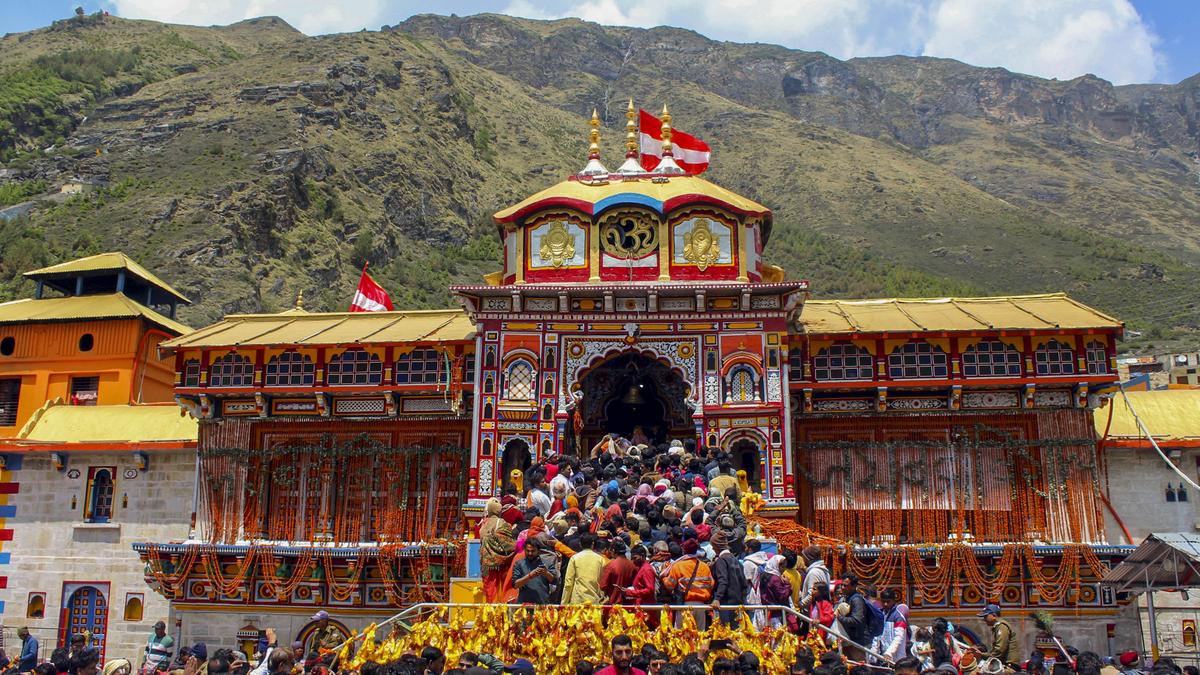
Debate rages over entry of non-Hindus into Badrinath, Kedarnath
A debate has emerged regarding the entry of non-Hindus into the sacred Badrinath and Kedarnath temples. Shri Badrinath Kedarnath Temple Committee chairman Hemant Dwivedi asserted that Hindu religious places, like mosques and churches, operate under specific rules for religious conduct. This issue highlights broader discussions on religious freedom, temple management, and access to pilgrimage sites, making it relevant for understanding cultural and constitutional aspects in competitive exams.
Revision structure
Monthly events and exam calendar context
Static GK and one-liner notes
Quiz and mock-test revision path
Key points
Exam-ready takeaways
Shri Badrinath Kedarnath Temple Committee chairman Hemant Dwivedi commented on the matter.
Dwivedi stated that Hindu religious places have specific rules for religious conduct, similar to other religious institutions.
Badrinath and Kedarnath are two of the revered Char Dham pilgrimage sites located in Uttarakhand.
The issue implicitly touches upon constitutional provisions related to religious freedom, particularly Article 25.
Detailed analysis
Full exam-oriented breakdown
The recent debate surrounding the entry of non-Hindus into the revered Badrinath and Kedarnath temples, sparked by the Shri Badrinath Kedarnath Temple Committee chairman Hemant Dwivedi's assertion about specific rules for Hindu religious places, encapsulates a complex interplay of religious tradition, constitutional rights, and the evolving nature of secularism in India. This issue is not merely a local dispute but reflects broader national discussions on religious freedom, temple management, and the state's role in religious affairs. **Background Context and What Happened:** Badrinath and Kedarnath are two of the four sacred Char Dham pilgrimage sites in Uttarakhand, deeply significant for Hindu devotees across India and beyond. These temples are ancient, steeped in mythology and history, and attract millions of pilgrims annually. The controversy arose when the Temple Committee chairman, Hemant Dwivedi, reiterated that Hindu religious places, much like mosques and churches, operate under their own specific rules for religious conduct. This statement came amidst discussions or perhaps implicit challenges regarding the entry of non-Hindus, suggesting a reinforcement of existing or perceived restrictions. While specific boards or signs prohibiting non-Hindus might not be universally present, the tradition and prevailing understanding in many Hindu temples, particularly those considered highly sacred or having specific rituals, often imply or explicitly state entry is reserved for Hindus. The Badrinath Kedarnath Temple Committee is a statutory body, managing these significant shrines under state legislation, giving its chairman's statements considerable weight. **Key Stakeholders Involved:** 1. **Shri Badrinath Kedarnath Temple Committee:** As the primary administrative body, its chairman's statements define the official stance on temple entry. They are responsible for the management, rituals, and upkeep of these prominent shrines, balancing religious traditions with administrative duties. 2. **Hindu Devotees:** A vast majority of pilgrims are Hindus who visit these sites for spiritual solace. Their beliefs and traditions often support the maintenance of specific religious customs, including entry rules. 3. **Non-Hindu Individuals/Groups:** Those who might wish to visit the temples out of curiosity, respect for cultural heritage, or personal spiritual seeking, but are barred by current or traditional rules. This group may include tourists, researchers, or individuals of other faiths. 4. **Uttarakhand State Government:** Given that the Temple Committee is a statutory body, the state government has an overarching role in its governance and policy, including any legislation related to temple management. The state's stance impacts religious tourism and the broader perception of secular governance. 5. **Civil Society Organizations and Legal Experts:** These groups often engage in debates surrounding religious freedom, secularism, and the rights of various communities, potentially leading to legal challenges or public advocacy. **Why This Matters for India:** This debate holds immense significance for India due to its constitutional commitment to secularism and the fundamental rights it grants. India is a pluralistic society, and how it navigates such issues impacts its social fabric, religious harmony, and democratic principles. * **Constitutional Principles:** It directly invokes fundamental rights like the Right to Equality (Article 14, 15) and the Right to Freedom of Religion (Article 25, 26). While Article 25 guarantees freedom of conscience and the right to freely profess, practice, and propagate religion, it is subject to public order, morality, and health. Crucially, Article 25(2)(b) allows the state to make laws providing for social welfare and reform or
How to study
Turn news into exam marks
Revise monthly events by exam family instead of reading random updates.
Pair one-liners with mock tests so mistakes become the next revision list.
Keep state job pages, calendar pages and GK packs connected in one path.