

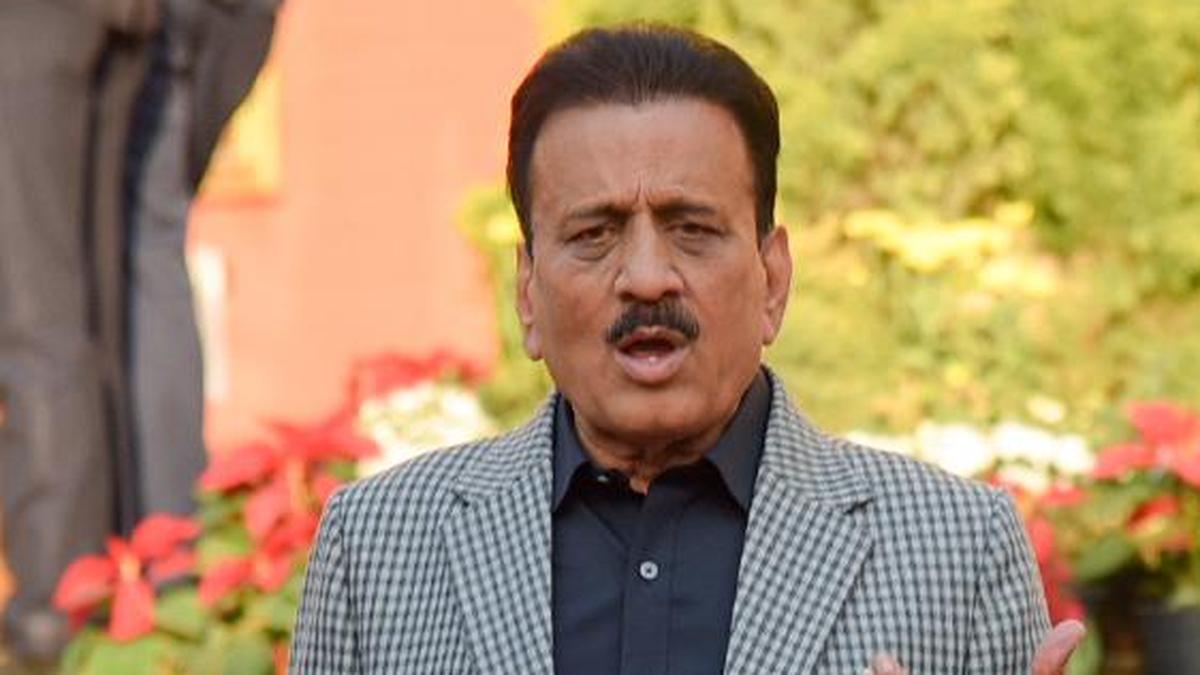
A forest guard questioned a Maharashtra cabinet Minister during a public event.
GK and monthly revision
‘Why didn’t you mention Dr. Ambedkar’s name’, angry forest guard asks Maharashtra cabinet Minister during Republic Day event
A forest guard in Maharashtra questioned a state cabinet Minister during a Republic Day event for not mentioning Dr. B.R. Ambedkar's name in his speech. This incident led the guard to seek legal action against the Minister under the Scheduled Castes and the Scheduled Tribes (Prevention of Atrocities) Act. It highlights the importance of recognizing key constitutional figures and the application of social justice laws, making it relevant for exams on constitutional provisions and social issues.
Revision structure
Monthly events and exam calendar context
Static GK and one-liner notes
Quiz and mock-test revision path
Key points
Exam-ready takeaways
The questioning concerned the omission of Dr. B.R. Ambedkar's name from the Minister's speech.
The incident occurred during a Republic Day celebration.
The forest guard sought to file a case under the Scheduled Castes and the Scheduled Tribes (Prevention of Atrocities) Act.
The event and incident took place in Maharashtra.
Detailed analysis
Full exam-oriented breakdown
The incident where a forest guard questioned a Maharashtra cabinet Minister for omitting Dr. B.R. Ambedkar's name during a Republic Day speech, and subsequently sought legal action under the Scheduled Castes and the Scheduled Tribes (Prevention of Atrocities) Act, is a potent illustration of the deep-seated significance of constitutional figures and social justice laws in India. This event, unfolding on a day commemorating the adoption of India's Constitution, brings to the forefront critical aspects of governance, social recognition, and legal accountability. **Background Context and What Happened:** Republic Day, celebrated on January 26th each year, marks the day in 1950 when the Constitution of India came into effect. It is a day for citizens and leaders alike to reflect on the nation's foundational principles of justice, liberty, equality, and fraternity. Against this backdrop, a forest guard in Maharashtra confronted a state cabinet Minister during a public address for not acknowledging Dr. B.R. Ambedkar, the chief architect of the Indian Constitution and a towering figure in the fight against social discrimination. The guard's subsequent demand to register a case against the Minister under the Scheduled Castes and the Scheduled Tribes (Prevention of Atrocities) Act, 1989 (often referred to as the PoA Act or SC/ST Act), elevates the incident beyond a mere public disagreement, turning it into a matter of legal and constitutional interpretation. **Key Stakeholders Involved:** 1. **The Forest Guard:** Represents an ordinary citizen exercising their right to question public officials and, more importantly, a member of a community for whom Dr. Ambedkar's legacy holds immense symbolic and historical value. Their action underscores the active engagement of citizens in upholding constitutional values. 2. **The Maharashtra Cabinet Minister:** As a public representative, the Minister is expected to uphold constitutional principles and be sensitive to the diverse sentiments of the populace. The omission, whether intentional or accidental, highlights the scrutiny public figures face regarding their speeches and gestures. 3. **Dr. B.R. Ambedkar:** Although not physically present, his monumental legacy is at the heart of the incident. He is revered as a champion of social justice, an architect of modern India, and a tireless advocate for the rights of the marginalized, particularly the Scheduled Castes. 4. **The Scheduled Castes and Scheduled Tribes:** These communities are the primary beneficiaries of the PoA Act and view Dr. Ambedkar as their emancipator. The incident resonates deeply within these communities, highlighting their ongoing struggle for dignity and recognition. 5. **The Indian Judiciary and Law Enforcement:** They become stakeholders if the legal complaint progresses, tasked with interpreting the PoA Act and determining if the Minister's actions constitute an 'atrocity' as defined by the law. **Significance for India and Historical Context:** This incident is highly significant for India, touching upon several critical themes. Socially, it underscores the continued importance of Dr. Ambedkar's legacy in public life and the sensitivity surrounding issues of caste and social justice. For millions, Dr. Ambedkar is not just a historical figure but a living symbol of their aspirations for equality and dignity. Politically, the event can fuel debates on representation, historical acknowledgment, and the conduct of public officials. It reinforces the idea that omissions can be as impactful as commissions, especially when they pertain to figures central to India's social reform narrative. Historically, Dr. Ambedkar's contributions are unparalleled. Born into the Mahar (Dalit) caste, he faced severe discrimination but rose to become a barrister, economist, politician, and social reformer. His relentless fight against untouchability and his role as the Chairman of the Drafting Committee of the Indian Constitution ensured that principles of equality, justice, and fraternity were enshrined as fundamental rights. His efforts led to crucial provisions like Article 17, which abolished untouchability, and various affirmative action policies. The PoA Act itself, enacted in 1989, is a direct outcome of this historical struggle, designed to prevent atrocities and provide special protection to SCs and STs, recognizing the historical injustices they have faced. **Related Constitutional Articles, Acts, and Future Implications:** The core of the legal demand lies in the **Scheduled Castes and the Scheduled Tribes (Prevention of Atrocities) Act, 1989**. This Act was legislated to prohibit the commission of offenses against members of SCs and STs and to provide for special courts for the trial of such offenses and for the relief and rehabilitation of the victims. Its various sections define 'atrocities' broadly, including acts that insult or humiliate members of these communities. Whether a mere omission in a speech falls under the purview of 'atrocity' is a complex legal question that might be debated if the case proceeds. Other relevant constitutional provisions include: * **Article 17: Abolition of Untouchability** – A cornerstone of Ambedkar's vision. * **Article 15: Prohibition of Discrimination** on grounds of religion, race, caste, sex, or place of birth. * **Article 46: Promotion of educational and economic interests of Scheduled Castes, Scheduled Tribes and other weaker sections** – A Directive Principle of State Policy. * The **Preamble** of the Constitution, which promises Justice (social, economic, political), Liberty, Equality, and Fraternity, principles championed by Dr. Ambedkar. Future implications could include heightened awareness among public officials regarding the need to be inclusive and historically accurate in their public addresses, especially on national occasions. It might lead to a legal precedent regarding what constitutes an 'atrocity' under the PoA Act in cases of symbolic omissions. Furthermore, it could galvanize social movements advocating for greater recognition of marginalized leaders and continued vigilance against subtle forms of discrimination or disrespect. The incident serves as a stark reminder that while the Constitution guarantees equality, the struggle for social justice and recognition remains an ongoing process in India's democratic journey.
How to study
Turn news into exam marks
Revise monthly events by exam family instead of reading random updates.
Pair one-liners with mock tests so mistakes become the next revision list.
Keep state job pages, calendar pages and GK packs connected in one path.