

The India-EU Free Trade Agreement (FTA) negotiations have been concluded after two decades of talks.
GK and monthly revision
India-EU FTA to cover 99% of Indian exports, 97% of EU exports, says Piyush Goyal
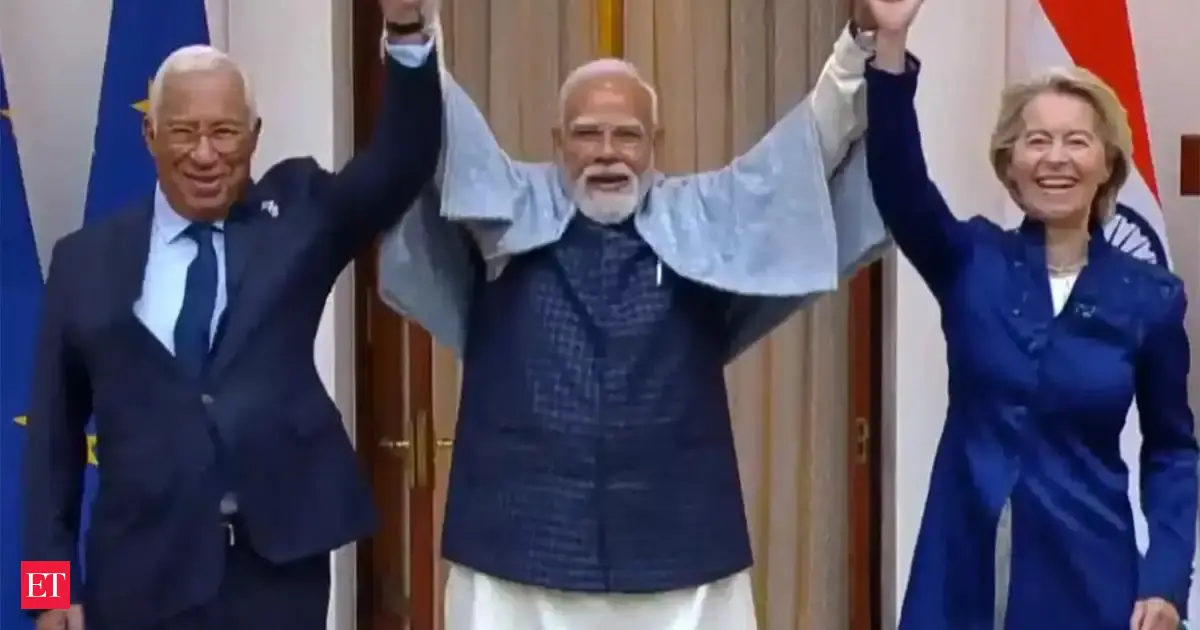
India and the European Union have concluded negotiations for a comprehensive Free Trade Agreement (FTA), marking a significant step in India's trade diplomacy after two decades of talks. This landmark deal, dubbed the "mother of all deals" by Piyush Goyal, aims to cover 99% of Indian exports and 97% of EU exports, boosting bilateral commerce. Its implications for trade, economy, and international relations make it highly relevant for competitive exams.
Revision structure
Monthly events and exam calendar context
Static GK and one-liner notes
Quiz and mock-test revision path
Key points
Exam-ready takeaways
The FTA is expected to cover 99% of India's exports to the European Union.
The agreement will cover 97% of the European Union's exports to India.
Union Minister Piyush Goyal referred to this comprehensive deal as the "mother of all deals."
The agreement is a comprehensive free trade agreement, covering nearly all traded goods and services.
Detailed analysis
Full exam-oriented breakdown
The recent conclusion of negotiations for a comprehensive Free Trade Agreement (FTA) between India and the European Union (EU) marks a pivotal moment in India's trade diplomacy and global economic engagement. Dubbed the "mother of all deals" by Union Minister Piyush Goyal, this agreement is set to cover an ambitious 99% of India's exports to the EU and 97% of the EU's exports to India, encompassing both goods and services. **Background Context and Historical Journey:** India and the EU, two of the world's largest economies and democratic entities, initiated negotiations for a broad-based trade and investment agreement (BTIA) way back in 2007. The initial talks, however, stalled in 2013 due to significant differences on key issues. These included the EU's demands for greater market access in India's automotive, wine, and spirits sectors, and stronger intellectual property rights protection. India, on its part, sought greater access for its skilled professionals (Mode 4 services) and robust data security provisions. After nearly a decade of hiatus, the negotiations were officially relaunched in June 2022, reflecting a renewed strategic imperative from both sides to deepen economic ties amidst evolving geopolitical landscapes and global supply chain realignments. **What Happened: A Landmark Achievement:** After two decades of on-again, off-again discussions, the finalization of the FTA negotiations signifies a breakthrough. The agreement is comprehensive, moving beyond mere tariff reductions to include provisions on trade facilitation, services, investment, intellectual property rights, sustainable development, and dispute settlement mechanisms. This holistic approach aims to create a more predictable and transparent trade and investment environment, reducing non-tariff barriers and fostering greater economic integration. The high percentage coverage of exports underscores the depth and ambition of this agreement, promising substantial benefits for businesses on both sides. **Key Stakeholders and Their Motivations:** On the Indian side, the Ministry of Commerce and Industry, led by Minister Piyush Goyal, has been the primary driver. Indian industries such as textiles, pharmaceuticals, automotive components, and IT services stand to gain significantly from enhanced market access to the EU. The agreement also aligns with the broader goals of 'Make in India' and 'Atmanirbhar Bharat' initiatives by encouraging domestic manufacturing to cater to a larger global market and attracting foreign investment. For the EU, represented by the European Commission, the motivation lies in accessing India's vast and rapidly growing market, diversifying its supply chains, and strengthening strategic partnerships in the Indo-Pacific region. European industries, including machinery, chemicals, advanced manufacturing, and luxury goods, are keen to capitalize on reduced tariffs and improved market conditions in India. Consumers in both regions are also key stakeholders, potentially benefiting from a wider variety of goods and services at competitive prices. **Significance for India:** This FTA holds immense significance for India. Economically, the EU is India's third-largest trading partner, and this agreement is expected to significantly boost bilateral trade, which currently stands at over $120 billion. Increased market access for Indian goods and services will stimulate export growth, create employment opportunities, and attract foreign direct investment (FDI) into India, particularly in manufacturing and infrastructure. Strategically, the deal diversifies India's trade relationships, reducing over-reliance on any single region and enhancing its resilience against global economic shocks. It strengthens India's geopolitical standing as a reliable partner for democratic economies and provides a counterweight to growing Chinese economic influence. Furthermore, the agreement's focus on sustainable development chapters aligns with India's commitment to climate action and responsible trade practices. **Constitutional and Policy Framework:** From a constitutional perspective, international agreements like this FTA are typically entered into by the Executive. However, their implementation often requires legislative action. **Article 253 of the Indian Constitution** grants Parliament the power to make any law for implementing any treaty, agreement, or convention with any other country or any decision made at any international conference, association, or other body. This ensures that the provisions of the FTA, once ratified, can be domestically enforced through appropriate laws and regulations. The agreement also aligns with India's **Foreign Trade Policy**, which aims to make India a major participant in world trade and integrate it with the global economy. Policies like 'Make in India' and 'Atmanirbhar Bharat' are directly supported by the enhanced market access and investment opportunities this FTA promises. **Future Implications:** The successful implementation of the India-EU FTA will solidify India's position as a crucial player in global trade. It is expected to lead to increased cross-border investments, technology transfer, and deeper integration of value chains. While the agreement opens up vast opportunities, challenges such as harmonizing regulatory standards, addressing non-tariff barriers, and ensuring equitable benefits across all sectors will need careful management during the implementation phase. This landmark deal could also set a precedent for India's ongoing and future FTA negotiations with other major economies, demonstrating India's commitment to global economic integration and its capacity to conclude complex trade agreements.
How to study
Turn news into exam marks
Revise monthly events by exam family instead of reading random updates.
Pair one-liners with mock tests so mistakes become the next revision list.
Keep state job pages, calendar pages and GK packs connected in one path.