

India currently has social security agreements in place with 14 EU member countries.
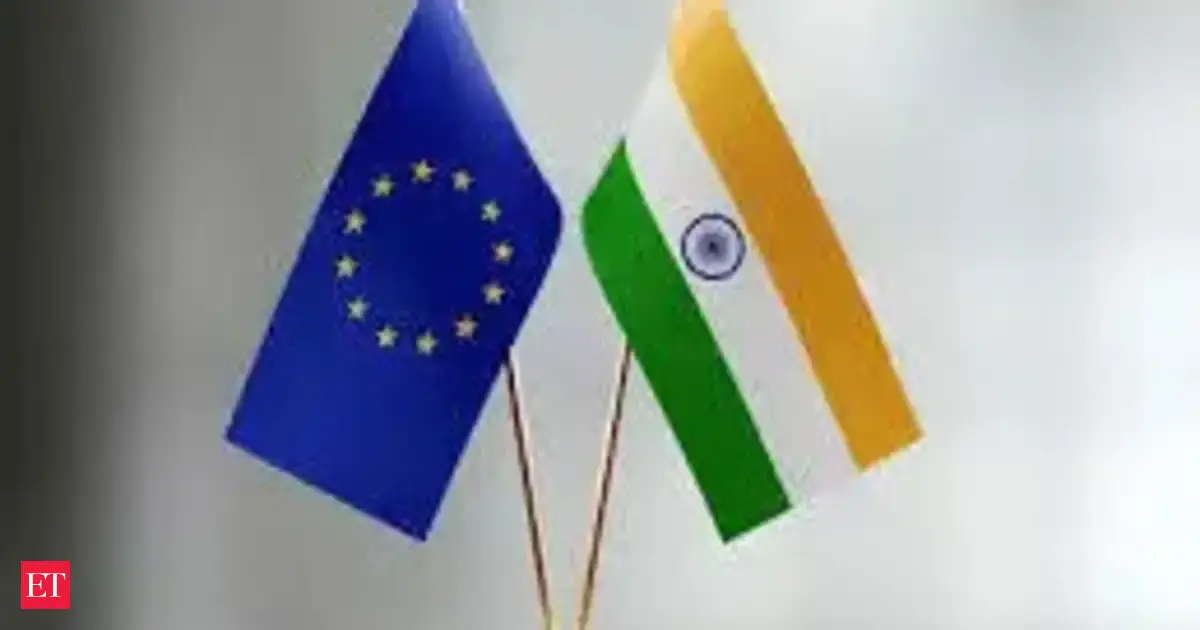
GK and monthly revision
India hopes to conclude social security pacts with remaining 13 EU members in 5 years
India is actively expanding its social security agreements with European Union nations, aiming to finalize pacts with the remaining 13 EU member states within the next five years. This initiative is crucial for Indian professionals working abroad, as these agreements prevent them from making double social security contributions. The move significantly benefits Indian skilled workers and businesses, streamlining international employment and fostering stronger economic ties.
Revision structure
Monthly events and exam calendar context
Static GK and one-liner notes
Quiz and mock-test revision path
Key points
Exam-ready takeaways
India intends to finalize social security agreements with the remaining 13 EU member states.
The target timeline for concluding these agreements with the remaining 13 EU members is within the next five years.
These social security agreements are designed to prevent Indian professionals from making double contributions in the EU.
The agreements are a significant development for Indian businesses and skilled workers operating abroad in the EU.
Detailed analysis
Full exam-oriented breakdown
The pursuit of social security agreements (SSAs) with European Union nations marks a significant stride in India's economic diplomacy and its commitment to the welfare of its global workforce. At its core, a social security agreement is a bilateral pact designed to protect the social security rights of workers who have divided their careers between two countries. Without such agreements, individuals might lose out on benefits or be forced to make double contributions – once in their home country and again in the host country – leading to financial burdens and administrative complexities. Historically, as India's economy liberalized in the early 1990s and its skilled workforce began to seek opportunities globally, the issue of social security for expatriate Indians became increasingly pertinent. Indian professionals, especially in the IT and engineering sectors, found themselves contributing to social security schemes in countries like the USA, UK, and various EU nations, often without the ability to repatriate these funds or claim benefits upon retirement if they did not meet specific residency or contribution thresholds. This led to significant financial losses for both individuals and companies. India began actively pursuing SSAs in the early 2000s, with its first agreement being signed with Belgium in 2009. Since then, India has expanded its network, now boasting SSAs with 14 of the 27 EU member states, alongside agreements with other major economies like the USA, Canada, Australia, and Japan. The current objective to finalize agreements with the remaining 13 EU members within the next five years underscores India's strategic focus on the European market, which is a major destination for Indian talent and investment. These agreements operate on key principles: 'totalization' and 'portability'. Totalization means that periods of coverage in both countries are combined to determine eligibility for benefits. Portability ensures that benefits earned in one country can be paid to the beneficiary even if they reside in the other country. For Indian professionals, this translates into direct financial savings by exempting them from making social security contributions in the host EU country if they continue to contribute to India's social security system (e.g., Employees’ Provident Fund Organisation – EPFO). This exemption typically applies for a specified period, often up to 60 months, which can be extended. For businesses, it reduces the cost of deploying Indian employees abroad, making Indian companies more competitive in international markets. Key stakeholders in this process include the Indian government, particularly the Ministry of External Affairs (MEA) for treaty negotiations, the Ministry of Labour & Employment for policy formulation, and the Ministry of Finance for broader economic implications. Indian professionals and businesses are direct beneficiaries, gaining financial relief and operational ease. The EU member states also benefit through reciprocal agreements, which protect their citizens working in India and foster stronger bilateral economic ties. While the EU does not sign SSAs as a bloc, the European Commission plays a role in coordinating member states' policies and ensuring consistency with EU law, making the process of individual bilateral agreements somewhat streamlined. This initiative holds immense significance for India. Economically, it boosts India's services exports, particularly in IT and healthcare, by making Indian professionals more attractive to overseas employers due to reduced social security costs. It also enhances the competitiveness of Indian companies operating abroad. Socially, it provides a crucial safety net for the Indian diaspora, ensuring their long-term welfare and fostering a sense of security, which can encourage more skilled migration. Diplomatically, successfully concluding these agreements strengthens India's bilateral relations with individual EU nations and demonstrates India's commitment to facilitating global labour mobility and protecting its citizens' interests abroad. From a constitutional perspective, the power to enter into and implement treaties and agreements with foreign countries lies with the Union Government, as specified in Entry 14 of the Union List under the Seventh Schedule of the Indian Constitution. Article 51, a Directive Principle of State Policy, encourages the State to foster respect for international law and treaty obligations, aligning with the spirit of these SSAs. While specific social security provisions are covered under domestic laws like the Employees' Provident Funds and Miscellaneous Provisions Act, 1952, and the Employees' State Insurance Act, 1948, these international agreements essentially extend the protective umbrella of social security beyond national borders, fulfilling the broader welfare objectives enshrined in Articles 38, 39, 41, and 43 of the DPSP, which mandate the state to secure social justice and welfare for its citizens, including the right to work and public assistance in certain cases. Looking ahead, the successful conclusion of SSAs with all EU members could set a precedent for similar expanded agreements with other regions, further integrating India's workforce into the global economy. It reflects India's growing stature as a global player and its proactive approach to addressing the challenges faced by its diaspora. Such agreements also contribute to a more predictable and stable international legal framework for labour mobility, which is crucial in an increasingly globalized world. This ongoing effort is a testament to India's commitment to its citizens' welfare, both at home and abroad, and its strategic engagement with key economic partners.
How to study
Turn news into exam marks
Revise monthly events by exam family instead of reading random updates.
Pair one-liners with mock tests so mistakes become the next revision list.
Keep state job pages, calendar pages and GK packs connected in one path.