

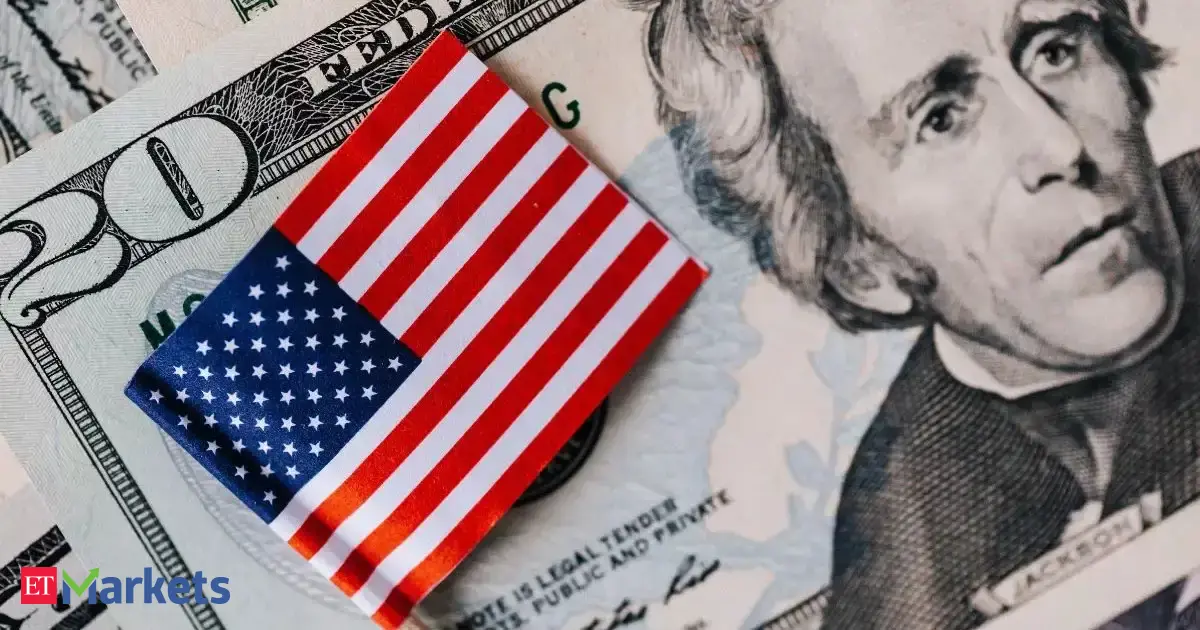
The US dollar is projected to experience fresh pressure in early 2026.
GK and monthly revision
US dollar under pressure in early 2026 amid policy and market uncertainty
The US dollar is anticipated to face renewed pressure in early 2026, driven by a reassessment of its strength among investors. This situation is attributed to evolving US policies, escalating geopolitical risks, and strategic moves by various central banks. Furthermore, indications from Washington favoring a weaker currency are exacerbating the strain, making it crucial for competitive exam aspirants to understand global economic dynamics and currency movements.
Revision structure
Monthly events and exam calendar context
Static GK and one-liner notes
Quiz and mock-test revision path
Key points
Exam-ready takeaways
Shifting US policies are identified as a significant factor contributing to the dollar's reassessment.
Geopolitical risks are cited as another key reason for the US dollar's anticipated strain.
Central bank moves globally are influencing the perceived strength of the US dollar.
Signals from Washington indicating a preference for a weaker currency are adding to the dollar's pressure.
Detailed analysis
Full exam-oriented breakdown
The projected pressure on the US dollar in early 2026 signifies a crucial shift in global economic dynamics, demanding a nuanced understanding for competitive exam aspirants. For decades, the US dollar has reigned supreme as the world's primary reserve currency, a status largely cemented by the Bretton Woods Agreement of 1944. This agreement pegged major world currencies to the dollar, which in turn was convertible to gold. Although the gold standard was abandoned in 1971, the dollar's role as the dominant currency for international trade, finance, and central bank reserves persisted due to the sheer size and stability of the US economy, its deep capital markets, and geopolitical influence. This dominance has historically provided the US with significant economic advantages, including lower borrowing costs and insulation from currency crises. However, the article points to renewed pressure on the dollar, driven by a confluence of factors. Firstly, **shifting US policies** are a major contributor. This could encompass changes in fiscal policy (government spending and taxation), trade policy (tariffs, trade agreements), or even a deliberate shift in currency policy where Washington signals a preference for a weaker dollar. A weaker dollar can make US exports cheaper and more competitive, potentially boosting domestic industries and employment, while also making dollar-denominated debt easier to service. Secondly, **geopolitical risks** play a significant role. Global instability, conflicts, or major power shifts can lead investors to reassess safe-haven assets. While traditionally the dollar has been a primary safe haven, persistent or new geopolitical tensions could prompt diversification away from dollar-denominated assets, especially if the US itself is perceived as a source of instability or its economic outlook becomes uncertain. Thirdly, **central bank moves globally** are critical. If other major central banks (like the European Central Bank, Bank of Japan, or People's Bank of China) adopt more aggressive monetary tightening (raising interest rates) or significant easing, it alters the relative attractiveness of their currencies versus the dollar, influencing capital flows and exchange rates. **Key stakeholders** in this scenario include the **US Federal Reserve**, whose monetary policy (interest rates, quantitative easing/tightening) directly impacts the dollar's value. The **US Treasury Department and the Executive Branch** shape fiscal and trade policies and can influence currency perception through official statements. **Other major central banks** like the ECB, BoJ, and RBI, through their independent monetary policies, constantly interact with the dollar's strength. Lastly, **global investors and financial markets**, through their collective investment decisions based on economic data, policy signals, and risk perception, ultimately determine currency movements. **For India,** a weaker US dollar has multi-faceted implications. On the one hand, it could be beneficial for India's **import bill**. Since commodities like crude oil and many capital goods are priced in dollars, a stronger Indian Rupee (INR) against a weaker dollar would make these imports cheaper, potentially easing inflationary pressures and reducing the current account deficit. This is crucial given India's significant reliance on imported oil. On the other hand, a weaker dollar could make Indian **exports** relatively more expensive in international markets, potentially impacting their competitiveness and growth, especially for sectors like IT services and textiles that earn substantial foreign exchange. India's **external debt**, much of which is dollar-denominated, would become easier to service in rupee terms if the INR strengthens. The **Reserve Bank of India (RBI)** plays a critical role in managing currency volatility through interventions in the foreign exchange market to ensure stability and protect India's economic interests. The **Foreign Exchange Management Act (FEMA), 1999**, governs foreign exchange transactions and capital flows in India, while the **RBI Act, 1934**, empowers the RBI to formulate and implement monetary policy and manage foreign exchange reserves. Historically, discussions around the dollar's dominance have resurfaced during periods of US economic stress or rising geopolitical multipolarity. The current scenario could be seen as part of a broader trend towards a more **multipolar currency world**, where the dollar's share in global reserves and transactions might gradually decline in favor of other major currencies or even a basket of currencies. This could lead to greater diversification in international trade invoicing and capital flows. For India, this implies a need for robust **foreign exchange management** and a continued focus on strengthening its economic fundamentals to withstand global currency shocks. Future implications include potential shifts in global trade patterns, commodity pricing, and international financial architecture. India's ability to navigate these changes will depend on its economic resilience, prudent fiscal management, and strategic trade policies, all aimed at achieving sustainable growth and stability as outlined in various government policies and economic surveys.
How to study
Turn news into exam marks
Revise monthly events by exam family instead of reading random updates.
Pair one-liners with mock tests so mistakes become the next revision list.
Keep state job pages, calendar pages and GK packs connected in one path.