

India and the European Union (EU) have signed a significant Free Trade Agreement (FTA).
GK and monthly revision
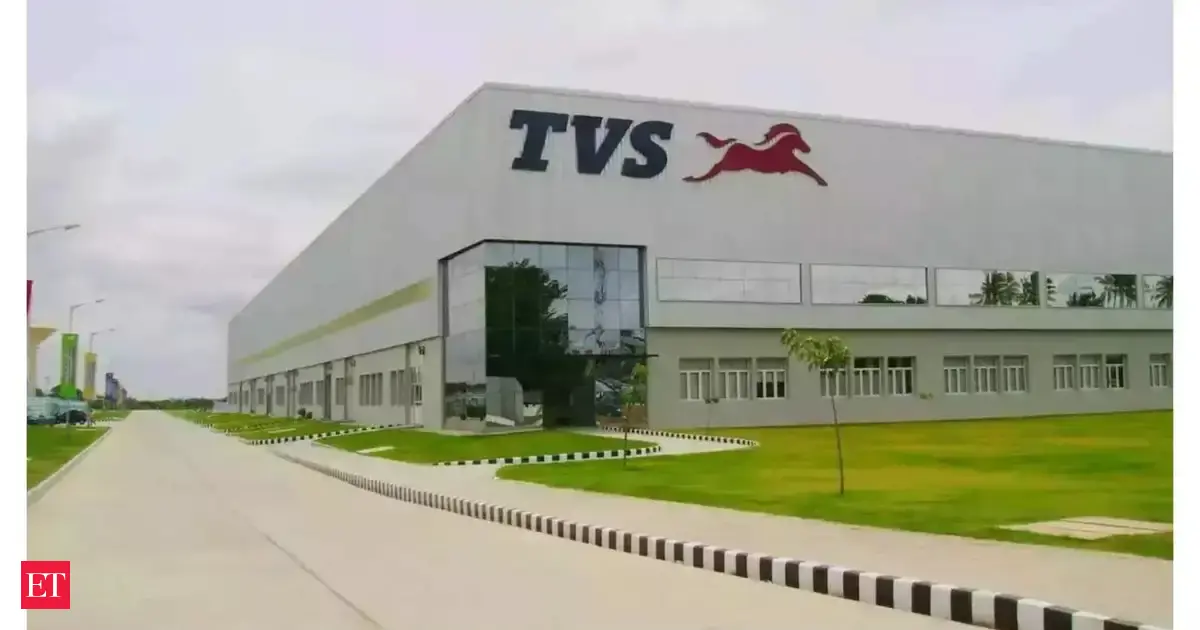
India-EU FTA opens pathways for Indian manufacturers to compete globally: TVS Motor
India and the European Union have signed a significant Free Trade Agreement (FTA), poised to transform business environments for Indian industries. This landmark deal aims to strengthen supply chains and foster innovation-led manufacturing, creating global competitive pathways. For competitive exams, understanding the parties involved and the broad economic implications of such FTAs is crucial for questions on trade and international relations.
Revision structure
Monthly events and exam calendar context
Static GK and one-liner notes
Quiz and mock-test revision path
Key points
Exam-ready takeaways
The FTA is expected to transform business environments for Indian industries.
It aims to strengthen supply chains for Indian manufacturers.
The agreement creates new avenues for innovation-led Indian manufacturers.
TVS Motor Company views the India-EU FTA as a major milestone for opportunities in Europe.
Detailed analysis
Full exam-oriented breakdown
The recent signing of a significant Free Trade Agreement (FTA) between India and the European Union (EU) marks a pivotal moment in India's economic trajectory and its ambition to become a global manufacturing powerhouse. This landmark deal, a culmination of years of negotiations, is poised to reshape the business landscape for Indian industries, bolster supply chains, and unlock new avenues for innovation-led manufacturing, as highlighted by industry leaders like TVS Motor Company. **Background Context and Historical Trajectory:** India and the European Union, two of the world's largest economies and democratic entities, have a long-standing relationship. Formal economic cooperation dates back decades, but the idea of a comprehensive FTA gained traction in the early 2000s. Negotiations for a Broad-based Trade and Investment Agreement (BTIA) were initially launched in 2007. However, these talks faced significant hurdles, primarily over issues such as market access for agricultural products, services, intellectual property rights, and government procurement, leading to their suspension in 2013. The global economic shifts, including supply chain vulnerabilities exposed by the pandemic, geopolitical realignments, and India's renewed focus on trade liberalization, provided the impetus for the resumption of negotiations in June 2022. This time, both sides demonstrated renewed political will to overcome past impasses and forge a mutually beneficial agreement. **What Happened and Key Provisions:** The India-EU FTA is envisioned as a comprehensive agreement covering trade in goods, services, investment, intellectual property rights (IPR), geographical indications (GIs), and provisions for sustainable development. While the prompt states it has been 'signed', it's important for aspirants to note that comprehensive FTAs often undergo multiple rounds of negotiation and ratification. The core objective is to reduce or eliminate tariffs on a wide range of products, dismantle non-tariff barriers, facilitate easier movement of professionals, protect investments, and ensure a level playing field for businesses. For Indian manufacturers, this translates into significantly enhanced market access to the EU's vast consumer base of over 450 million people, making Indian products more competitive by reducing import duties. **Key Stakeholders Involved:** On the Indian side, the primary stakeholder is the **Government of India**, particularly the Ministry of Commerce and Industry, which spearheads the negotiations. **Indian industries** across various sectors – automotive (like TVS Motor), textiles, pharmaceuticals, chemicals, leather, IT services, and agriculture – are crucial beneficiaries and contributors to the negotiation mandate. Their feedback and requirements shape India's demands. **Indian farmers** and **consumers** are also indirect stakeholders, impacted by potential price changes and product availability. On the EU side, the **European Commission** negotiates on behalf of its 27 member states, with the approval of the **European Council** and **European Parliament**. **European businesses** and **consumers** are the primary stakeholders here, seeking greater access to India's burgeoning market and diverse products. **Significance for India:** This FTA holds immense significance for India across multiple dimensions: 1. **Economic Boost**: It will provide a substantial fillip to India's exports, especially for sectors where India has a competitive advantage but faces tariff barriers. Reduced tariffs mean Indian goods become cheaper and more attractive in the EU market, potentially boosting export volumes significantly. This aligns perfectly with the 'Make in India' and 'Atmanirbhar Bharat' initiatives by encouraging domestic manufacturing for global markets. 2. **Investment and Technology Transfer**: The investment protection provisions within the FTA are expected to attract greater Foreign Direct Investment (FDI) from the EU into India, bringing capital, advanced technology, and best practices. This can lead to job creation, skill development, and infrastructure improvements. 3. **Supply Chain Diversification**: In a world grappling with supply chain resilience, this FTA offers India an opportunity to integrate more deeply into global value chains and diversify its trade relationships, reducing over-reliance on any single region. 4. **Innovation and Competitiveness**: Increased competition from European firms and access to advanced technologies can spur innovation among Indian manufacturers. The agreement will push Indian companies to enhance product quality, efficiency, and sustainability standards, making them globally competitive. 5. **Geopolitical and Strategic Importance**: The EU is a critical geopolitical player. Strengthening economic ties with the EU enhances India's strategic autonomy and balances its foreign policy objectives, especially in the Indo-Pacific context. **Constitutional and Policy References:** The power to enter into and implement international treaties and agreements primarily rests with the Executive. **Article 73** of the Indian Constitution states that the executive power of the Union extends to matters with respect to which Parliament has power to make laws. More specifically, **Article 253** empowers Parliament to make any law for implementing any treaty, agreement, or convention with any other country or any decision made at any international conference, association, or other body. This article provides the constitutional basis for enacting domestic legislation necessary to give effect to the provisions of the FTA. Furthermore, the **Foreign Trade (Development and Regulation) Act, 1992**, and India's periodically updated **Foreign Trade Policy (FTP)** govern the framework within which such agreements operate, aiming to facilitate exports and regulate imports. **Future Implications:** The India-EU FTA is expected to be a game-changer, potentially increasing bilateral trade volumes significantly and fostering deeper economic integration. For Indian manufacturers, it opens doors not just to the EU but also positions them better to compete globally. However, it also presents challenges: some domestic industries might face increased competition from European imports, necessitating structural adjustments and government support for adaptation. The success of the FTA will depend on effective implementation, continuous monitoring, and the ability of Indian businesses to leverage the new opportunities. This agreement also signals India's growing confidence in engaging with large economic blocs and its commitment to a rules-based international trading system, setting a precedent for future FTAs with other partners globally.
How to study
Turn news into exam marks
Revise monthly events by exam family instead of reading random updates.
Pair one-liners with mock tests so mistakes become the next revision list.
Keep state job pages, calendar pages and GK packs connected in one path.