

India is poised to sign a 10-year uranium supply deal with Canada.
GK and monthly revision
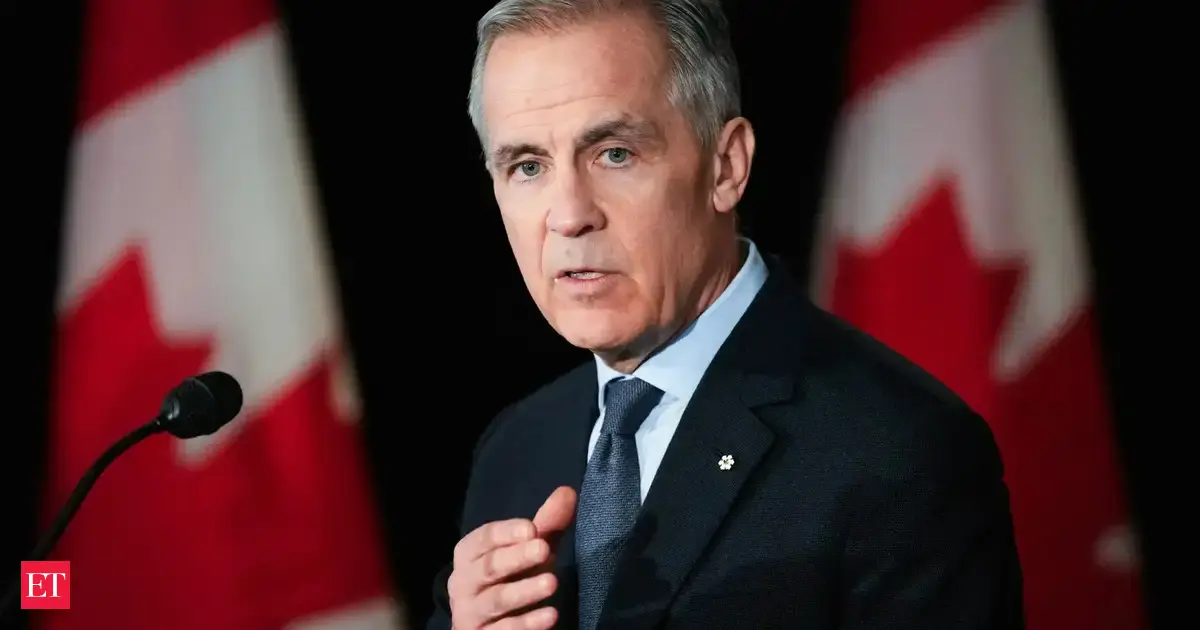
India set to ink 10-yr uranium supply deal during Canadian PM Mark Carney's visit
India is set to ink a significant 10-year uranium supply deal with Canada, valued at 2.8 billion Canadian dollars, during Canadian PM Mark Carney's upcoming March visit. This agreement, alongside long-term deals for crude oil, LPG, LNG, and critical minerals, aims to enhance India's energy security and reset bilateral ties. This development is crucial for understanding India's international relations and energy diplomacy for competitive exams.
Revision structure
Monthly events and exam calendar context
Static GK and one-liner notes
Quiz and mock-test revision path
Key points
Exam-ready takeaways
The uranium supply deal is valued at 2.8 billion Canadian dollars.
The agreement is expected to be finalized during Canadian PM Mark Carney's visit to India in March.
The visit also aims to secure long-term energy supplies, including crude oil, LPG, and LNG.
Agreements for critical minerals are also on the agenda to reset bilateral ties between India and Canada.
Detailed analysis
Full exam-oriented breakdown
India's burgeoning energy demands, driven by its rapid economic growth and population expansion, necessitate a diversified and secure energy basket. This upcoming 10-year uranium supply deal with Canada, valued at a substantial 2.8 billion Canadian dollars, marks a pivotal moment in India's energy security strategy and its international relations. The deal, expected to be finalized during Canadian Prime Minister Mark Carney's visit in March, extends beyond uranium to include long-term agreements for crude oil, LPG, LNG, and critical minerals, signaling a comprehensive 'reset' of bilateral ties. To understand the significance of this deal, one must delve into the historical context of India's nuclear program and its relationship with Canada. India embarked on its nuclear journey with a strong emphasis on self-reliance, culminating in the peaceful nuclear explosion (PNE) known as 'Smiling Buddha' in 1974. This test, conducted using plutonium from the Canadian-supplied CIRUS reactor, led to a severe backlash from the international community, particularly Canada, which imposed a nuclear embargo on India. This embargo, lasting for decades, significantly hampered India's access to nuclear technology and fuel. The Nuclear Suppliers Group (NSG), formed in 1974, further restricted nuclear commerce with India due to its non-signatory status to the Nuclear Non-Proliferation Treaty (NPT). The tide began to turn with the landmark India-US Civil Nuclear Agreement in 2008, which secured a waiver from the NSG, allowing India to engage in civil nuclear trade despite its NPT status. This opened doors for India to enter into similar agreements with other nuclear suppliers, including Canada. In 2015, India and Canada signed a civil nuclear cooperation agreement, with Canadian company Cameco Corporation agreeing to supply uranium to India for five years. The current proposed deal builds upon this foundation, signifying a deeper and more sustained partnership. Key stakeholders in this development include the Government of India, particularly the Department of Atomic Energy (DAE) and the Ministry of External Affairs, which orchestrate India's nuclear and foreign policy. The Nuclear Power Corporation of India Limited (NPCIL) is the primary entity responsible for operating nuclear power plants and will be the direct beneficiary of the uranium supply. On the Canadian side, the Government of Canada, led by Prime Minister Mark Carney, and Canadian companies like Cameco Corporation, are central. International bodies such as the International Atomic Energy Agency (IAEA) also play a crucial role in ensuring the safe and peaceful use of nuclear material through safeguards agreements, which India adheres to for its civilian nuclear facilities. This deal holds immense significance for India. Firstly, it bolsters India's energy security by ensuring a stable, long-term supply of uranium, a critical fuel for its ambitious 'three-stage nuclear power program'. Nuclear energy is a clean, baseload power source, crucial for India to meet its growing electricity demand and achieve its climate change commitments without relying heavily on fossil fuels. Secondly, it marks a significant step in the 'reset' of India-Canada bilateral relations, moving past historical strains to forge a strategic partnership based on mutual interests in energy, trade, and critical minerals. This diversification of energy sources and suppliers reduces India's vulnerability to geopolitical volatilities affecting traditional oil and gas markets. Thirdly, the focus on critical minerals like lithium, cobalt, and rare earths is vital for India's manufacturing sector, especially for electric vehicles and renewable energy technologies, aligning with the 'Make in India' initiative. Looking ahead, this agreement has several future implications. It solidifies India's position as a responsible nuclear power with access to global nuclear commerce, potentially strengthening its bid for membership in the NSG. It paves the way for deeper collaboration between India and Canada in other strategic sectors, including technology, education, and defense. From a policy perspective, this aligns with India's National Energy Policy, which emphasizes a diversified energy mix, and its commitment under the Paris Agreement to increase the share of non-fossil fuel-based energy in its electricity generation. While there isn't a single constitutional article directly governing international nuclear deals, Article 51 of the Indian Constitution, a Directive Principle of State Policy, encourages the promotion of international peace and security and the maintenance of just and honourable relations between nations, providing a foundational principle for such bilateral agreements. The Atomic Energy Act, 1962, is the primary legislation governing all aspects of nuclear energy in India, including fuel procurement and plant operation. In essence, this uranium and broader energy deal with Canada is not merely a commercial transaction; it is a strategic move that underpins India's energy future, strengthens its diplomatic ties, and reinforces its commitment to clean energy and responsible global nuclear governance.
How to study
Turn news into exam marks
Revise monthly events by exam family instead of reading random updates.
Pair one-liners with mock tests so mistakes become the next revision list.
Keep state job pages, calendar pages and GK packs connected in one path.