

India and the European Union (EU) have concluded a trade agreement.
GK and monthly revision
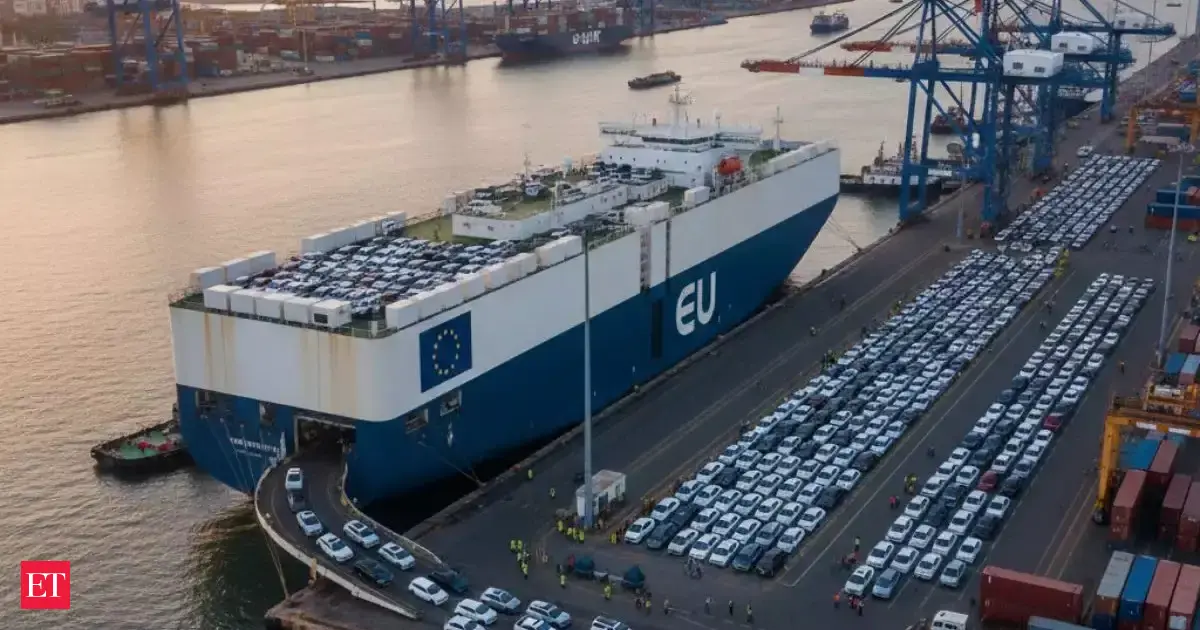
Quota under auto duty concessions to largely benefit traditional EU carmakers under FTA
India and the EU have concluded a trade agreement that includes specific provisions for the automotive sector. Under this agreement, mass market cars will remain fully protected, while import duty concessions will be phased in for passenger vehicles priced above Rs 25 lakh. These concessions will be subject to annual quotas, aiming to incentivize EU manufacturers to introduce new models and gradually establish local manufacturing facilities in India, thereby boosting economic ties and domestic production.
Revision structure
Monthly events and exam calendar context
Static GK and one-liner notes
Quiz and mock-test revision path
Key points
Exam-ready takeaways
Mass market cars are fully protected, meaning no import duty concessions apply to them.
Import duty concessions are specifically for passenger vehicles priced above Rs 25 lakh.
These duty concessions will be phased in over time and are subject to annual quotas.
The policy aims to encourage EU manufacturers to launch new models and gradually start local manufacturing in India.
Detailed analysis
Full exam-oriented breakdown
The recently concluded trade agreement between India and the European Union (EU) marks a significant milestone in their economic relationship, with particular attention paid to the automotive sector. This agreement, often referred to as a Free Trade Agreement (FTA) or Broad-based Trade and Investment Agreement (BTIA), has been a subject of protracted negotiations for over a decade, reflecting the complexities and strategic importance of trade ties between two of the world's largest economies. **A Long Road to Partnership: Background Context** India and the EU initiated negotiations for a comprehensive FTA in 2007. However, talks stalled in 2013 primarily due to significant divergences on key issues such as market access for automobiles, wines and spirits, intellectual property rights, and data security. The EU sought greater market access and lower tariffs for its products, while India aimed for easier access for its skilled professionals and a robust framework for services trade. The geopolitical landscape, particularly the need for diversification of supply chains and strengthening partnerships with like-minded economies in the wake of global disruptions and rising protectionism, provided a renewed impetus for resuming these critical negotiations in 2021. Both sides recognized the immense untapped potential in their bilateral trade, which stood at over $120 billion in goods trade in 2022-23, making the EU India's second-largest trading partner after the US. **Unpacking the Automotive Deal: What Happened** Under the new agreement, the automotive sector sees a nuanced approach. Critically, **mass market cars remain fully protected**, meaning no import duty concessions will apply to vehicles typically affordable to the average Indian consumer. This provision safeguards India's robust domestic automotive industry, which is a major employer and contributor to manufacturing GDP. The significant concession is specifically for **passenger vehicles priced above Rs 25 lakh**, which primarily covers luxury and high-end cars. These import duty concessions will not be immediate but will be **phased in over time**, and crucially, they are subject to **annual quotas**. This structured approach aims to prevent a sudden flood of imports that could disrupt the domestic market while gradually opening it up. The strategic intent behind these concessions is dual: to encourage EU manufacturers to **launch new models** in India and, more importantly, to incentivize them to **gradually start local manufacturing** within the country. This aligns with India's broader 'Make in India' initiative, promoting domestic value addition, technology transfer, and job creation. Additionally, auto part concessions will also be reduced over time, further integrating the supply chains. **Players on the Global Stage: Key Stakeholders** Several key stakeholders are directly impacted by this agreement. On the Indian side, the **Government of India**, particularly the Ministry of Commerce and Industry, is the primary negotiator and policymaker. **Domestic auto manufacturers** like Maruti Suzuki, Tata Motors, Mahindra & Mahindra, and Hyundai India (with significant local presence) are crucial, as their interests in protecting the mass market segment have been largely addressed. **Indian consumers** stand to benefit from increased choice, potentially lower prices for luxury vehicles, and access to advanced automotive technology. On the EU side, the **European Commission** spearheads the negotiations. **European luxury car manufacturers** such as Mercedes-Benz, BMW, Audi, Volvo, and Porsche are significant beneficiaries, as the phased duty reduction will make their high-end models more competitive in the Indian market, which is rapidly expanding its luxury segment. Their strategic interest lies in expanding their market share and potentially establishing or expanding manufacturing bases in India. **Driving India's Future: Significance for India** This agreement holds profound significance for India. **Economically**, it promises to boost foreign direct investment (FDI) in the automotive sector, especially if EU manufacturers establish local production facilities, leading to job creation and skill development. It facilitates technology transfer, bringing advanced manufacturing processes and R&D capabilities to India. For consumers, it means greater access to a wider range of high-quality, technologically advanced vehicles. **Strategically**, deepening trade ties with the EU, a major economic bloc, diversifies India's trade partnerships and reduces over-reliance on any single region, enhancing supply chain resilience. This aligns with India's foreign policy objectives of fostering multilateral cooperation and strengthening its position in the global trade architecture. The emphasis on local manufacturing resonates strongly with the 'Make in India' and 'Atmanirbhar Bharat' (self-reliant India) initiatives, aiming to transform India into a global manufacturing hub. **Constitutional Underpinnings & Policy Framework** From a constitutional perspective, international trade agreements fall under the ambit of the Union List (Entry 41: Trade and Commerce with foreign countries; import and export across customs frontiers) of the Seventh Schedule, as per **Article 246** of the Indian Constitution. The power to implement such agreements is derived from **Article 253**, which empowers Parliament to make any law for implementing any international treaty, agreement, or convention. The framework for foreign trade in India is primarily governed by the **Foreign Trade (Development and Regulation) Act, 1992**, and the periodically updated Foreign Trade Policy (FTP) issued by the Ministry of Commerce and Industry. The FDI Policy, administered by the Department for Promotion of Industry and Internal Trade (DPIIT), will also play a crucial role in facilitating investments from EU manufacturers. **The Road Ahead: Future Implications** Looking ahead, this agreement could pave the way for increased bilateral trade across various sectors beyond automobiles. For the automotive sector specifically, it is expected to intensify competition in the luxury segment, potentially spurring innovation and quality improvements from existing players. While the mass market is protected, the long-term impact on the domestic auto component industry will need careful monitoring as duties on auto parts are also reduced. The success of incentivizing local manufacturing will be key to realizing the full economic benefits for India. This agreement also sets a precedent for India's approach to other ongoing FTA negotiations, balancing market access with protection for sensitive domestic industries, and emphasizing 'Make in India' as a core component of trade policy. It underscores India's growing confidence in engaging with global economic powers on its own terms.
How to study
Turn news into exam marks
Revise monthly events by exam family instead of reading random updates.
Pair one-liners with mock tests so mistakes become the next revision list.
Keep state job pages, calendar pages and GK packs connected in one path.