

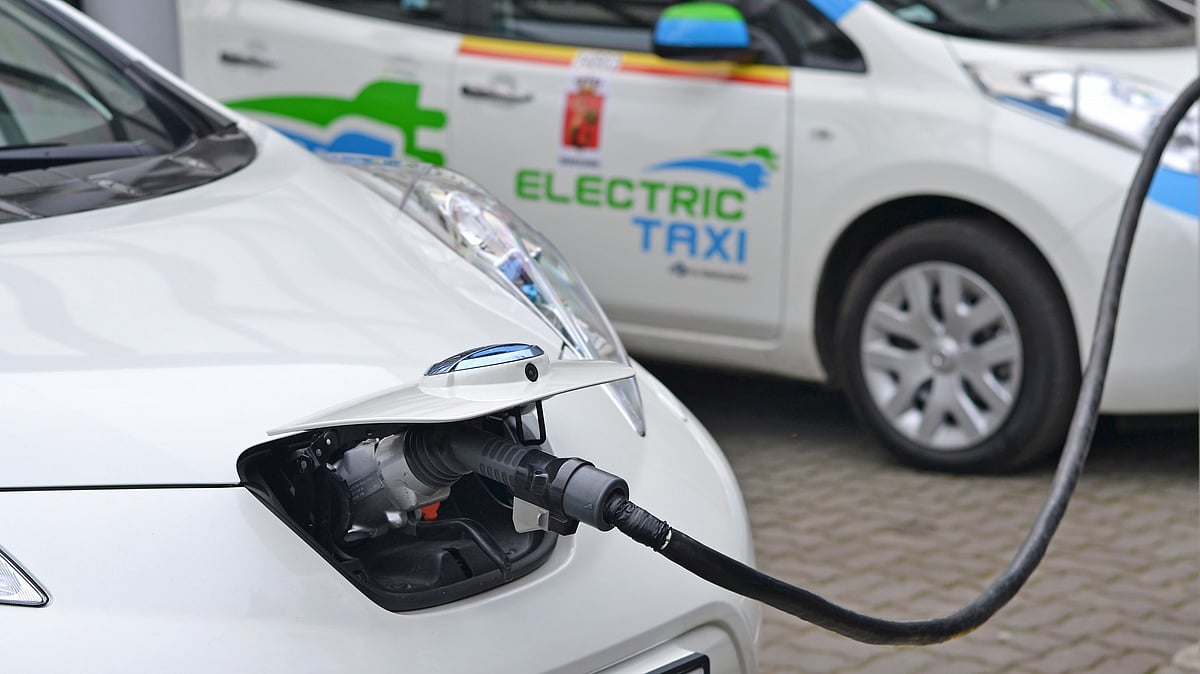
India has established clear policy targets aimed at promoting the transition to electric vehicles, including electric cabs.
GK and monthly revision
What’s really holding back India’s electric cab transition?
Despite India's clear policy targets to promote electric vehicles, the transition for electric cabs is significantly hampered. Their adoption remains concentrated in only a few cities due to critical infrastructure challenges. These include inadequate power supply, insufficient parking facilities, and complex procurement processes, highlighting the need for robust policy implementation and infrastructure development for sustainable green mobility. This is crucial for exam preparation related to government policies, infrastructure, and environmental initiatives.
Revision structure
Monthly events and exam calendar context
Static GK and one-liner notes
Quiz and mock-test revision path
Key points
Exam-ready takeaways
The adoption and operation of electric cabs are currently concentrated in only a few select cities across the country.
A major constraint holding back the widespread transition of electric cabs is the inadequacy of power infrastructure.
Limited availability of dedicated parking facilities poses another significant challenge for electric cab deployment.
Procurement processes for electric cabs are identified as a key constraint impeding their broader integration into urban transport.
Detailed analysis
Full exam-oriented breakdown
India, a nation grappling with rapid urbanization and the twin challenges of air pollution and energy security, has set ambitious targets for electric vehicle (EV) adoption. The vision for green mobility is clear, spearheaded by policies like the National Electric Mobility Mission Plan (NEMMP) 2020 and the Faster Adoption and Manufacturing of Electric Vehicles in India (FAME India) scheme. FAME India Phase I, launched in 2015, and its more robust Phase II, launched in 2019 with an outlay of ₹10,000 crore, aim to provide incentives for EV purchases and develop charging infrastructure. The goal is not merely to reduce the carbon footprint but also to decrease the hefty crude oil import bill, bolster indigenous manufacturing under the 'Make in India' initiative, and create new job opportunities in the burgeoning EV sector. Despite these clear policy directives and a growing enthusiasm for electric mobility, the transition for electric cabs in India remains largely confined to a handful of metropolitan cities. This concentration highlights significant systemic hurdles that prevent widespread adoption. The primary bottlenecks identified are inadequate power infrastructure, insufficient parking facilities, and cumbersome procurement processes. For instance, the lack of readily available and reliable charging stations outside major urban hubs creates 'range anxiety' among drivers and fleet operators. Even within cities, the existing grid infrastructure often struggles to support the simultaneous charging demands of a large EV fleet, leading to slow charging speeds or power fluctuations. The challenge of parking is equally critical. Indian cities are notorious for their congested roads and limited parking spaces. For electric cabs, dedicated parking is not just about space but also about access to charging points. The absence of designated parking-cum-charging hubs forces drivers to spend valuable time searching for facilities, impacting their operational efficiency and income. Furthermore, the high upfront cost of electric vehicles, despite subsidies, poses a significant barrier for individual cab owners and smaller fleet operators. The complex and often bureaucratic procurement processes, coupled with limited financing options tailored for EVs, further deter investment, making the transition less appealing compared to conventional internal combustion engine (ICE) vehicles. Key stakeholders involved in this transition include the **Central Government** (Ministry of Heavy Industries, Ministry of Power, NITI Aayog) which frames policies and provides financial incentives; **State Governments and Urban Local Bodies (ULBs)** responsible for on-ground implementation, land allocation for charging stations, and local regulations; **Private EV Manufacturers** (e.g., Tata Motors, Mahindra Electric) who produce the vehicles; **Cab Aggregators** (e.g., Ola, Uber) who manage fleets and drivers; **Charging Infrastructure Providers** (e.g., EESL, Magenta Power) who set up and operate charging networks; and **Financial Institutions** that need to develop innovative loan products for EVs. The success hinges on seamless coordination among these diverse entities. This issue holds immense significance for India. Environmentally, a successful EV transition can significantly reduce urban air pollution, a major public health crisis, and contribute to India's climate change commitments, including its Nationally Determined Contributions (NDCs) under the Paris Agreement and the ambitious 'Net Zero by 2070' target announced at COP26. Economically, it can drastically cut the country's reliance on imported crude oil, saving precious foreign exchange. Socially, cleaner air translates to better public health outcomes and an improved quality of life for urban dwellers. The push for electric mobility also aligns with broader themes of sustainable urban development, energy security, and technological innovation. From a constitutional perspective, while there isn't a direct article mandating EV adoption, the state's responsibility towards environmental protection is enshrined in **Article 48A** of the Directive Principles of State Policy, which mandates the state to 'endeavour to protect and improve the environment and to safeguard the forests and wildlife of the country.' Similarly, **Article 51A(g)** lists it as a fundamental duty of every citizen 'to protect and improve the natural environment including forests, lakes, rivers and wildlife, and to have compassion for living creatures.' Policies like the Motor Vehicles (Amendment) Act, 2019, also provide a framework for vehicle regulation, which can be adapted to promote EVs through registration and permit reforms. The future implications are profound. Overcoming these challenges requires a multi-pronged approach: significant investment in smart grid infrastructure and renewable energy sources to power charging stations; innovative urban planning to integrate dedicated EV parking and charging facilities; and a robust financial ecosystem offering attractive subsidies, tax breaks, and easy financing options for EV purchases. The government's push for battery swapping technology, as announced in the 2022-23 Union Budget, could address range anxiety and reduce charging times. Furthermore, public-private partnerships will be crucial for scaling infrastructure rapidly. A successful electric cab transition would not only green India's urban transport but also serve as a global model for sustainable development, solidifying India's position as a leader in combating climate change and fostering green growth.
How to study
Turn news into exam marks
Revise monthly events by exam family instead of reading random updates.
Pair one-liners with mock tests so mistakes become the next revision list.
Keep state job pages, calendar pages and GK packs connected in one path.