

India's Chief Economic Advisor (CEA) is V. Anantha Nageswaran.
GK and monthly revision
India needs to address land reforms, bring fuels under GST to reach 8% growth: CEA
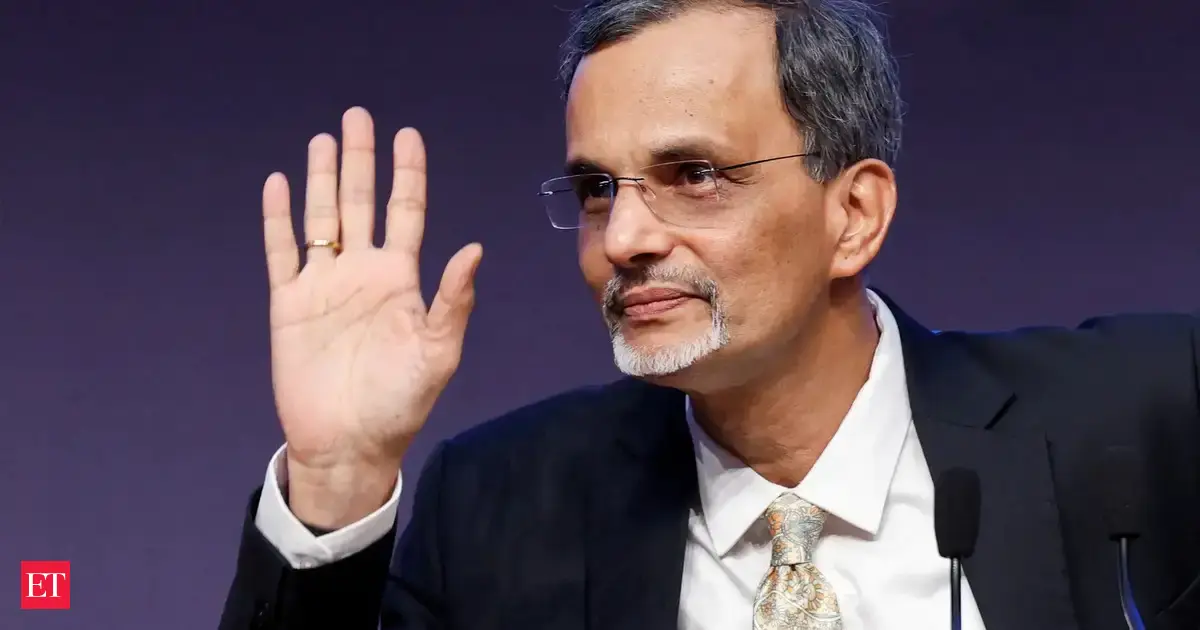
Chief Economic Advisor V. Anantha Nageswaran stated that India needs to implement land reforms and bring fuels under GST to achieve an 8% economic growth rate. This is crucial for competitive exams as it highlights key policy recommendations and challenges in India's economic landscape. The Economic Survey 2025-26 projects GDP growth between 6.8-7.2% for the next fiscal, providing important figures for economic analysis.
Revision structure
Monthly events and exam calendar context
Static GK and one-liner notes
Quiz and mock-test revision path
Key points
Exam-ready takeaways
CEA Nageswaran suggested land reforms and bringing fuels under GST to achieve 8% economic growth.
The Economic Survey 2025-26 projects India's GDP growth between 6.8-7.2% for the next fiscal year.
The current projected growth (6.8-7.2%) is considered a stable outlook despite a depreciating rupee.
Fuels are currently not under the Goods and Services Tax (GST) regime.
Detailed analysis
Full exam-oriented breakdown
India's Chief Economic Advisor (CEA), V. Anantha Nageswaran, recently highlighted two critical areas – land reforms and bringing fuels under the Goods and Services Tax (GST) regime – as essential catalysts for India to achieve an ambitious 8% economic growth rate. This statement comes against the backdrop of the Economic Survey 2025-26 projecting a GDP growth between 6.8-7.2% for the next fiscal year, a stable outlook despite global economic uncertainties and a depreciating rupee. Understanding these recommendations is crucial for grasping India's current economic challenges and future policy direction. **Background Context and What Happened:** India, with its vast demographic dividend and growing aspirations, aims for sustained high economic growth to lift millions out of poverty, create jobs, and enhance its global standing. The 6.8-7.2% growth projection, while robust in a global context, falls short of the transformative 8% plus growth rates that are often cited as necessary for India to achieve its 'Viksit Bharat' (Developed India) vision by 2047. The CEA's remarks pinpoint structural rigidities that have historically constrained India's economic potential. These aren't new issues; land reforms have been a perennial challenge since independence, and the exclusion of petroleum products from GST has been a point of contention since the tax regime's inception in 2017. **Land Reforms: A Historical Perspective and Current Challenges:** Post-independence, India embarked on a series of land reforms aimed at abolishing intermediaries (like Zamindars), redistributing land to the tillers, consolidating fragmented holdings, and imposing land ceilings. Landmark legislations like the Zamindari Abolition Acts were passed in the 1950s. To protect these reforms from judicial challenge, many land reform laws were placed under the **Ninth Schedule of the Constitution** (added by the First Amendment Act, 1951), initially making them immune to judicial review. However, subsequent Supreme Court judgments, particularly *I.R. Coelho v. State of Tamil Nadu (2007)*, established that laws placed in the Ninth Schedule after April 24, 1973 (the date of the *Kesavananda Bharati* judgment) are open to judicial scrutiny if they violate the basic structure of the Constitution. Despite these efforts, land reforms remain incomplete. Challenges include: a) **Fragmented land holdings**, which hinder agricultural modernization and productivity; b) **Opaque land records and titling issues**, leading to frequent disputes and making land acquisition difficult for industrial and infrastructure projects; c) **Complex and varying state-level land laws**, as land is a **State Subject** under **Entry 18 of the State List in the Seventh Schedule** of the Constitution, making uniform national reforms arduous. The inability to easily acquire land often delays or stalls critical infrastructure and industrial projects, increasing project costs and deterring investment. **Bringing Fuels Under GST: The Unfinished Agenda:** When the Goods and Services Tax (GST) was rolled out on July 1, 2017, through the **101st Constitutional Amendment Act, 2016**, it subsumed a plethora of central and state indirect taxes, aiming for a 'one nation, one tax' regime. However, five petroleum products – crude oil, petrol, diesel, aviation turbine fuel (ATF), and natural gas – along with alcohol for human consumption, were deliberately kept out. This was primarily due to the significant revenue dependence of both the Central and State governments on these items. Currently, fuels are subject to central excise duty and state Value Added Tax (VAT), leading to a cascading effect (tax on tax) and higher prices for consumers and businesses. **Significance for India and Key Stakeholders:** Achieving 8% growth is paramount for India. It translates into faster job creation for the millions entering the workforce annually, increased per capita income, better social indicators, and greater fiscal space for public spending on health, education, and infrastructure. * **Land Reforms' Impact**: Clear land titles and easier acquisition would boost manufacturing, infrastructure, and real estate sectors. It would also enhance agricultural productivity by enabling consolidation and better investment. This would attract both domestic and foreign direct investment (FDI). * **GST on Fuels' Impact**: Bringing fuels under GST would rationalize fuel prices by eliminating the cascading effect, potentially reducing inflation, lowering logistics costs for businesses, and making Indian goods more competitive. It would also simplify the tax structure and expand the GST tax base. However, it would require significant political consensus, especially from State Governments, who currently derive substantial revenue from fuel taxes. The **GST Council**, established under **Article 279A**, would be the key forum for such a decision, requiring a three-fourths majority of members present and voting. **Key Stakeholders:** * **Central Government**: Benefits from higher economic growth, potentially simplified tax administration, but needs to address revenue concerns of states. * **State Governments**: Currently heavily reliant on fuel taxes and land revenues; reforms would require them to potentially give up some fiscal autonomy or be adequately compensated. * **Businesses/Industry**: Benefit from easier land acquisition, lower logistics costs, and a more predictable tax regime, boosting 'ease of doing business'. * **Consumers**: Potentially benefit from lower fuel prices and reduced inflation. * **Farmers**: Benefit from clear land titles, potentially better land markets, but also need protection during land acquisition. **Future Implications and Broader Themes:** These reforms are critical structural changes. Successfully implementing them would signal India's commitment to creating a more efficient and investor-friendly economy. Failure to address these could mean India continues to operate below its full potential, missing out on opportunities for rapid, inclusive growth. The discourse around these issues also highlights the challenges of **fiscal federalism** in India, where revenue sharing and policy implementation often require complex negotiations between the Centre and States. It also links to broader themes of **governance reforms**, **economic liberalization**, and improving **global competitiveness**. The CEA's statement underscores that while macroeconomic stability is important, sustained high growth necessitates tackling deep-seated structural issues. These policy recommendations are not just about numbers; they are about unlocking India's true economic prowess and ensuring that the benefits of growth are widely shared, propelling the nation towards its ambitious development goals.
How to study
Turn news into exam marks
Revise monthly events by exam family instead of reading random updates.
Pair one-liners with mock tests so mistakes become the next revision list.
Keep state job pages, calendar pages and GK packs connected in one path.