

A 'white collar terror module' was identified for planning attacks in India.
GK and monthly revision
Delhi car blast: Terror module wanted to target global coffee chain outlets
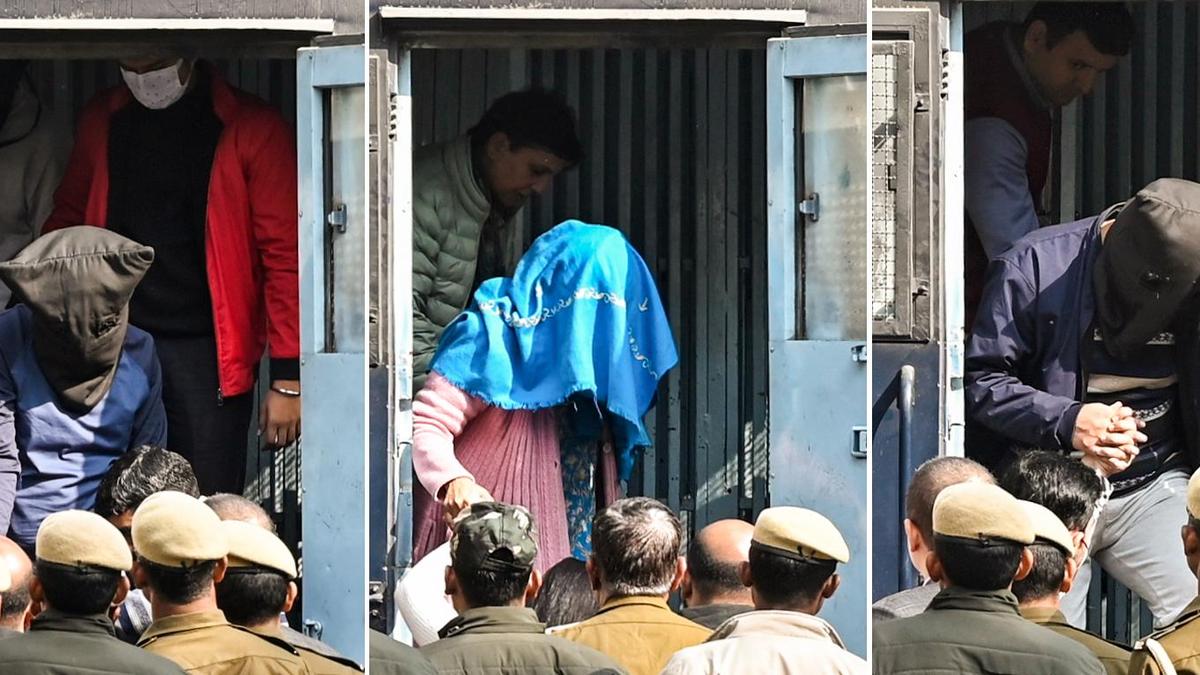
A white collar terror module was reportedly planning to target global coffee chain outlets in Delhi and other major Indian cities. The module's objective was to protest Israel's military action in Gaza, as revealed by officials investigating a Delhi car blast. This incident highlights India's vulnerability to international geopolitical conflicts manifesting as internal security threats, crucial for competitive exams focusing on internal security and international relations.
Revision structure
Monthly events and exam calendar context
Static GK and one-liner notes
Quiz and mock-test revision path
Key points
Exam-ready takeaways
The module intended to target global coffee chain outlets in Delhi and other major Indian cities.
The primary motive for these planned attacks was to protest Israel's military action in Gaza.
Officials revealed this information during investigations related to a Delhi car blast.
The module aimed to send a message against Israel's actions through these attacks.
Detailed analysis
Full exam-oriented breakdown
The recent revelation of a 'white collar terror module' planning attacks on global coffee chain outlets in Delhi and other major Indian cities underscores a critical and evolving threat to India's internal security. This module, identified during investigations into a Delhi car blast, aimed to protest Israel's military actions in Gaza, signaling a disturbing spillover of international geopolitical conflicts onto Indian soil. Understanding this incident requires a deep dive into its background, implications, and India's strategic response. At the heart of this incident lies the enduring Israel-Gaza conflict, a complex and deeply emotive issue with roots stretching back decades. The latest escalation, particularly after the October 7, 2023 attacks by Hamas and Israel's subsequent military response in Gaza, has inflamed passions globally. While India maintains a historical stance of support for the Palestinian cause, it has also forged robust strategic and economic ties with Israel, creating a delicate diplomatic balance. The 'white collar terror module' seems to have leveraged this global outrage, seeking to make a political statement by targeting symbols of Western capitalism and perceived Israeli allies. The term 'white collar terror module' is particularly alarming. It suggests that radicalization is not confined to traditional socio-economic profiles but can infiltrate educated, seemingly integrated segments of society. Their choice of targets – global coffee chains – is symbolic. These outlets represent globalization, Western influence, and potentially, indirectly, countries perceived to be supportive of Israel. Attacking such targets aims to disrupt daily life, create fear, and send a message with international resonance, while potentially avoiding direct confrontation with state security assets. The discovery of this plot through a Delhi car blast investigation highlights the crucial role of proactive intelligence and law enforcement in foiling such complex plans. Key stakeholders in this scenario include the terror module itself, driven by a radicalized ideology and a desire to influence geopolitical events through violence. On the other side are the Indian security agencies, including the National Investigation Agency (NIA), Intelligence Bureau (IB), and various state police forces, whose primary role is intelligence gathering, threat assessment, prevention, and investigation. Global coffee chains, while unwitting targets, are stakeholders due to the direct threat to their operations and personnel. The Indian state, as a whole, is a major stakeholder, responsible for maintaining law and order, protecting its citizens, securing national interests, and upholding its diplomatic standing. This incident carries profound significance for India. Firstly, it reiterates India's vulnerability to transnational terrorism and the weaponization of international conflicts. India has a long history of dealing with terrorism, but the increasing sophistication and ideological motivations linked to global events present a renewed challenge to internal security. Secondly, it poses economic risks; threats to global brands can deter foreign investment and tourism, impacting India's economic growth trajectory. Thirdly, it tests India's diplomatic agility. While India has historically balanced its relations, such incidents can put pressure on its foreign policy choices in the Middle East. Lastly, it has social implications, with the potential to fuel communal tensions if not handled with extreme care and sensitivity by both authorities and media. From a legal and constitutional perspective, India's robust anti-terrorism framework comes into play. The **Unlawful Activities (Prevention) Act (UAPA), 1967**, as amended, is the primary legislation for combating terrorism, providing powers for investigation, prosecution, and prevention. The **National Investigation Agency (NIA) Act, 2008**, established the NIA to investigate and prosecute offenses affecting the sovereignty, security, and integrity of India, including terrorism. Constitutional articles like **Article 21 (Protection of Life and Personal Liberty)** obligate the state to protect its citizens from such threats, while **Article 51 (Promotion of International Peace and Security)** guides India's foreign policy to avoid entanglement in conflicts that could destabilize its internal environment. The incident also highlights the need for effective intelligence coordination, as mandated by various internal security policies. Looking ahead, the future implications are multi-layered. India must enhance its intelligence gathering capabilities, especially in identifying and neutralizing 'white collar' radicalization networks that operate subtly. There is an increased need for robust counter-radicalization programs, focusing on youth and online spaces where extremist ideologies proliferate. Strengthening cybersecurity measures to track online radicalization and terror financing will be crucial. Furthermore, India's foreign policy will continue to navigate the complexities of the Middle East, aiming to protect its interests while upholding its values. The incident serves as a stark reminder that even seemingly distant conflicts can have immediate and tangible security repercussions within India, necessitating constant vigilance and adaptive security strategies.
How to study
Turn news into exam marks
Revise monthly events by exam family instead of reading random updates.
Pair one-liners with mock tests so mistakes become the next revision list.
Keep state job pages, calendar pages and GK packs connected in one path.