

Odds of a partial U.S. government shutdown rose on Friday.
GK and monthly revision
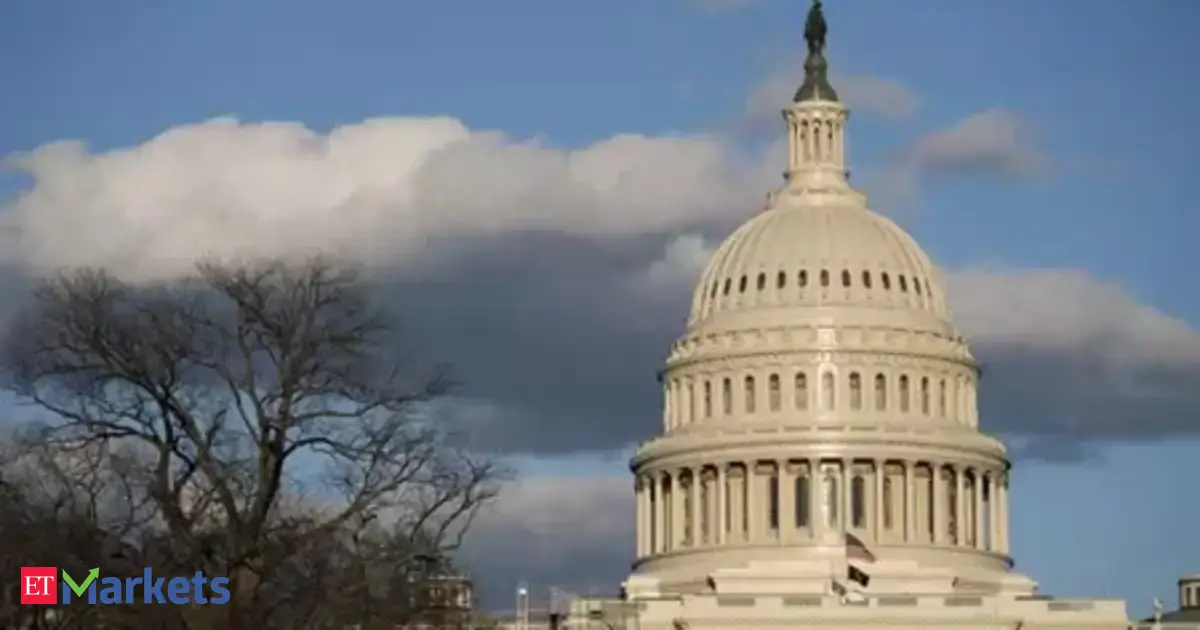
Odds of US government shutdown rise after funding deal stalls in Senate
The likelihood of a partial U.S. government shutdown increased on Friday due to new obstacles in the Senate regarding a crucial funding deal. This development is significant as a shutdown in the world's largest economy can trigger global economic instability, impacting financial markets and international trade. For competitive exams, understanding the causes and consequences of government shutdowns, and the U.S. legislative process, is vital for sections on international relations and economics.
Revision structure
Monthly events and exam calendar context
Static GK and one-liner notes
Quiz and mock-test revision path
Key points
Exam-ready takeaways
New barriers emerged in the U.S. Senate, stalling a funding deal.
The deal aimed to ensure uninterrupted funding for U.S. agency operations.
A U.S. government shutdown occurs when Congress fails to pass appropriation bills or a continuing resolution.
Such shutdowns can have significant global economic implications, affecting international markets and trade.
Detailed analysis
Full exam-oriented breakdown
The prospect of a U.S. government shutdown is a recurring drama in American politics, often sending ripples across global financial markets. To understand why this happens and why it matters, especially for a country like India, let's delve into the mechanics and implications. **Background Context and What Happened:** In the United States, the federal government's fiscal year runs from October 1st to September 30th. Before the start of each fiscal year, the U.S. Congress is constitutionally mandated to pass 12 individual appropriations bills to fund various government agencies and programs. If these bills are not passed by the September 30th deadline, Congress can pass a 'continuing resolution' (CR), which temporarily extends funding at current levels, often for a few weeks or months, giving lawmakers more time to negotiate the full budget. A government shutdown occurs when neither the full appropriations bills nor a continuing resolution are enacted into law. The recent news indicates that new barriers have emerged in the Senate, stalling a deal that would prevent such an interruption in funding. This means lawmakers are struggling to agree on spending levels and potentially other policy riders attached to these funding bills. **Key Stakeholders Involved:** Several key players are central to this political deadlock. The **President of the United States** (currently Joe Biden) proposes a budget, but Congress holds the 'power of the purse.' Within Congress, both the **House of Representatives** and the **Senate** must agree on the spending bills. The **Democratic Party**, generally advocating for certain spending priorities, and the **Republican Party**, often pushing for fiscal conservatism and spending cuts, are the primary ideological adversaries. Within the Republican Party, a conservative faction, particularly in the House, often demands deeper cuts or policy concessions, making bipartisan agreement difficult. Each party uses the budget process as leverage to advance their policy agendas or gain political advantage, sometimes at the risk of a shutdown. **Historical Context:** Government shutdowns are not new to the U.S. political landscape. Notable shutdowns include the 1995-96 shutdown under President Bill Clinton, which lasted 21 days, and the 2013 shutdown under President Barack Obama, lasting 16 days, largely over the Affordable Care Act funding. More recently, the 2018-19 shutdown, the longest in U.S. history at 35 days, occurred under President Donald Trump over funding for a border wall. These historical instances demonstrate that shutdowns typically arise from deep ideological divisions over spending priorities or major policy disputes, highlighting the intense partisan nature of American politics. **Why This Matters for India:** As the world's largest economy, the U.S. government's stability and functioning have significant global ramifications, directly impacting India in several ways: 1. **Economic Impact:** A U.S. shutdown can trigger **global market instability**. Indian stock markets, like others, are susceptible to volatility in Wall Street. Foreign Institutional Investors (FIIs) might pull out investments from emerging markets like India due to increased risk aversion. The U.S. is one of India's largest trading partners; a shutdown could disrupt trade flows, delay customs clearances, and impact export orders, especially for sectors like IT services, textiles, and pharmaceuticals. Delays in government contracts or project approvals could affect Indian companies operating in the U.S. Furthermore, if a prolonged shutdown leads to a slowdown in U.S. economic growth, it could dampen global demand, affecting India's overall economic prospects. 2. **Strategic and Diplomatic Impact:** Bilateral engagements, high-level visits, and strategic dialogues between India and the U.S. could be postponed or scaled back if key U.S. government agencies are affected. This might delay crucial discussions on defense cooperation, technology transfer, or climate change initiatives. Visa processing for Indian students and professionals could also face delays, impacting individuals and the larger Indian diaspora. **Related Constitutional Articles, Acts, or Policies:** In the U.S., the power of the purse is enshrined in **Article I, Section 9, Clause 7** of the Constitution, stating, "No Money shall be drawn from the Treasury, but in Consequence of Appropriations made by Law." This clause underpins the necessity of Congressional approval for government spending. The **Antideficiency Act (originally 1884, amended over time)** is the primary legal tool enforcing this, prohibiting federal agencies from obligating or expending funds in advance or in excess of an appropriation. For Indian aspirants, it's crucial to compare this with India's budgetary process, governed by **Articles 112 to 117 of the Indian Constitution**, which deal with the 'Annual Financial Statement' (Budget), Appropriation Bill, and Vote on Account. Unlike the U.S., a shutdown in India is practically non-existent due to the dominance of the executive in the legislative process and the convention of passing a 'Vote on Account' well in advance. **Future Implications and Broader Themes:** If a shutdown occurs, non-essential government services will halt, federal employees will be furloughed without pay, and economic data releases could be delayed, obscuring the true state of the U.S. economy. This legislative gridlock reflects broader themes of fiscal policy debates, the role of government in the economy, and the effectiveness of checks and balances in a highly polarized political environment. For India, a U.S. shutdown underscores the interconnectedness of the global economy and the need for robust domestic economic policies to cushion against external shocks. It also highlights the strategic importance of diversifying economic partnerships and strengthening multilateral institutions to ensure global stability.
How to study
Turn news into exam marks
Revise monthly events by exam family instead of reading random updates.
Pair one-liners with mock tests so mistakes become the next revision list.
Keep state job pages, calendar pages and GK packs connected in one path.