

The Supreme Court of India kept in abeyance the University Grants Commission (UGC) Regulations.
GK and monthly revision
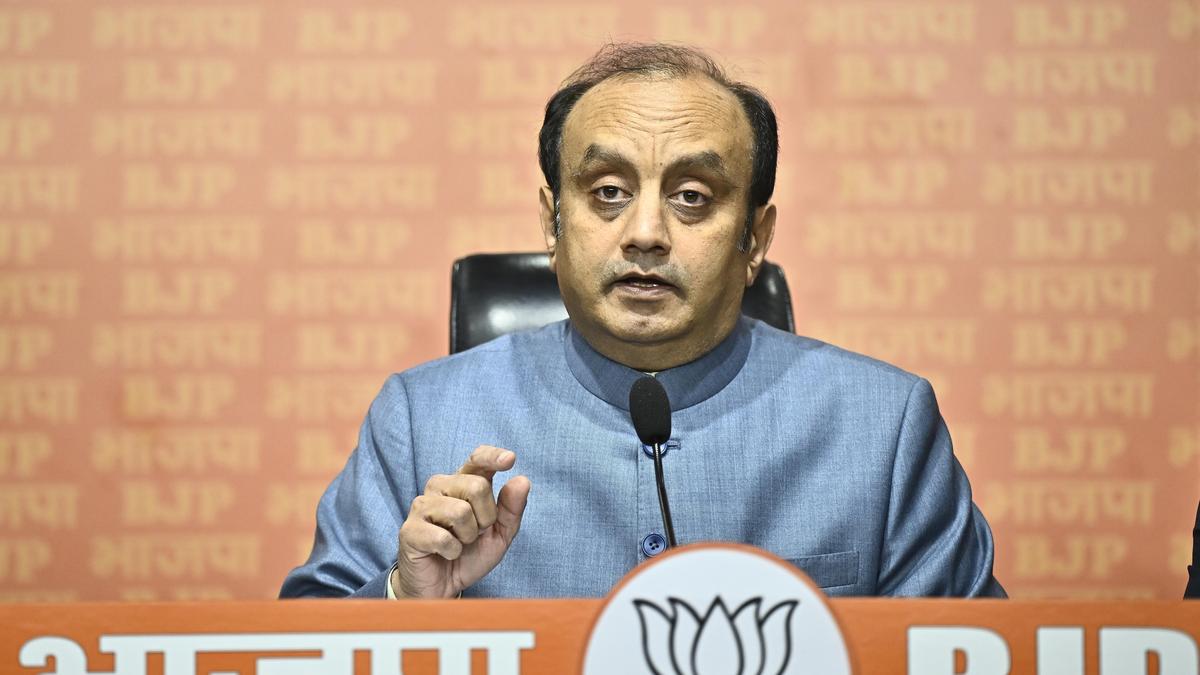
SC order on UGC regulations: Government will ensure justice to everybody, says BJP
The Supreme Court has kept in abeyance the University Grants Commission (Promotion of Equity in Higher Education Institutions) Regulations 2026. This judicial intervention is significant as it impacts future policy on equity in higher education, a crucial area for social justice and administrative law. For competitive exams, understanding the role of the SC, UGC, and specific regulations is vital for questions on governance and education policy.
Revision structure
Monthly events and exam calendar context
Static GK and one-liner notes
Quiz and mock-test revision path
Key points
Exam-ready takeaways
The specific regulations are titled 'UGC (Promotion of Equity in Higher Education Institutions) Regulations'.
These regulations were slated for the year 2026.
The University Grants Commission (UGC) is the statutory body responsible for maintaining standards of higher education.
The BJP stated that the government will ensure justice to everybody following the Supreme Court's order.
Detailed analysis
Full exam-oriented breakdown
The Supreme Court's decision to keep in abeyance the University Grants Commission (UGC) (Promotion of Equity in Higher Education Institutions) Regulations 2026 marks a significant moment in India's ongoing discourse on social justice, educational access, and the intricate balance between executive policy-making and judicial oversight. This judicial intervention, as highlighted by the BJP's statement on ensuring justice, underscores the sensitive nature of equity policies in a diverse nation like India. **Background and Historical Context:** India's Constitution, since its inception, has enshrined the principles of equality and social justice. Articles 14, 15, and 16 of the Constitution are foundational, prohibiting discrimination and ensuring equality of opportunity. However, recognizing historical injustices and systemic disadvantages, the Constitution also provides for affirmative action. Article 15(4) and 16(4) allow the state to make special provisions for the advancement of any socially and educationally backward classes of citizens or for the Scheduled Castes and Scheduled Tribes. Later, Article 15(5) was added by the 93rd Amendment in 2005, enabling the state to make special provisions for the advancement of any socially and educationally backward classes of citizens or for the SCs or STs in admission to educational institutions, including private unaided institutions, except minority educational institutions. The Directive Principles of State Policy, particularly Article 46, further mandate the state to promote with special care the educational and economic interests of the weaker sections of the people, especially the Scheduled Castes and the Scheduled Tribes. Over the decades, these constitutional provisions have translated into various reservation policies in education and public employment. The Mandal Commission Report in the 1980s and its subsequent implementation in the 1990s, upheld by the Supreme Court in the landmark Indra Sawhney case (1992), solidified reservations for Other Backward Classes (OBCs). More recently, the 103rd Constitutional Amendment Act, 2019, introduced a 10% reservation for Economically Weaker Sections (EWS), further expanding the scope of affirmative action. The UGC, established under the UGC Act, 1956, is the statutory body responsible for coordinating, determining, and maintaining standards of university education, including ensuring the implementation of reservation policies and promoting equity. **What Happened?** The UGC (Promotion of Equity in Higher Education Institutions) Regulations 2026 were formulated by the UGC, likely to provide a comprehensive framework for implementing and promoting equity and inclusion across all higher education institutions. While the precise details of these specific 2026 regulations are not publicly detailed in the provided context, such regulations typically cover aspects like reservation policies, accessibility for persons with disabilities, gender equity, and measures to support students from disadvantaged backgrounds. The Supreme Court's decision to 'keep in abeyance' these regulations means that their operation has been temporarily suspended. This is a significant judicial move, preventing the regulations from taking effect until further orders or a final decision by the court. **Key Stakeholders Involved:** 1. **Supreme Court of India:** As the guardian of the Constitution, the SC exercises judicial review, ensuring that executive actions and legislative enactments comply with constitutional principles. Its role here is to assess the legality and constitutionality of the UGC regulations. 2. **University Grants Commission (UGC):** The primary statutory body responsible for higher education in India. It frames policies and regulations to ensure academic standards, funding, and, crucially, social equity as per its mandate. 3. **Government of India (represented by BJP's statement):** The executive branch, responsible for policy formulation and implementation. The BJP's assurance reflects the government's commitment to ensuring justice, implying a potential alignment with the spirit of equity while respecting judicial pronouncements. 4. **Higher Education Institutions:** Universities and colleges across India would be directly impacted by these regulations, affecting their admission processes, faculty recruitment, and overall institutional framework for promoting equity. 5. **Students and Civil Society:** Students, particularly those from marginalized communities, are the direct beneficiaries of such equity-promoting regulations. Civil society organizations advocating for social justice and educational reform are also key stakeholders, often engaging in advocacy and legal challenges. **Significance for India:** This development is crucial for India for several reasons. Firstly, it highlights the delicate balance between policy formulation by executive bodies (UGC under government guidance) and judicial scrutiny. The Supreme Court's intervention underscores its role in ensuring that regulations align with the constitutional scheme and existing legal precedents regarding affirmative action. Secondly, it impacts the future trajectory of equity and inclusion in higher education. Any delay or modification of these regulations could affect the pace and nature of social justice initiatives in educational institutions. Thirdly, it reignites debates on reservation policies, merit versus equity, and the administrative challenges of implementing such complex regulations across a vast and diverse educational landscape. The outcome will shape how India addresses disparities in access to quality education, a critical component for socio-economic development and national cohesion. **Future Implications:** Keeping the regulations in abeyance signals that the Supreme Court has found prima facie issues with their provisions. This could lead to a detailed legal examination of the regulations' scope, constitutional validity, and practical implications. The UGC may be required to revise the regulations in light of judicial observations, or the government might intervene to address the concerns. The final decision will set an important precedent for future policy-making in higher education, potentially influencing admission criteria, funding mechanisms, and the overall framework for promoting diversity and inclusion. It also reinforces the judiciary's role as a check on executive overreach or potential constitutional infirmities in policy. **Related Constitutional Articles, Acts, or Policies:** * **The Constitution of India:** Articles 14 (Equality before law), 15 (Prohibition of discrimination on grounds of religion, race, caste, sex or place of birth), 15(4) & 15(5) (Special provisions for backward classes in education), 16 (Equality of opportunity in matters of public employment), 16(4) (Special provisions for backward classes in public employment), 46 (Promotion of educational and economic interests of SCs, STs, and other weaker sections). * **University Grants Commission Act, 1956:** The enabling legislation for the UGC, defining its powers and functions. * **National Education Policy (NEP) 2020:** Emphasizes equity and inclusion as core principles, advocating for targeted interventions for disadvantaged groups. * **Reservation policies:** For Scheduled Castes (SC), Scheduled Tribes (ST), Other Backward Classes (OBC), and Economically Weaker Sections (EWS). This episode serves as a vital case study for understanding the multi-faceted challenges and legal complexities involved in achieving social justice through policy interventions in India's higher education system.
How to study
Turn news into exam marks
Revise monthly events by exam family instead of reading random updates.
Pair one-liners with mock tests so mistakes become the next revision list.
Keep state job pages, calendar pages and GK packs connected in one path.