

Donald Trump was set to announce his pick for the next Federal Reserve chair.
GK and monthly revision
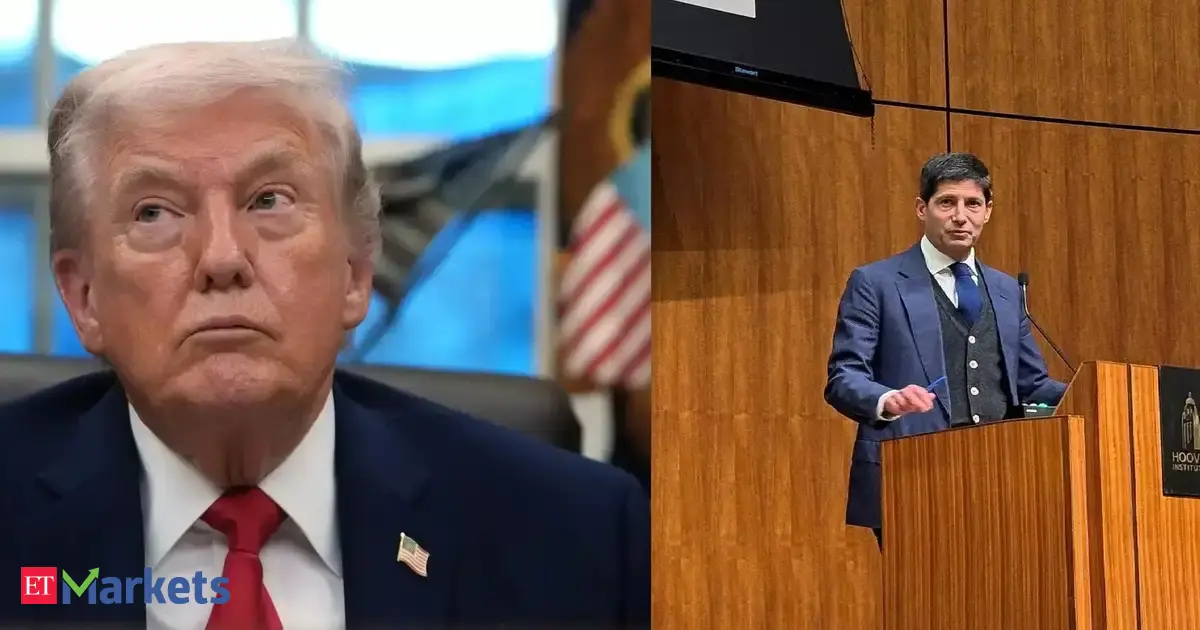
Trump to announce Fed chair pick today as Warsh emerges as front-runner
Donald Trump was poised to announce his selection for the next Federal Reserve chair, with former Fed Governor Kevin Warsh emerging as the leading candidate. This appointment is critical as the Fed chair dictates US monetary policy, impacting global financial markets and interest rates. Warsh's pro-rate-cut stance suggests potential shifts in economic policy, making the role and its implications vital for competitive exam aspirants studying international economics and central banking.
Revision structure
Monthly events and exam calendar context
Static GK and one-liner notes
Quiz and mock-test revision path
Key points
Exam-ready takeaways
Former Fed Governor Kevin Warsh emerged as the leading contender for the Federal Reserve chair position.
Kevin Warsh's economic stance is characterized as 'pro-rate-cut'.
The announcement was highly anticipated amidst intensifying political pressure on the Federal Reserve.
The Federal Reserve chair's decisions significantly influence US monetary policy and global financial markets.
Detailed analysis
Full exam-oriented breakdown
The news regarding Donald Trump's impending announcement of the Federal Reserve chair, with Kevin Warsh as a front-runner, highlights a critical aspect of global finance: the profound influence of a central bank's leadership on domestic and international economies. This event, from the perspective of an Indian competitive exam aspirant, is not merely a piece of international news but a crucial case study in understanding monetary policy, central bank independence, and global economic interconnectedness. **Background Context: The Federal Reserve and its Mandate** To truly grasp the significance, one must understand the Federal Reserve (often called 'the Fed'). Established in 1913 by the Federal Reserve Act, it is the central bank of the United States. Its primary mandates, often referred to as the 'dual mandate,' are to maximize employment and maintain price stability (i.e., control inflation). It achieves these through monetary policy tools such as setting the federal funds rate (which influences other interest rates), conducting open market operations, and quantitative easing/tightening. The Fed is governed by a Board of Governors, with the Chair being the most powerful figure, responsible for shaping policy and communicating the Fed's stance. The Chair's decisions ripple through global financial markets, affecting everything from stock prices to currency values and international capital flows. At the time of this news, Janet Yellen was the incumbent chair, and the transition to a new leader under a new administration was keenly watched. **What Happened and Key Stakeholders** Donald Trump, then the President of the United States, was poised to announce his nominee for the Federal Reserve Chair. This appointment is a presidential prerogative, subject to confirmation by the US Senate. Former Fed Governor Kevin Warsh emerged as a leading contender, known for his 'pro-rate-cut' stance. This position suggests a preference for lower interest rates, often advocated by politicians seeking to stimulate economic growth, potentially at the risk of higher inflation or asset bubbles. The key stakeholders involved were: 1. **The US President (Donald Trump):** As the appointing authority, his choice reflected his economic philosophy and desire for a Fed chair aligned with his administration's goals, particularly concerning economic growth and potential deregulation. 2. **The Federal Reserve System:** The institution whose independence and policy direction were at stake. A chair's appointment can shift the entire direction of monetary policy. 3. **Kevin Warsh:** The potential nominee, whose past experience as a Fed Governor and stated economic views (pro-rate-cut) made him a significant figure in the discussions. 4. **Global Financial Markets:** Investors, businesses, and governments worldwide were keenly observing, as the Fed's policy trajectory directly impacts asset valuations, borrowing costs, and investment decisions globally. **Why This Matters for India: Economic, Political, and Social Impact** The appointment of the US Federal Reserve Chair might seem distant, but its implications for India are substantial due to global economic interconnectedness. Here's why: * **Capital Flows and Rupee Volatility:** Changes in US interest rates directly impact global capital flows. If the Fed raises rates (a 'tightening' monetary policy), it makes dollar-denominated assets more attractive, potentially leading to capital outflows from emerging markets like India. This can put depreciation pressure on the Indian Rupee, making imports costlier and potentially fueling inflation. * **Borrowing Costs for Indian Companies:** Many Indian companies borrow in dollars from international markets. Higher US interest rates translate to higher borrowing costs for these companies, impacting their profitability and investment plans. * **Trade Dynamics:** A stronger dollar (a potential outcome of certain Fed policies) can affect India's export competitiveness. While a stronger dollar makes Indian exports cheaper for US buyers, it also makes imports for India more expensive. * **Inflation Management:** Global commodity prices, especially crude oil, are often dollar-denominated. Changes in dollar strength and global liquidity, influenced by Fed policy, can impact India's imported inflation, posing challenges for the Reserve Bank of India (RBI) in achieving its inflation targets. * **RBI's Monetary Policy Space:** The RBI's monetary policy decisions are not made in a vacuum. It must consider global cues, especially from the Fed, to manage the balance between growth and inflation, and to maintain financial stability. Any drastic shift in US policy can constrain RBI's policy options. **Historical Context and Broader Themes** The concept of central bank independence is a recurring theme. Historically, central banks have often faced political pressure to align monetary policy with government objectives, sometimes leading to inflationary spirals. The Fed, like the RBI, strives for operational independence to make decisions based purely on economic fundamentals, free from short-term political considerations. However, the President's power to appoint the Chair, and the Senate's confirmation, inherently introduces a political dimension. This event underscores the delicate balance between accountability and independence. In India, the **Reserve Bank of India Act, 1934**, governs the RBI, and recent amendments (2016) established the **Monetary Policy Committee (MPC)** for inflation targeting, aiming for a more institutionalized and independent approach to monetary policy, similar in spirit to the Fed's structure. **Future Implications** If a 'pro-rate-cut' chair like Kevin Warsh were appointed, it could have signaled a more accommodative (loose) monetary policy in the US, potentially leading to lower global interest rates and a weaker dollar. This could have eased capital outflow pressures on emerging markets like India, at least initially. However, it could also have led to concerns about rising inflation or asset bubbles in the US. The actual appointment (Jerome Powell was ultimately nominated and confirmed) demonstrates the dynamic nature of such decisions and their long-term impact on global financial stability and growth trajectories. For India, the ongoing need to manage external sector vulnerabilities, particularly capital flows and exchange rate fluctuations, remains paramount, irrespective of who chairs the Fed. Policies like those under the **Foreign Exchange Management Act (FEMA), 1999**, become critical tools for managing these external shocks. This event is a vivid illustration of how a single appointment in one of the world's largest economies can have far-reaching consequences, emphasizing the interconnectedness of global finance and the strategic importance of understanding central banking for competitive exam aspirants.
How to study
Turn news into exam marks
Revise monthly events by exam family instead of reading random updates.
Pair one-liners with mock tests so mistakes become the next revision list.
Keep state job pages, calendar pages and GK packs connected in one path.