

US President Trump is expected to announce his nominee for the next Federal Reserve chief.
GK and monthly revision
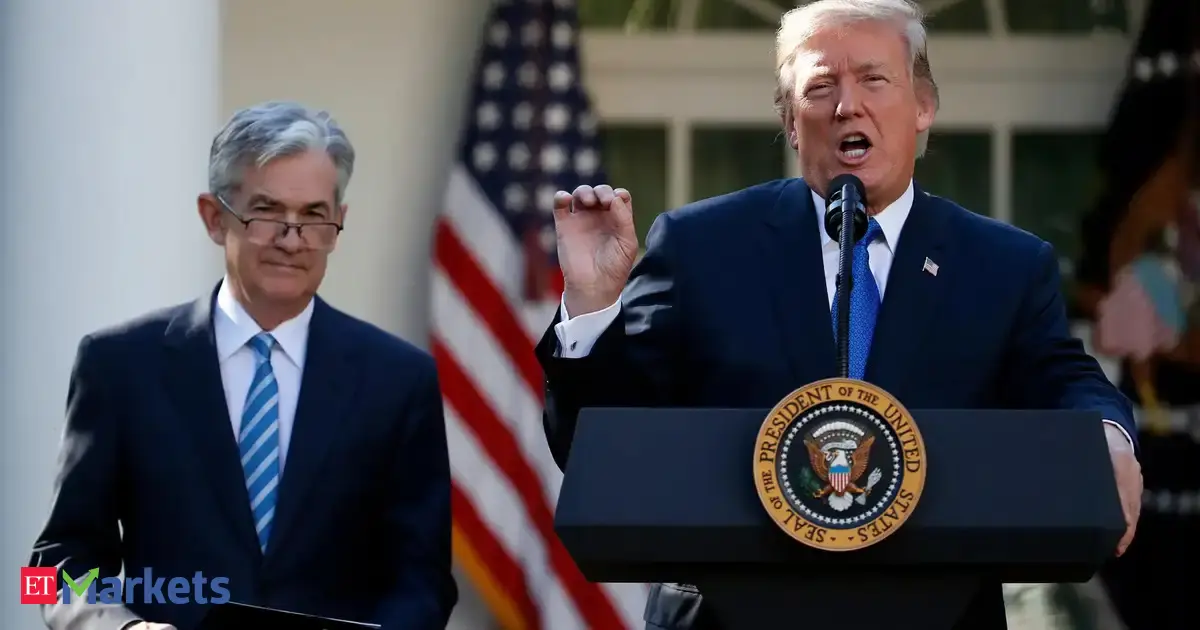
Trump's Fed nomination to ease market uncertainty, all eyes on Warsh
President Trump is set to nominate the next Federal Reserve chief, with former Fed Governor Kevin Warsh reportedly the leading candidate. This crucial decision aims to alleviate market uncertainty and could signal a significant shift in US monetary policy. For competitive exams, understanding the Federal Reserve's role, the impact of its leadership on global economics, and key economic terms like 'hawkish' is vital.
Revision structure
Monthly events and exam calendar context
Static GK and one-liner notes
Quiz and mock-test revision path
Key points
Exam-ready takeaways
Former Fed Governor Kevin Warsh is reportedly the leading candidate for the top position.
Kevin Warsh is characterized as a "hawkish" choice, indicating a potential shift in monetary policy.
The nomination aims to end market uncertainty regarding the future direction of US economic policy.
The Federal Reserve chief plays a critical role in setting interest rates and managing the US economy.
Detailed analysis
Full exam-oriented breakdown
The impending nomination of the Federal Reserve chief by the US President is a pivotal event that reverberates across global financial markets, with significant implications for economies like India. To truly grasp its importance, we must delve into the Federal Reserve's role, the context of the nomination, and its potential ripple effects. **Background Context: The Federal Reserve and its Mandate** The Federal Reserve, often simply called 'the Fed,' is the central banking system of the United States. Established by the Federal Reserve Act in 1913, it plays a crucial role in managing the US economy. Its primary mandates are to achieve maximum employment, maintain stable prices (control inflation), and moderate long-term interest rates. The Fed achieves these objectives primarily through monetary policy tools such as setting the federal funds rate (the benchmark interest rate), conducting open market operations, and managing its balance sheet. The Chair of the Federal Reserve's Board of Governors is arguably one of the most powerful economic figures globally, influencing not just the US but also the world's financial health. At the time of this article, Janet Yellen was the incumbent Chair, known for her cautious and data-dependent approach to monetary policy. **What Happened: A New Helm for the Fed?** President Trump's decision to nominate a new Federal Reserve chief signaled a potential shift from the continuity offered by Janet Yellen. The article highlights former Fed Governor Kevin Warsh as a leading candidate. Warsh's characterization as a "hawkish" choice is key. In central banking terminology, a 'hawk' typically favors tighter monetary policy – meaning higher interest rates and a reduction in the money supply – to combat inflation, even if it might slow economic growth. Conversely, a 'dove' prioritizes economic growth and employment, often advocating for lower interest rates and looser monetary policy. Markets were closely watching this nomination to understand the future trajectory of US monetary policy, particularly regarding interest rate hikes and the reduction of the Fed's massive balance sheet, accumulated during and after the 2008 financial crisis through quantitative easing programs. **Key Stakeholders Involved** Several key players are central to this development. First, the **US President** holds the power to nominate the Fed Chair, subject to confirmation by the **US Senate**. This political appointment underscores the interplay between government and central bank independence. Second, the **Federal Reserve's Board of Governors** and the **Federal Open Market Committee (FOMC)**, which sets the federal funds rate, are directly impacted by the new leadership. Their collective decisions on interest rates and balance sheet management affect businesses, consumers, and financial institutions. Third, **global financial markets** are major stakeholders, reacting to every hint and announcement, as US monetary policy influences global capital flows, currency valuations, and commodity prices. Lastly, **international economies**, including India, are indirect but significant stakeholders, as they bear the brunt or benefit from US economic policy shifts. **Why This Matters for India: Economic Interdependence** The nomination of a 'hawkish' Fed chief and the subsequent shift in US monetary policy have profound implications for India. If the US Fed raises interest rates more aggressively, it could lead to: 1. **Capital Outflows**: Higher interest rates in the US make dollar-denominated assets more attractive, potentially drawing Foreign Institutional Investments (FIIs) and Foreign Portfolio Investments (FPIs) away from emerging markets like India. This can put downward pressure on the Indian stock market and bond yields. 2. **Rupee Depreciation**: As FIIs withdraw, the demand for dollars increases, leading to a depreciation of the Indian Rupee against the US Dollar. A weaker Rupee makes imports more expensive (e.g., crude oil), potentially fueling inflation in India and increasing the current account deficit. 3. **RBI's Monetary Policy**: The Reserve Bank of India (RBI) often has to consider global monetary conditions, especially those in the US, while formulating its own policy. If the Fed tightens, the RBI might face pressure to prevent excessive capital outflows or manage imported inflation, sometimes by raising its own policy rates, even if domestic conditions don't entirely warrant it. India's own inflation-targeting framework, governed by the Monetary Policy Committee (MPC) established under the RBI Act, 1934 (specifically Section 45ZB), aims to keep inflation within a target range (currently 4% +/- 2%). External pressures from US policy can complicate this task. 4. **Trade and Exports**: A stronger dollar generally means US goods are more expensive globally, which could theoretically benefit Indian exports. However, global demand contraction due to tighter US policy could offset this. India's significant trade relations with the US mean that economic stability in the US is beneficial for India's export sector and overall growth. **Future Implications: A Global Economic Rebalancing** A hawkish Fed leadership could signal an era of faster monetary policy normalization globally. This would mean a gradual unwinding of the easy money policies adopted post-2008 crisis. For India, this implies a need for robust macroeconomic management, focusing on fiscal prudence, strengthening domestic demand, and building foreign exchange reserves to cushion against external shocks. The shift could also lead to increased volatility in global capital markets, requiring Indian policymakers and investors to remain vigilant. The broader theme here is the interconnectedness of global finance and how decisions in one major economy can create a cascade of effects worldwide, impacting governance, economy, and international relations. While the Indian Constitution doesn't directly address the US Federal Reserve, it provides the framework for India's own central bank, the RBI, through acts like the Reserve Bank of India Act, 1934. Understanding the autonomy and functions of the RBI, particularly its role in maintaining financial stability and managing foreign exchange (as per Article 282, 292 of the Constitution regarding government borrowing and financial stability), is crucial for appreciating the domestic response to international economic shifts.
How to study
Turn news into exam marks
Revise monthly events by exam family instead of reading random updates.
Pair one-liners with mock tests so mistakes become the next revision list.
Keep state job pages, calendar pages and GK packs connected in one path.