

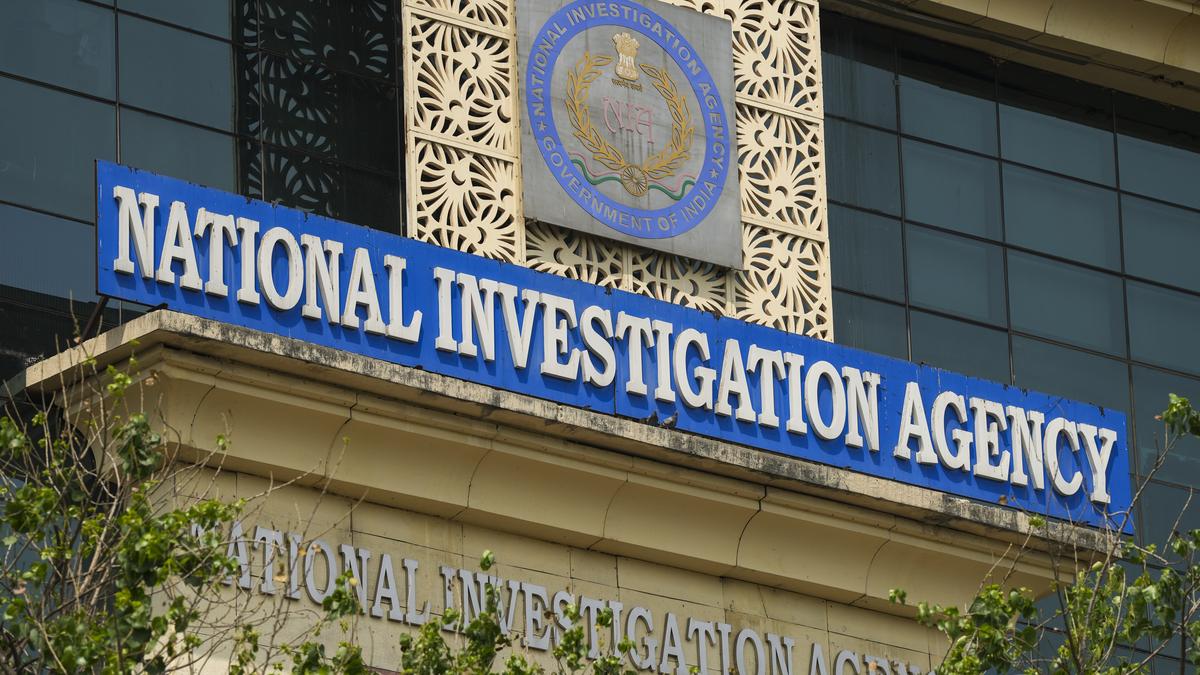
The National Investigation Agency (NIA) has launched an investigation into violence.
GK and monthly revision
NIA begins probe into Beldanga violence in West Bengal
The National Investigation Agency (NIA) has initiated a probe into recent violence in Beldanga, West Bengal. The investigation aims to uncover whether the incidents were a result of an organized conspiracy, the spread of fake information, or deliberate communal provocation. This highlights the NIA's role in internal security matters and its mandate to investigate terror-related or serious crimes, making it relevant for exams focusing on Indian polity and security agencies.
Revision structure
Monthly events and exam calendar context
Static GK and one-liner notes
Quiz and mock-test revision path
Key points
Exam-ready takeaways
The violence under investigation occurred in Beldanga, located in West Bengal.
The primary objective of the NIA probe is to determine if an organized conspiracy led to the violence.
NIA is also scrutinizing the role of fake or misleading information in inciting the incidents.
The investigation specifically examines if deliberate provocation was used to stoke communal passion.
Detailed analysis
Full exam-oriented breakdown
The National Investigation Agency's (NIA) decision to probe the violence in Beldanga, West Bengal, underscores critical facets of India's internal security architecture, federal dynamics, and the persistent challenge of communal harmony. This investigation is not merely a local law and order issue but touches upon broader themes of governance, the role of central agencies, and the increasing menace of misinformation in a digitally connected society. **Background Context and What Happened:** West Bengal, a state known for its vibrant political landscape, has unfortunately witnessed sporadic instances of political and communal violence. The specific incidents in Beldanga, though not detailed in the quick summary, have prompted the NIA to step in, indicating the gravity and potential wider ramifications of the violence. The agency's stated focus – to determine if the violence was a result of an organised conspiracy, the spread of fake or misleading information, or deliberate provocation to stoke communal passion – highlights the complex nature of such incidents. Often, local disputes can be exacerbated by external influences, including organised groups and the rapid dissemination of false narratives through social media, leading to widespread unrest. **Key Stakeholders Involved:** 1. **National Investigation Agency (NIA):** Established in 2008 in the aftermath of the Mumbai terror attacks, the NIA is India's premier counter-terrorism law enforcement agency. It functions under the Ministry of Home Affairs and has the mandate to investigate and prosecute offenses affecting the sovereignty, security, and integrity of India, friendly relations with foreign states, and international treaties, including terror acts. Its concurrent jurisdiction allows it to take over cases from state police forces, especially when they involve cross-state implications or national security concerns. The NIA Act, 2008, provides the legal framework for its operations. 2. **West Bengal State Police/Government:** Law and order is primarily a State subject under the Seventh Schedule (State List) of the Indian Constitution. The state police would have been the first responders to the violence. The entry of the NIA often leads to questions of federalism and Centre-State relations, particularly when the state government perceives it as an encroachment on its jurisdiction or politically motivated. Cooperation or friction between state and central agencies is a recurring theme in such cases. 3. **Union Government:** As the parent body of the NIA, the Union Government plays a crucial role in directing central agencies to intervene in matters of internal security, especially when a state is deemed unable or unwilling to effectively handle a situation. 4. **Local Communities and Citizens:** They are directly impacted by the violence, both as victims and, in some cases, as participants. Their trust in law enforcement and the justice system is vital for restoring peace and harmony. 5. **Social Media Platforms:** These platforms have emerged as significant enablers of misinformation and hate speech, capable of rapidly amplifying provocations and fake news, turning isolated incidents into widespread communal flare-ups. **Why This Matters for India:** This investigation holds immense significance for India's internal security and social fabric. Firstly, it underscores the NIA's expanding role beyond traditional terrorism cases to include serious organised crimes and communal violence with potential national security implications. Secondly, it highlights the delicate balance of federalism, particularly concerning law and order. While states have primary responsibility, the Union's power to intervene through agencies like NIA, especially under Article 355 (duty of the Union to protect states against external aggression and internal disturbance), is crucial for maintaining national integrity. Thirdly, the focus on 'fake or misleading information' and 'deliberate provocation' brings to the forefront the contemporary challenge of information warfare and the need for robust mechanisms to counter online radicalisation and incitement. Unchecked communal violence can destabilise regions, deter investment, and erode public trust, impacting India's overall development trajectory. **Historical Context and Constitutional Provisions:** India has a long history of communal tensions, often exacerbated during sensitive political or religious periods. Various commissions have been set up over the decades to study and recommend measures to prevent such violence. The legal framework for dealing with communal offences includes sections of the Indian Penal Code (IPC) like 153A (promoting enmity between different groups), 295A (deliberate and malicious acts, intended to outrage religious feelings), and 505 (statements conducing to public mischief). The NIA Act, 2008, with its amendments, empowers the agency to investigate a schedule of offences, which now includes certain aspects of organised crime and terrorism financing that might be linked to communal violence. The concurrent jurisdiction of the NIA sometimes leads to debates about states' autonomy, a core principle of India's federal structure as outlined in Part XI of the Constitution. **Future Implications:** The outcome of the Beldanga probe could have several implications. It might lead to the unearthing of organised networks behind communal instigation, potentially involving cross-state or even cross-border elements. This would further solidify the NIA's role in investigating complex cases beyond conventional terrorism. It will also test the efficacy of inter-agency cooperation between central and state forces. Furthermore, it could prompt renewed discussions on regulating social media and holding platforms accountable for content that incites violence, necessitating a balance between freedom of speech (Article 19(1)(a)) and reasonable restrictions (Article 19(2)) to maintain public order. Ultimately, a thorough and impartial investigation is crucial not only for delivering justice but also for fostering long-term peace and strengthening the rule of law in India.
How to study
Turn news into exam marks
Revise monthly events by exam family instead of reading random updates.
Pair one-liners with mock tests so mistakes become the next revision list.
Keep state job pages, calendar pages and GK packs connected in one path.