

The implementation of the 16th Finance Commission's recommendations is awaited.
GK and monthly revision
Poor coordination in policy making: Congress slams Govt. ahead of Union Budget 2026
The recommendations of the 16th Finance Commission are highly anticipated, with the Finance Minister expected to announce their implementation. State governments are particularly anxious about the implications for their finances. This development is crucial for understanding India's fiscal federalism and the distribution of resources between the Union and states, making it a significant topic for competitive exams focusing on Indian Polity and Economy.
Revision structure
Monthly events and exam calendar context
Static GK and one-liner notes
Quiz and mock-test revision path
Key points
Exam-ready takeaways
The Finance Minister is slated to announce the recommendations of the 16th Finance Commission.
State governments are anxiously awaiting the details regarding the 16th Finance Commission's recommendations.
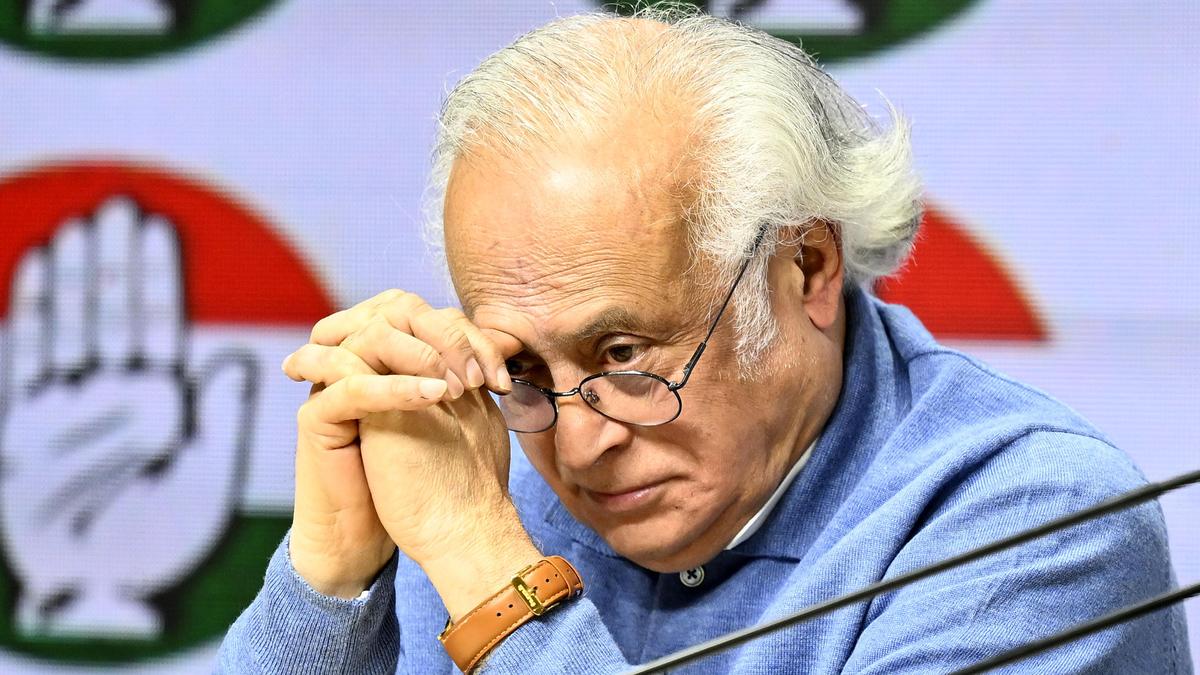
Jairam Ramesh of the Congress party criticized the government's policy making coordination.
Finance Commissions are constitutional bodies established under Article 280 of the Indian Constitution, crucial for fiscal federalism.
Detailed analysis
Full exam-oriented breakdown
The anticipation surrounding the recommendations of the 16th Finance Commission, especially among state governments, highlights a crucial aspect of India's governance: fiscal federalism. This subject is not merely an economic discussion but a cornerstone of Union-State relations, determining the financial health and autonomy of states, and consequently, their capacity to deliver public services and drive development. **Background Context and the Genesis of Finance Commissions** India, being a diverse country with a federal structure, necessitates a robust mechanism for the equitable distribution of financial resources between the Union (Central) government and the State governments. This is enshrined in the Constitution itself. Article 280 mandates the President of India to constitute a Finance Commission (FC) every five years, or earlier if deemed necessary. The primary role of the FC is to make recommendations on the distribution of net proceeds of taxes between the Union and the States (vertical devolution) and the allocation of shares among the States themselves (horizontal devolution). It also advises on the principles governing grants-in-aid to states by the Union government from the Consolidated Fund of India and measures needed to augment the Consolidated Fund of a State to supplement the resources of Panchayats and Municipalities. The need for such a body stems from the fact that while the Union government has access to broader tax bases and higher revenue-generating powers, State governments bear the responsibility for a significant portion of public expenditure, including law and order, health, education, and infrastructure. This vertical fiscal imbalance is inherent in most federations, and the Finance Commission acts as a balancing wheel, ensuring financial stability and equity across the nation. **The 16th Finance Commission and Current Expectations** The 16th Finance Commission was constituted on December 31, 2023, with Dr. Arvind Panagariya, former Vice-Chairman of NITI Aayog, as its Chairman. It is tasked with submitting its report by October 31, 2025, covering a five-year period starting April 1, 2026. The current news article reflects the anxiety of state governments and the critical commentary from political parties like the Congress, ahead of the Union Budget 2026, indicating that the Finance Minister is expected to announce the implementation of these recommendations. This announcement will be pivotal as it will lay out the financial roadmap for states for the next half-decade. **Key Stakeholders and Their Roles** Several key players are involved in this complex process. The **16th Finance Commission** itself is the central body, conducting extensive consultations with the Union and State governments, experts, and stakeholders to formulate its recommendations. The **Union Government**, specifically the Ministry of Finance, receives the report and decides on its implementation, which is then presented to **Parliament** for consideration and incorporation into the Union Budget. **State governments** are the primary recipients and are keenly awaiting the recommendations, as these will directly impact their fiscal space, development plans, and ability to manage their budgets. Their anxiety stems from the potential changes in tax devolution formulas, special grants, and performance-based incentives. Political parties, like the **Congress**, also play a role by scrutinizing the government's approach to fiscal federalism and policy coordination. **Significance for India's Fiscal Federalism and Future Implications** The recommendations of the 16th Finance Commission hold immense significance for India. Firstly, they will redefine **fiscal federalism** by determining the quantum and criteria for resource transfers, influencing the balance of power between the Union and states. Historically, successive Finance Commissions have adapted to India's evolving economic landscape, from the initial focus on revenue deficit grants to incorporating demographic changes, fiscal discipline, and performance-based criteria. Secondly, the recommendations will directly impact **state finances**, enabling them to fund critical public services, infrastructure projects, and welfare schemes. Fair and predictable resource allocation is essential for reducing regional disparities and fostering balanced development across the country. The 15th Finance Commission, for instance, recommended a 41% share of the divisible pool of taxes for states for the 2021-26 period. The 16th FC will need to consider the impact of the Goods and Services Tax (GST) regime, which has altered the revenue landscape for states, and potentially recommend new criteria for horizontal devolution, such as efforts in population control, disaster management, or green initiatives. Future implications include potential reforms in the grant-in-aid system, perhaps linking them more explicitly to specific outcomes or fiscal reforms undertaken by states. The Commission might also propose measures to strengthen the fiscal position of local bodies, aligning with the constitutional mandates of Articles 243G and 243W. The implementation of these recommendations will undoubtedly shape the economic trajectory of states and influence cooperative federalism for the next five years, making it a critical aspect of India's governance and development strategy. Any perceived imbalance or unfairness could lead to friction between the Union and states, making the coordination in policy-making, as highlighted by the Congress, a crucial element for smooth implementation.
How to study
Turn news into exam marks
Revise monthly events by exam family instead of reading random updates.
Pair one-liners with mock tests so mistakes become the next revision list.
Keep state job pages, calendar pages and GK packs connected in one path.