

The rally was named the "Save Manipur" rally.
GK and monthly revision
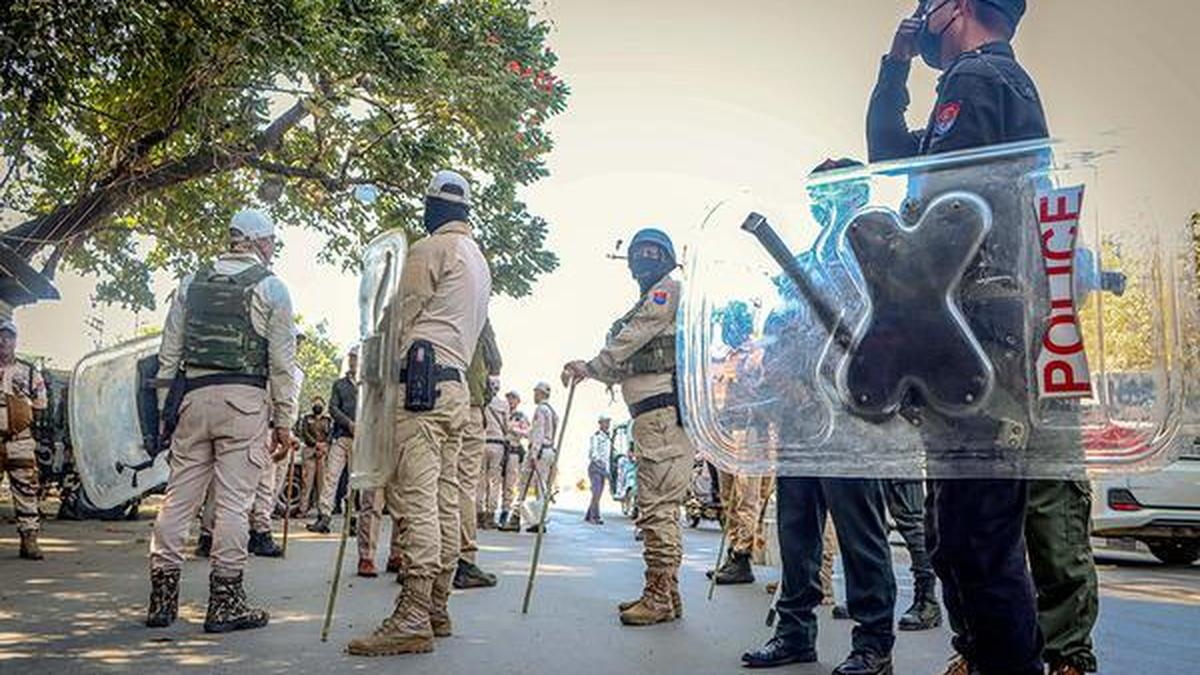
Thousands rally to assert stand on territorial, administrative integrity of Manipur; security tightened
Thousands rallied in Manipur under the banner of the "Save Manipur" movement, organized by the Coordinating Committee on Manipur Integrity (COCOMI), an umbrella body of Meitei civil society organizations. The rally aimed to assert the territorial and administrative integrity of Manipur, highlighting ongoing ethnic tensions and demands within the state. This event is significant for understanding India's internal security challenges and regional political dynamics, crucial for competitive exams.
Revision structure
Monthly events and exam calendar context
Static GK and one-liner notes
Quiz and mock-test revision path
Key points
Exam-ready takeaways
It was organized by the Coordinating Committee on Manipur Integrity (COCOMI).
COCOMI is an umbrella body comprising several Meitei civil society organizations.
The primary objective of the rally was to assert the territorial and administrative integrity of Manipur.
Security measures were tightened in Manipur in response to the rally.
Detailed analysis
Full exam-oriented breakdown
The "Save Manipur" rally, organized by the Coordinating Committee on Manipur Integrity (COCOMI), an umbrella body of Meitei civil society organizations, represents a significant manifestation of the deep-seated ethnic and territorial tensions plaguing the northeastern state of Manipur. This event, where thousands gathered to assert the territorial and administrative integrity of Manipur, underscores the volatile socio-political landscape of the region, making it a critical topic for competitive exam aspirants. **Background Context: A History of Tensions** Manipur, a state rich in cultural diversity, has a long history of ethnic strife, primarily between the Meitei community residing in the Imphal Valley and various Kuki-Zomi and Naga tribal communities inhabiting the surrounding hill districts. The Meiteis, predominantly Hindu, constitute about 53% of the state's population and live on approximately 10% of the land area, mainly the valley. The tribal communities, largely Christian, make up about 40% of the population and reside in the remaining 90% of the hilly, forested terrain. Historically, the Meiteis have been prohibited from settling in the hill areas without specific permission, while tribal communities can acquire land in the valley. This demographic and land-use imbalance has been a persistent source of friction. The immediate catalyst for the recent widespread violence, which erupted in May 2023, was the Manipur High Court's directive to the state government to consider including the Meitei community in the Scheduled Tribes (ST) list. This demand by the Meiteis stems from a desire for land protection, cultural preservation, and a perceived loss of identity, arguing that their population growth has stagnated, and they are being marginalized. However, the tribal communities vehemently oppose this, fearing that granting ST status to the Meiteis would allow them to purchase land in the hills, dilute tribal reservations, and further erode their own rights and resources. The "Tribal Solidarity March" organized by the All Tribal Students' Union of Manipur (ATSUM) on May 3, 2023, protesting the Meitei ST demand, escalated into widespread violence, resulting in significant loss of life, displacement, and property damage. **What Happened and Key Stakeholders** The "Save Manipur" rally was a direct response from the Meitei community, channelled through COCOMI, to these ongoing ethnic tensions and the perceived threats to Manipur's territorial integrity. The rally's core demand—to assert the territorial and administrative integrity of Manipur—is aimed at countering any proposals for separate administration or carving out distinct political entities for tribal communities, such as the Kuki-Zomi demand for a separate 'Kuki-land' or autonomous council, and historical Naga demands for 'Greater Nagalim' which would encompass parts of Manipur. Security was tightened across the state, particularly in sensitive areas, to prevent any untoward incidents and maintain law and order. Key stakeholders involved include: * **Coordinating Committee on Manipur Integrity (COCOMI)**: An influential umbrella body of Meitei civil society organizations, representing the Meitei community's interests, particularly concerning the state's territorial unity. * **Meitei Community**: The majority ethnic group, advocating for their rights, land protection, and the integrity of the state. * **Kuki-Zomi Communities**: Various tribal groups inhabiting the hill districts, who feel marginalized and have been demanding greater autonomy or separate administration, citing historical grievances and perceived discrimination. * **Government of Manipur**: Led by Chief Minister N. Biren Singh, the state government faces the arduous task of restoring peace, addressing grievances, and maintaining the state's integrity amidst conflicting demands. * **Government of India**: The Union government plays a crucial role in internal security, peace negotiations with various insurgent groups, and facilitating reconciliation between warring communities. Its intervention is vital for a lasting solution. * **Security Forces**: The Indian Army, Assam Rifles, and state police are heavily deployed to maintain peace and order, often operating under challenging circumstances. **Significance for India and Constitutional Relevance** The Manipur crisis holds profound significance for India. Firstly, it poses a severe **internal security challenge** in a strategically vital border state, impacting stability in the entire Northeast region. The prolonged conflict disrupts normal life, hinders economic development, and could potentially fuel insurgent activities. Secondly, it tests India's **federal structure** and the ability of the Union government to manage complex ethnic conflicts that threaten the territorial integrity of its constituent states. Demands for separate administration touch upon **Article 3 of the Indian Constitution**, which grants Parliament the power to form new states, alter areas, boundaries, or names of existing states. While the Sixth Schedule provides for autonomous administrative divisions in some tribal areas, its applicability and demands for similar structures in Manipur are contentious. Manipur's location, bordering Myanmar, makes it crucial for India's **Act East Policy**, aimed at enhancing connectivity and trade with Southeast Asian nations. Instability in Manipur can undermine these geopolitical aspirations. The crisis also highlights the challenge of **ethnic harmony** and the need for inclusive governance that respects the rights and aspirations of all communities without compromising national integrity. **Article 371C** of the Constitution provides special provisions for Manipur, including the establishment of a Committee of the Legislative Assembly consisting of members from the Hill Areas, aimed at protecting tribal interests. However, its effectiveness in resolving the current impasse is under scrutiny. **Future Implications** The path ahead for Manipur is fraught with challenges. The "Save Manipur" rally indicates the Meitei community's unwavering stance on territorial integrity, which directly clashes with the tribal communities' demands for greater autonomy or separate administration. Without a comprehensive and inclusive dialogue, the ethnic polarization could deepen, leading to continued unrest and potential for further violence. The Union government faces immense pressure to broker a lasting peace, which will require careful negotiation, confidence-building measures, and potentially a re-evaluation of land and administrative policies. Any solution must address the genuine grievances of all communities, ensure their safety and dignity, and uphold the constitutional framework while maintaining the territorial integrity of Manipur. Failure to do so could have long-term destabilizing effects on the entire Northeast region and India's internal security fabric.
How to study
Turn news into exam marks
Revise monthly events by exam family instead of reading random updates.
Pair one-liners with mock tests so mistakes become the next revision list.
Keep state job pages, calendar pages and GK packs connected in one path.