

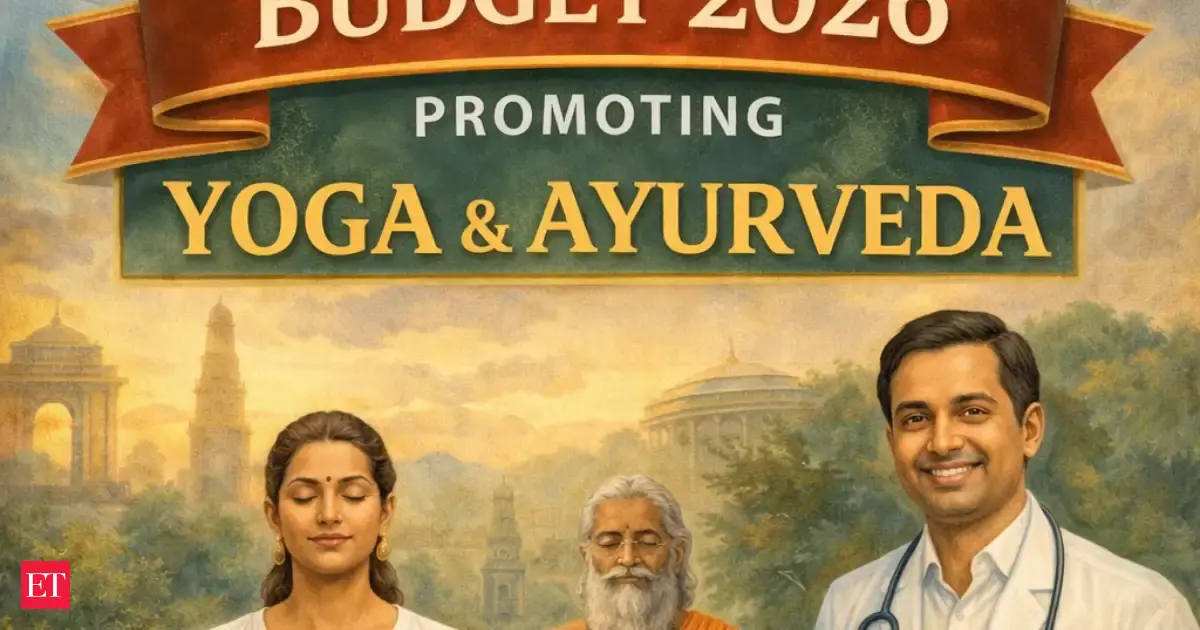
Union Budget 2026 proposes a significant boost to traditional wellness systems like Ayurveda and Yoga.
GK and monthly revision
Budget 2026: Ayurveda, Yoga get big boost as global interest grows
The Union Budget 2026 significantly boosts traditional wellness systems like Ayurveda and Yoga. It proposes training 1.5 lakh caregivers for these services and establishing three new Ayurveda institutes. Additionally, ten new allied health disciplines will train one lakh professionals, alongside three new pharmaceutical education institutes and a network of 1,000 clinical trials. This initiative is crucial for enhancing healthcare skills, promoting research, and expanding India's traditional medicine sector, making it vital for competitive exam aspirants focusing on government policies and healthcare development.
Revision structure
Monthly events and exam calendar context
Static GK and one-liner notes
Quiz and mock-test revision path
Key points
Exam-ready takeaways
The budget includes plans to train 1.5 lakh caregivers specifically for yoga and Ayurveda services.
Three new Ayurveda institutes are slated to be established under this budget initiative.
Ten new allied health disciplines will be introduced to train a total of one lakh professionals.
Three new pharmaceutical education institutes and a network of 1,000 clinical trials have also been proposed.
Detailed analysis
Full exam-oriented breakdown
The Union Budget 2026's significant allocation towards traditional wellness systems like Ayurveda and Yoga marks a pivotal moment for India's healthcare landscape and global standing. This strategic move is not an isolated event but rather a culmination of decades of efforts to recognize, revive, and integrate India's rich heritage of traditional medicine into the mainstream. It reflects a growing understanding, both domestically and internationally, of the importance of holistic health, preventive care, and wellness. Historically, India has been the cradle of several traditional medical systems, with Ayurveda and Yoga being prominent examples dating back thousands of years. While these systems thrived for centuries, they faced a period of decline during colonial rule, overshadowed by Western allopathic medicine. Post-independence, there was a gradual resurgence of interest, leading to the establishment of various councils and institutions. A major policy shift occurred in 2014 with the creation of the Ministry of AYUSH (Ayurveda, Yoga and Naturopathy, Unani, Siddha, and Homoeopathy), signalling the government's commitment to promoting and regulating these systems. The National Health Policy 2017 further emphasized the mainstreaming of AYUSH systems, advocating for pluralistic healthcare options for citizens. What the Budget 2026 proposes is a substantial leap forward. The plan to train 1.5 lakh caregivers specifically for Yoga and Ayurveda services directly addresses the human resource gap in this sector. The establishment of three new Ayurveda institutes will bolster educational infrastructure, ensuring a steady supply of qualified practitioners and researchers. Furthermore, the introduction of ten new allied health disciplines to train one lakh professionals, alongside three new pharmaceutical education institutes and a network of 1,000 clinical trials, underscores a comprehensive approach. This not only aims to enhance skills but also to foster research and development, providing a scientific validation for traditional practices and enabling the creation of standardized, quality-controlled AYUSH products. Key stakeholders in this ambitious initiative include the Government of India, particularly the Ministry of AYUSH and the Ministry of Health & Family Welfare, which are responsible for policy formulation, funding, and regulatory oversight. Educational institutions and universities will play a crucial role in curriculum development and training. Traditional medicine practitioners, researchers, and the pharmaceutical industry (especially those focusing on AYUSH products) are direct beneficiaries and contributors. Ultimately, the broader Indian populace and global healthcare consumers stand to benefit from enhanced access to diverse, quality-assured traditional healthcare services. This budgetary boost holds immense significance for India. Economically, it promises significant job creation, particularly in rural and semi-urban areas, fostering entrepreneurship within the AYUSH sector. It can propel India as a global hub for medical tourism, attracting international patients seeking traditional therapies. Socially, it promotes health equity by offering accessible and often more affordable healthcare options. It also contributes to the preservation and promotion of India's cultural heritage. Politically, it strengthens India's soft power on the global stage, showcasing its unique contribution to universal wellness, aligning with global trends towards holistic health, and potentially leading to collaborations with international bodies like the World Health Organization (WHO), which has shown increasing interest in traditional medicine. From a constitutional perspective, this initiative aligns with the Directive Principles of State Policy, particularly Article 47, which mandates the State to regard the improvement of public health as among its primary duties. By investing in AYUSH, the government is fulfilling its constitutional obligation to improve the standard of living and public health. The push for skill development also resonates with the broader objectives of the Skill India Mission, aiming to empower the youth with employable skills. The future implications are profound. This investment could position India as the world leader in traditional medicine research, education, and practice. It may lead to greater integration of AYUSH into mainstream healthcare, potentially reducing the burden on the allopathic system, especially for preventive and chronic care. Challenges remain in standardization, quality control, and scientific validation, but the proposed network of clinical trials is a crucial step towards addressing these. This holistic approach could significantly contribute to achieving Sustainable Development Goal 3 (Good Health and Well-being) and solidify India's role as a proponent of universal, accessible healthcare solutions for a global population. The emphasis on pharmaceutical education and research also opens avenues for drug discovery based on traditional knowledge, potentially leading to innovative and cost-effective medical solutions.
How to study
Turn news into exam marks
Revise monthly events by exam family instead of reading random updates.
Pair one-liners with mock tests so mistakes become the next revision list.
Keep state job pages, calendar pages and GK packs connected in one path.