

Under Budget 2026, the government plans to train 20,000 veterinary professionals.
GK and monthly revision
Budget 2026: Government to train 20,000 vets, develop 500 water bodies for fisheries
The Finance Minister unveiled key initiatives under Budget 2026 aimed at bolstering rural economies. These plans focus on enhancing livestock, fisheries, and high-value agriculture sectors. Significant proposals include training 20,000 veterinary professionals and developing 500 water bodies for fisheries, alongside promoting specific high-value crops. This is crucial for competitive exams as it details future government policy and schemes impacting agriculture and rural development.
Revision structure
Monthly events and exam calendar context
Static GK and one-liner notes
Quiz and mock-test revision path
Key points
Exam-ready takeaways
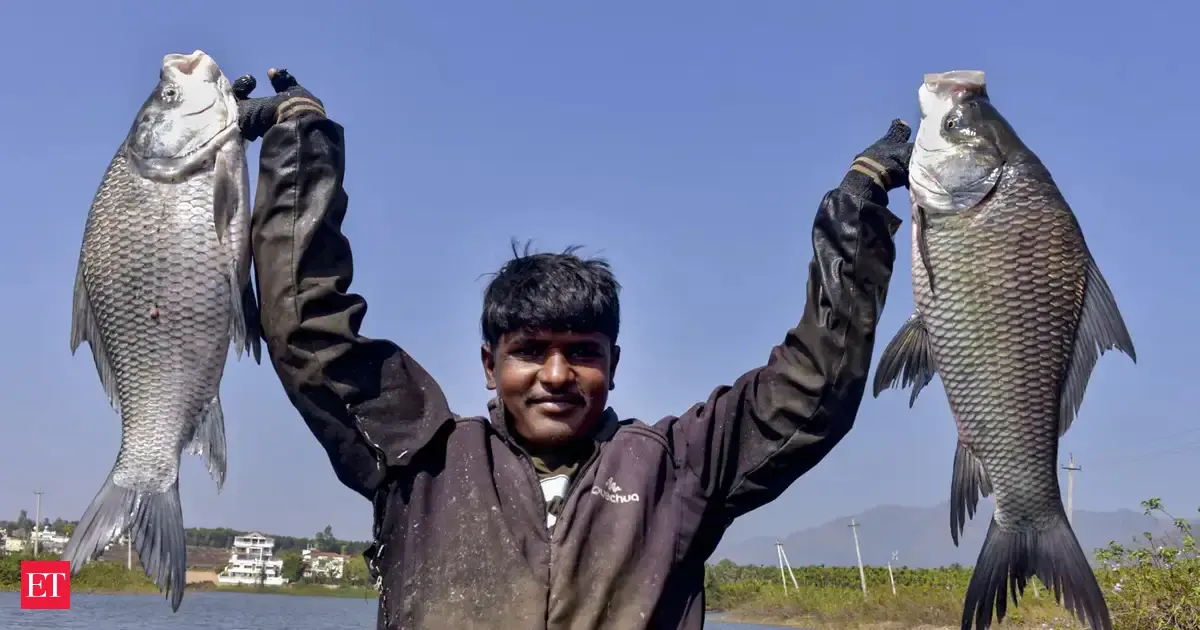
A target has been set to develop 500 water bodies specifically for fisheries.
The initiatives aim to boost rural economies by supporting livestock, fisheries, and high-value agriculture.
Schemes will promote animal husbandry entrepreneurship and enhance production of coconut, cashew, and cocoa.
Support will also be provided for sandalwood cultivation and nut farming in hilly regions.
Detailed analysis
Full exam-oriented breakdown
The Budget 2026 proposals, focusing on an ambitious plan to train 20,000 veterinary professionals and develop 500 water bodies for fisheries, along with supporting high-value agriculture, signify a strategic pivot towards strengthening India's rural economy. These initiatives are not isolated measures but are deeply embedded in the government's broader vision for inclusive growth and sustainable development. **Background Context:** India's economy is predominantly agrarian, with a significant portion of its population residing in rural areas and dependent on agriculture and allied sectors for livelihood. Despite its vast potential, the sector faces numerous challenges: fragmented landholdings, dependence on monsoon, climate change vulnerabilities, lack of modern infrastructure, limited access to credit and markets, and an urgent need for skill upgradation. While the Green Revolution significantly boosted food grain production, subsequent efforts have aimed at diversifying agriculture, promoting allied sectors like animal husbandry and fisheries, and enhancing farmers' income. The government's long-term goal of 'doubling farmers' income' by 2022 (though delayed) has consistently driven policy formulation, emphasizing value addition, market linkages, and technological adoption. **What Happened:** The Finance Minister's announcement under Budget 2026 outlines concrete steps to address these challenges. The plan to train 20,000 veterinary professionals is a critical investment in rural animal health infrastructure. A robust veterinary service is essential for livestock health, disease prevention, increasing productivity of dairy and poultry, and ensuring food safety. Similarly, developing 500 water bodies for fisheries directly addresses the need for enhanced infrastructure in the 'Blue Revolution' sector. This will not only boost fish production but also create employment opportunities and improve the livelihoods of fishing communities. Furthermore, the focus on animal husbandry entrepreneurship, along with specific high-value crops like coconut, cashew, cocoa, sandalwood, and nuts in hilly regions, indicates a move towards agricultural diversification and promoting niche markets, which can fetch better returns for farmers. **Key Stakeholders Involved:** This multi-pronged approach involves several key stakeholders. The **Ministry of Finance** provides the budgetary allocation and overall policy direction. The **Ministry of Agriculture & Farmers' Welfare** and the **Ministry of Fisheries, Animal Husbandry & Dairying** are central to implementation, scheme formulation, and coordination. **State governments** play a crucial role, as agriculture, animal husbandry, and fisheries largely fall under the State List of the Seventh Schedule of the Indian Constitution (Entries 14, 15, and 21 respectively). **Farmers and fishermen** are the primary beneficiaries and implementers at the ground level. **Veterinary universities and training institutes** will be crucial for professional development. **Farmer Producer Organizations (FPOs)** and **Self-Help Groups (SHGs)** will facilitate collective action, market access, and entrepreneurship. The **private sector** is also an important partner in value chain development, processing, and technology dissemination. **Why This Matters for India:** These initiatives hold immense significance for India's socio-economic landscape. Economically, they promise to boost rural incomes, generate significant employment opportunities, especially for rural youth and women, and contribute to agricultural GDP growth. Enhancing livestock and fisheries productivity directly impacts food security and nutritional levels, aligning with **Article 47** of the Directive Principles of State Policy, which mandates the State to raise the level of nutrition and the standard of living. Promoting high-value crops and entrepreneurship can reduce disguised unemployment in agriculture, diversify income sources, and potentially boost exports, thereby strengthening India's position in global agri-food markets. Socially, these measures can lead to greater empowerment of rural communities and reduce rural-urban migration by creating viable livelihoods locally. **Historical Context:** India's agricultural policy has evolved significantly. Post-independence, the focus was on achieving food self-sufficiency through the Green Revolution (1960s-70s). Subsequently, 'Operation Flood' (White Revolution) transformed the dairy sector, and the 'Blue Revolution' has been promoting sustainable development of the fisheries sector. Recent policies, like the Pradhan Mantri Matsya Sampada Yojana (PMMSY) launched in 2020, and the National Livestock Mission, have emphasized integrated development, infrastructure creation, and value chain strengthening. The Budget 2026 proposals build upon these foundations, providing specific targets and resources. **Future Implications:** The training of 20,000 vets will significantly improve animal healthcare, leading to healthier livestock, higher milk and meat production, and better disease control, which is vital for both economic and public health reasons. Developing 500 water bodies for fisheries will expand aquaculture, contributing to the 'Blue Economy' and potentially positioning India as a major global player in seafood production. The emphasis on high-value crops and entrepreneurship will encourage diversification away from traditional, often less remunerative, crops. This could lead to more resilient and profitable agricultural practices, better climate change adaptation, and a stronger rural economy less vulnerable to market fluctuations. It also aligns with **Article 48** of the DPSP, which calls for the organization of agriculture and animal husbandry on modern and scientific lines. Overall, these initiatives are poised to create a more dynamic, diversified, and resilient rural economy, contributing significantly to India's overall development trajectory.
How to study
Turn news into exam marks
Revise monthly events by exam family instead of reading random updates.
Pair one-liners with mock tests so mistakes become the next revision list.
Keep state job pages, calendar pages and GK packs connected in one path.