

India's 'Budget 2026' makes a fresh bet on manufacturing as the primary driver to sustain economic growth.
GK and monthly revision
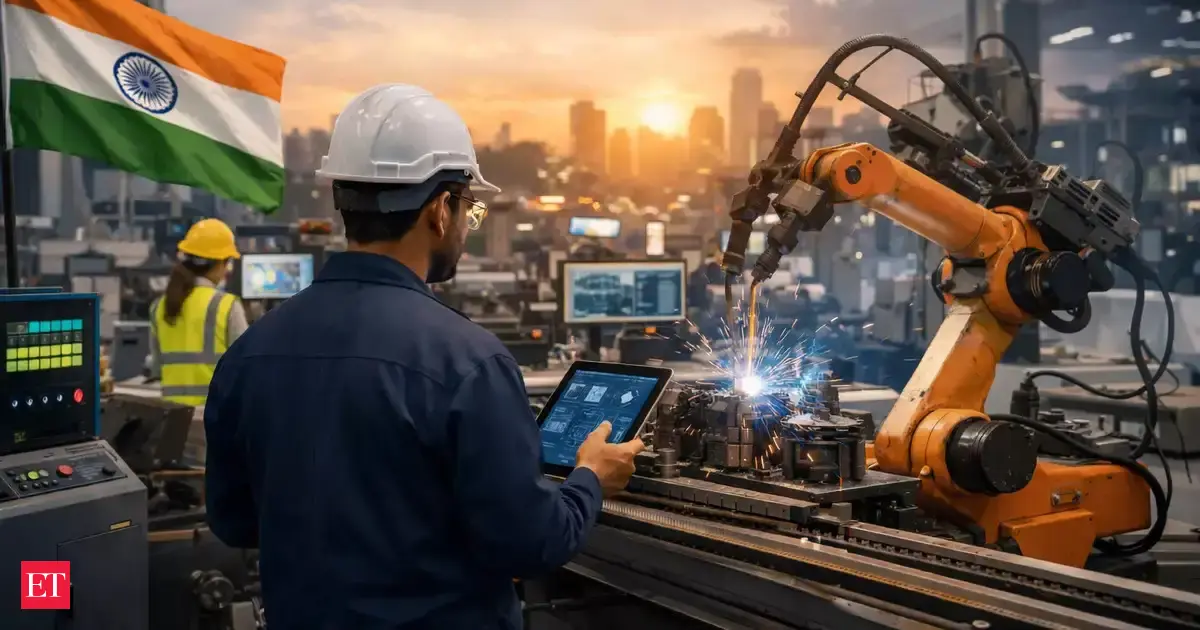
Budget 2026 makes fresh bet on manufacturing as it seeks to sustain growth
India's 'Budget 2026' has placed a renewed emphasis on boosting the manufacturing sector to sustain economic growth. This strategic move aims to significantly increase manufacturing's contribution to the nation's GDP and generate substantial employment opportunities. The budget outlines plans for targeted investments in advanced technologies and critical infrastructure, alongside reforms designed to attract private investment and stimulate domestic demand, while also pursuing international trade deals.
Revision structure
Monthly events and exam calendar context
Static GK and one-liner notes
Quiz and mock-test revision path
Key points
Exam-ready takeaways
A key objective of Budget 2026 is to increase manufacturing's contribution to India's Gross Domestic Product (GDP).
The budget also aims to create new job opportunities through enhanced focus and investment in the manufacturing sector.
Investments under Budget 2026 are specifically targeted towards cutting-edge technologies and critical infrastructure development.
India plans to implement reforms to spur private investment and demand, and actively pursue trade deals to counter global trade challenges.
Detailed analysis
Full exam-oriented breakdown
India's 'Budget 2026' signals a pivotal shift in the nation's economic strategy, reaffirming a strong commitment to manufacturing as a primary engine for sustained growth. This renewed focus builds upon previous initiatives and acknowledges the critical role of a robust industrial base in achieving comprehensive economic development and employment generation. For decades, India's growth narrative has largely been dominated by its services sector, often leading to a 'jobless growth' phenomenon in the industrial segment. The current emphasis aims to rebalance this, driving a more inclusive and resilient economic model. Historically, India's industrial policy has seen various phases. Post-independence, the Mahalanobis model emphasized heavy industries and state-led development. The economic liberalization of 1991 opened up the economy, but manufacturing struggled to compete globally. Initiatives like the 'Make in India' program, launched in 2014, were landmark efforts to boost domestic manufacturing, attract foreign direct investment (FDI), and create jobs. This was further bolstered by the introduction of Production Linked Incentive (PLI) schemes starting in 2020, which aimed to incentivize domestic and foreign companies to manufacture in India across various strategic sectors, from electronics to automobiles and pharmaceuticals. These schemes, with their fiscal outlays, have shown early signs of success in attracting investment and increasing production. The 'Budget 2026' can be seen as a logical progression and an intensification of these foundational efforts, recognizing the global shifts towards diversified supply chains and the need for greater self-reliance, especially after the disruptions caused by the COVID-19 pandemic and ongoing geopolitical tensions. The core of 'Budget 2026's' manufacturing push revolves around several key objectives: significantly increasing manufacturing's contribution to India's Gross Domestic Product (GDP), creating substantial employment opportunities, and fostering innovation. To achieve this, the budget proposes targeted investments in cutting-edge technologies such as semiconductors, green energy, artificial intelligence (AI)-driven manufacturing, and advanced materials. Simultaneously, it emphasizes critical infrastructure development, which is vital for reducing logistics costs and improving efficiency. Programs like PM Gati Shakti, which aims for integrated planning and coordinated implementation of infrastructure projects, will be crucial here. Furthermore, the budget outlines reforms designed to spur private investment and domestic demand, alongside an aggressive pursuit of international trade deals. These trade agreements are essential to expand market access for Indian manufactured goods and integrate India more deeply into global value chains, countering protectionist trends worldwide. Several key stakeholders are integral to the success of this manufacturing-centric budget. The **Government of India**, through ministries like Finance, Commerce and Industry, and NITI Aayog, is the primary driver, formulating policies, allocating resources, and creating a conducive regulatory environment. The **private sector**, encompassing both large domestic corporations, Micro, Small, and Medium Enterprises (MSMEs), and foreign investors, is crucial for actual investment, production, and innovation. MSMEs, in particular, are vital for job creation and feeding into larger supply chains. The **labor force**, both skilled and unskilled, is a fundamental stakeholder, as the success of manufacturing relies on a productive and adaptable workforce. Educational and vocational training institutions play a critical role in skill development. Finally, **consumers** are also stakeholders, benefiting from a wider array of domestically produced goods and potentially lower prices due to increased competition and efficiency. This focus on manufacturing holds immense significance for India. Economically, it promises more sustainable and inclusive growth, reducing the over-reliance on the services sector and making the economy more resilient to global shocks. It can help diversify India's export basket, improve the current account balance, and attract more Foreign Direct Investment (FDI). Socially, a burgeoning manufacturing sector is a powerful engine for job creation, especially for the millions of youth entering the workforce annually, helping to harness India's demographic dividend. It can lift people out of poverty and reduce regional disparities. Strategically, a strong manufacturing base contributes to India's 'Atmanirbhar Bharat' (self-reliant India) vision, enhancing national security through indigenous defense production and ensuring critical supply chain resilience. Politically, successful industrialization can enhance India's global standing as a manufacturing hub and a reliable trading partner. From a constitutional perspective, the government's role in promoting manufacturing and economic development is underpinned by the **Directive Principles of State Policy (DPSP)**. Article 38 mandates the state to secure a social order for the promotion of welfare of the people, aiming to minimize inequalities. Article 39 directs the state to ensure that the citizens have the right to an adequate means of livelihood and that the ownership and control of the material resources of the community are so distributed as best to subserve the common good. Article 41 recognizes the right to work, and Article 43 mandates the state to endeavor to secure a living wage and a decent standard of life for all workers. These principles provide the philosophical and legal framework for government intervention in economic sectors like manufacturing to achieve broader social and economic goals. Furthermore, the **Seventh Schedule** of the Constitution delineates legislative powers. 'Industries' (Entry 52) and 'Trade and Commerce' (Entry 42) fall under the Union List, empowering the central government to formulate comprehensive policies and laws for industrial development, while 'Economic and Social Planning' (Entry 20) is in the Concurrent List, allowing both central and state governments to cooperate in these initiatives. The future implications of this budget's manufacturing bet are profound. If successfully implemented, India could solidify its position as a global manufacturing hub, attracting more multinational corporations and creating a vibrant ecosystem of domestic industries. However, challenges remain, including ensuring consistent policy stability, addressing land acquisition and environmental clearance issues, upskilling the workforce to meet new technological demands, and navigating intense global competition. The long-term success will depend on effective implementation, continuous monitoring, and adaptability to evolving global economic landscapes. This strategic pivot promises to lay the groundwork for a more balanced, robust, and self-reliant Indian economy in the decades to come.
How to study
Turn news into exam marks
Revise monthly events by exam family instead of reading random updates.
Pair one-liners with mock tests so mistakes become the next revision list.
Keep state job pages, calendar pages and GK packs connected in one path.